


Listen to the article
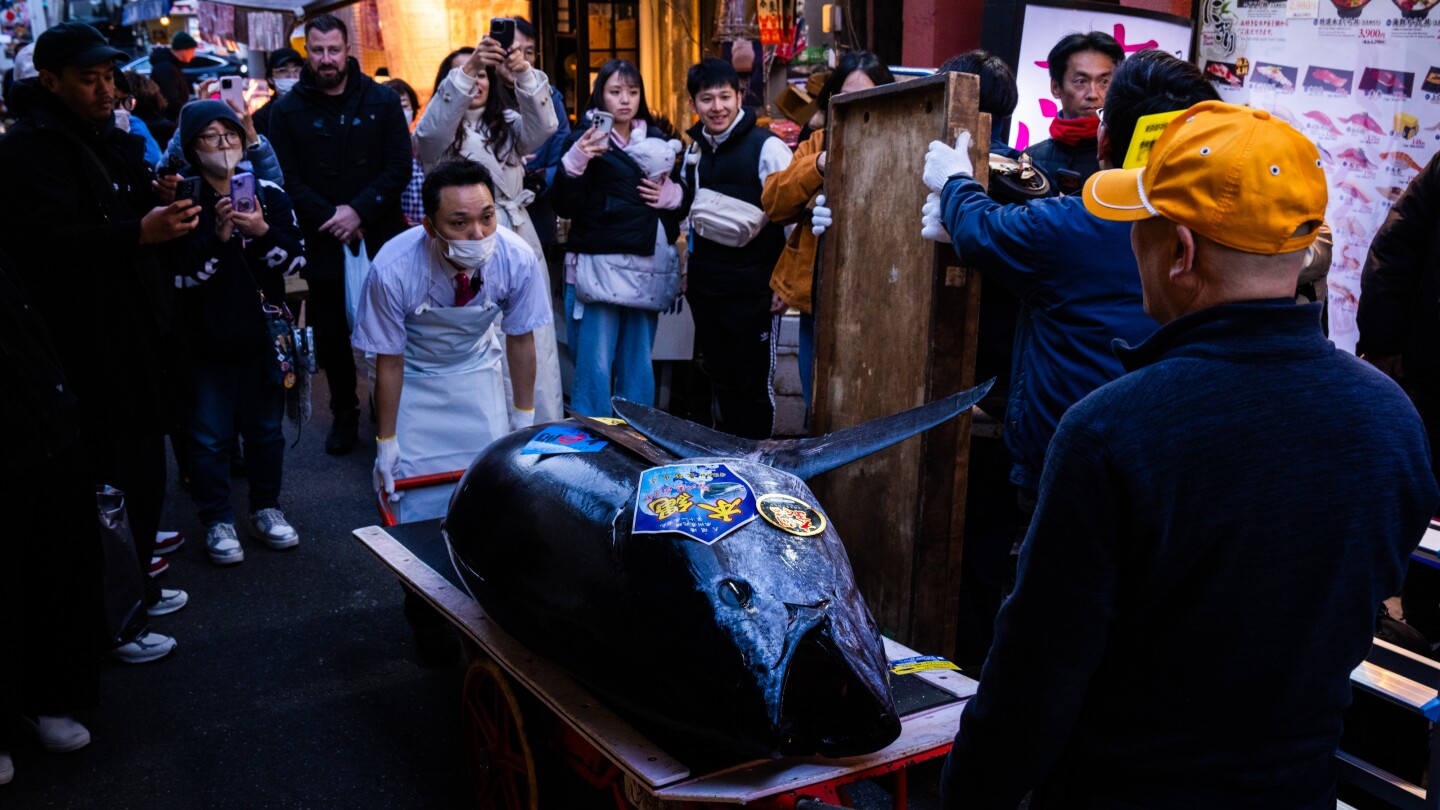
A massive bluefin tuna has shattered auction records at Tokyo’s famed Toyosu fish market, fetching an unprecedented 510 million yen ($3.2 million) during the ceremonial first auction of 2026 held early Monday morning.
The 243-kilogram (535-pound) fish was purchased by Kiyomura Corporation, operator of the popular Sushi Zanmai restaurant chain. The company’s flamboyant owner, Kiyoshi Kimura, has maintained his reputation as “Tuna King” by outbidding competitors and breaking his own previous record of 334 million yen ($2.1 million) set in 2019.
This year’s prized tuna originated from the waters off Oma in northern Japan’s Aomori Prefecture, a region renowned for producing some of the world’s highest quality bluefin tuna. The eye-watering price translates to approximately 2.1 million yen ($13,360) per kilogram, or about $6,060 per pound.
“The quality and fat content of Oma tuna is exceptional this year,” said a market official who requested anonymity as they weren’t authorized to speak publicly. “The bidding was particularly intense given the size and condition of this specific fish.”
The New Year’s auction at Toyosu, which replaced the historic Tsukiji market in 2018, has evolved into a major media event that combines Japanese tradition with high-stakes commerce. While hundreds of tuna change hands during these predawn auctions throughout the year, the first auction of January typically sees prices soar far beyond market rates as successful bidders gain valuable publicity.
For Kimura and his Sushi Zanmai restaurants, the record purchase represents more than just securing premium ingredients. The media attention generated by winning the year’s first auction provides invaluable marketing exposure that industry analysts say far outweighs the inflated price tag.
“The promotional value of these headline-grabbing bids often exceeds the actual purchase price,” explained Hiroko Tabuchi, a food market analyst based in Tokyo. “For high-end sushi establishments, it establishes prestige and attracts customers eager to taste what’s considered the best of the best.”
Pacific bluefin tuna, highly prized for its buttery texture and rich flavor in sushi and sashimi, was previously categorized as a threatened species due to decades of overfishing. However, conservation efforts including strict fishing quotas and international management agreements have begun to show positive results, with stocks slowly recovering in recent years.
The International Union for Conservation of Nature upgraded the Pacific bluefin’s status from “vulnerable” to “near threatened” in its latest assessment, reflecting improved population trends. Japanese fisheries authorities have implemented stricter management practices while working with international partners to ensure sustainable harvesting.
Despite the astronomical prices commanded at ceremonial auctions, everyday bluefin tuna transactions at Toyosu reflect more modest market rates, though still expensive compared to other seafood. The market handles approximately 1,600 tons of seafood daily, with bluefin tuna representing one of its most prestigious offerings.
As Japan welcomes 2026 with this record-breaking auction, the event highlights the enduring cultural significance of tuna in Japanese cuisine and the complex intersection of tradition, commerce, and conservation efforts that shape the modern seafood industry.
Fact Checker
Verify the accuracy of this article using The Disinformation Commission analysis and real-time sources.

7 Comments
This is a staggering price for a single fish, even in the context of the prestigious Toyosu auction. I’m curious to learn more about the unique characteristics of Oma tuna that make it so desirable and valuable.
While the $3.2 million price tag is certainly eye-catching, I’m not surprised that ultra-high-end sushi purveyors are willing to pay such a premium for the best quality bluefin tuna. It speaks to the enduring cultural importance of this fish in Japan.
Bluefin tuna is a fascinating commodity – the combination of its rarity, quality, and cultural significance in Japan clearly allows for astronomical prices at auction. It will be interesting to see if this record holds in the coming years.
You make a good point. Bluefin tuna prices seem to keep breaking new records, reflecting both the limited supply and high demand, especially in the Japanese sushi market.
Wow, a $3.2 million tuna! That’s an incredible price, even for the famed Toyosu fish market. I wonder what makes Oma tuna so special and sought-after that it can command such a premium.
A $3.2 million tuna – that’s truly remarkable. I wonder how the buyer, Sushi Zanmai, plans to utilize this record-breaking fish to create an exceptional dining experience for their customers. The Japanese reverence for top-quality seafood is unparalleled.
Oma tuna must be something special to fetch over $13,000 per kilogram at auction. I’d be very interested to learn more about the unique attributes that make it so prized in the Japanese sushi market. This record-breaking sale highlights the enduring demand for the finest bluefin tuna.