


Listen to the article
Rising Community Opposition Halts Data Center Expansion Across America
Tech companies seeking to build massive data centers for AI and cloud computing are facing unprecedented resistance from local communities across the United States. As proposals for larger, more energy-intensive facilities multiply, developers are increasingly losing battles against organized resident opposition.
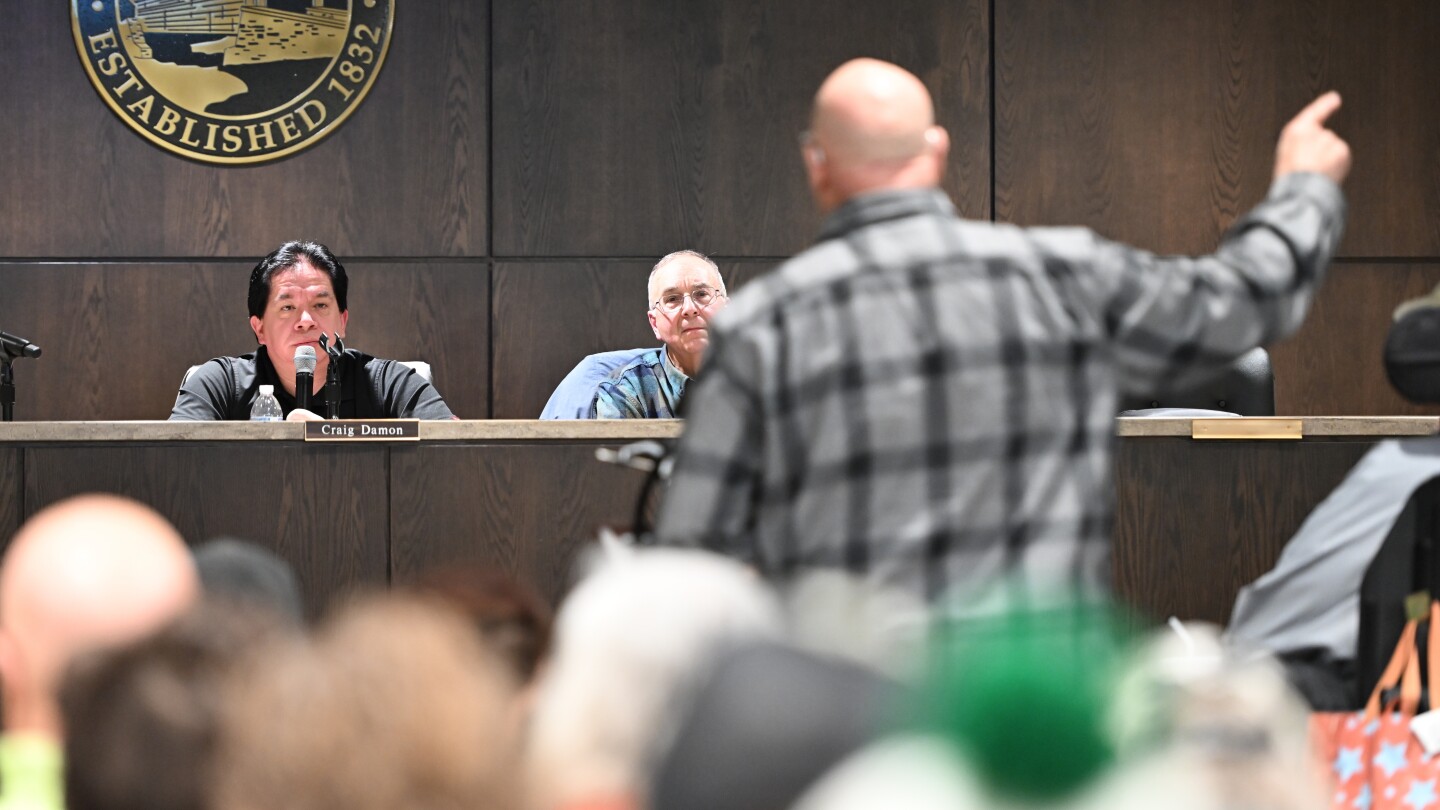
In East Vincent Township, Pennsylvania, local resident Larry Shank confronted supervisors at a municipal meeting with a pointed question: “Would you want this built in your backyard? Because that’s where it’s literally going, is in my backyard.” His sentiment echoes growing concerns in communities from rural farming towns to expanding suburbs.
Between April and June this year alone, Data Center Watch tracked 20 proposals valued at $98 billion across 11 states that were either blocked or delayed due to local resistance and state-level pushback. This represents approximately two-thirds of all projects the organization was monitoring during that period.
Andy Cvengros, who leads data center practice at commercial real estate firm JLL, has witnessed the growing opposition firsthand. “It’s becoming a huge problem,” he noted, describing multiple recent projects where opponents organized grassroots campaigns, distributing shirts and yard signs to rally communities against development.
The resistance has reached unprecedented levels in some regions. “I’ve been doing this work for 16 years, worked on hundreds of campaigns I’d guess, and this by far is the biggest kind of local pushback I’ve ever seen here in Indiana,” said Bryce Gustafson of the Indianapolis-based Citizens Action Coalition. In Indiana alone, more than a dozen projects have failed to secure necessary rezoning.
Residents’ concerns span multiple issues. Many worry about steep increases in electric bills that data centers might trigger. Others fear the loss of open space, farmland, forests, or rural character. The constant hum of servers and potential deployment of diesel generators raise quality of life concerns, while some communities worry about water consumption depleting local wells and aquifers.
The conflict has increasingly moved to the legal arena, with lawsuits being filed on both sides regarding whether local governments followed proper procedures in their decisions.
Tech giants including Microsoft, Google, Amazon, and Facebook—collectively investing hundreds of billions in data centers globally—have largely remained silent on the community pushback. However, Microsoft acknowledged these challenges in an October securities filing, listing operational risks including “community opposition, local moratoriums, and hyper-local dissent that may impede or delay infrastructure development.”
This resistance is reshaping industry strategy. Maxx Kossof, vice president of investment at Chicago-based developer The Missner Group, noted that some developers are selling properties once they secure a power source rather than risk a zoning fight. “You might as well take chips off the table,” Kossof explained. “The thing is you could have power to a site and it’s futile because you might not get the zoning. You might not get the community support.”
Industry representatives are urging developers to engage with communities earlier, emphasize economic benefits, support local initiatives, and highlight their conservation efforts. “It’s definitely a discussion that the industry is having internally about, ‘Hey, how do we do a better job of community engagement?'” said Dan Diorio of the Data Center Coalition.
But winning over residents has proven challenging even when local officials are supportive. In Matthews, North Carolina, developers withdrew a proposal from an October agenda after Mayor John Higdon informed them it faced unanimous defeat despite promising environmentally friendly features and funding that would cover half the city’s budget. Public sentiment was overwhelming, with opposition running “999 to one against,” according to Higdon.
In Hermantown, Minnesota, a proposed data center campus—several times larger than the Mall of America—is on hold amid environmental review challenges. Residents organized through social media after discovering that officials had kept the proposal secret for a year before internal emails were released through a public records request.
“It’s the secrecy. The secrecy just drives people crazy,” said Jonathan Thornton, a realtor living near the site. Local vegetable farmer Rebecca Gramdorf, who learned about the project from a newspaper article, quickly mobilized opposition by ordering yard signs and connecting with others online. “I don’t think this fight is over at all,” she said.
As communities learn from each other’s strategies and successes, the industry faces a growing challenge to its expansion plans, forcing a reconsideration of how—and where—the digital infrastructure powering AI and cloud computing will be built.
Fact Checker
Verify the accuracy of this article using The Disinformation Commission analysis and real-time sources.

13 Comments
The growing community opposition to data center projects is an important issue that deserves careful consideration. I hope the industry can find ways to meet its needs while being more responsive to local priorities and environmental impacts.
Fascinating to see the clash between tech’s expansion needs and local communities’ interests. Seems like a tough balance to strike, but important that all voices are heard in the process.
Absolutely. Developers should make a concerted effort to engage proactively and collaboratively with residents to find mutually agreeable solutions.
The data center buildout is crucial for the digital economy, but it’s understandable that residents would be concerned about the impacts. I wonder if new renewable energy and water conservation technologies could help ease some of the local frictions.
Good point. Innovative approaches to sustainability and resource use could go a long way in addressing community fears and building more acceptance for these projects.
This issue highlights the broader tension between the rapid digitalization of our economy and the need to respect local concerns. It will be interesting to see how the industry evolves its approach to address these challenges.
Interesting to see the growing community opposition to big tech’s data center expansion plans. I wonder if there are ways to address local concerns around energy use, environmental impact, and infrastructure strain while still meeting the industry’s needs.
Absolutely, striking the right balance will be key. Developers need to engage more transparently with communities upfront to understand and mitigate the local impacts.
The data center buildout is a double-edged sword – essential for the digital economy, but also posing risks to local communities. Balancing these competing needs will require creative thinking and a collaborative approach from all stakeholders.
It’s understandable that residents would be wary of the impacts of large data centers in their communities. However, these facilities are critical infrastructure for the digital age. Finding a way to reconcile these competing interests will be crucial.
This conflict between tech expansion and local concerns is a complex challenge with no easy answers. Transparent dialogue, innovative sustainability solutions, and a willingness to compromise on all sides will be key to resolving these issues.
This highlights the challenge of scaling critical digital infrastructure while respecting the interests of the communities hosting these facilities. Sounds like a complex issue with no easy solutions.
Agreed, it will require careful planning and compromise from all stakeholders. Transparent communication and a willingness to address local concerns will be crucial.