


Listen to the article
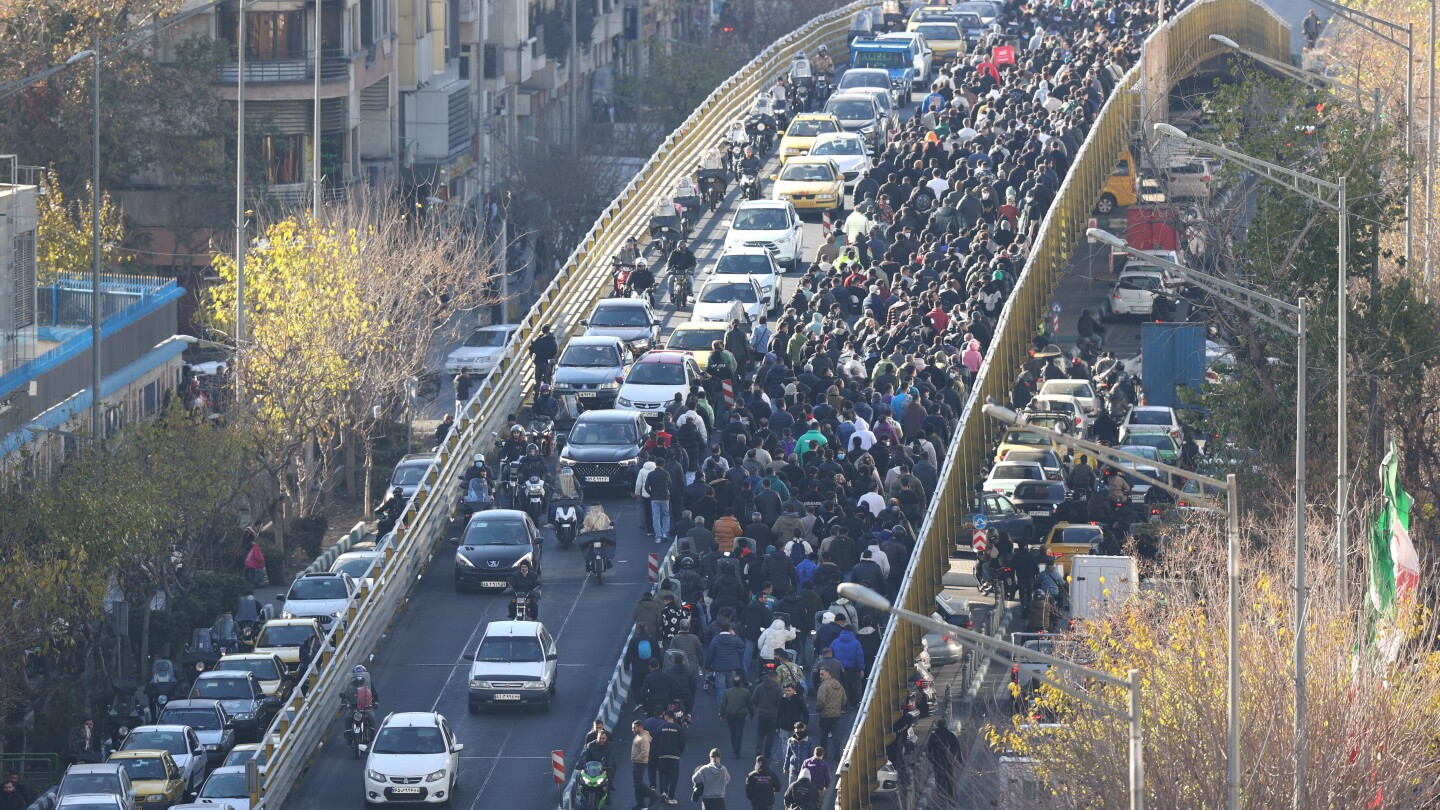
The death toll in ongoing protests across Iran has risen to at least 35 people, according to the U.S.-based Human Rights Activists News Agency (HRANA). The organization reported Tuesday that the demonstrations show no signs of abating despite growing casualties and mass detentions.
HRANA, which maintains an extensive network of activists inside Iran and has established credibility in reporting on previous unrest, stated that more than 1,200 protesters have been detained since demonstrations began over a week ago. Among the 35 reported deaths are 29 protesters, four children, and two members of Iran’s security forces.
The protests have rapidly spread across the country, reaching over 250 locations in 27 of Iran’s 31 provinces. Meanwhile, Iranian state media has provided a different perspective on the situation. Fars news agency, considered to have close ties to the Revolutionary Guard, reported late Monday that approximately 250 police officers and 45 members of the Guard’s volunteer Basij force have been injured during the demonstrations.
The escalating violence raises questions about potential international intervention, particularly from the United States. President Donald Trump warned Iran on Friday that if authorities “violently kill peaceful protesters,” the U.S. “will come to their rescue.” While the exact nature of any potential intervention remains unclear, Trump’s comments provoked an immediate and hostile response from Iranian officials, who threatened to target American military personnel in the Middle East.
These tensions have intensified following the U.S. military’s capture of Venezuelan President Nicolás Maduro on Saturday. Maduro has long been a staunch ally of Tehran, making this development particularly significant in the context of U.S.-Iran relations.
The current wave of demonstrations represents the largest civil unrest in Iran since 2022, when the death of 22-year-old Mahsa Amini in police custody sparked nationwide protests. Amini had been detained by Iran’s morality police for allegedly not wearing her hijab in accordance with government standards. However, analysts note that the current protests have not yet reached the same intensity or scope as the Amini demonstrations.
Iran has faced multiple rounds of nationwide protests in recent years, often triggered by economic hardship and political grievances. The country’s economy has been under severe strain due to international sanctions, and the situation deteriorated further after Iran’s 12-day conflict with Israel earlier this year. By December, Iran’s currency, the rial, had collapsed to 1.4 million to the U.S. dollar, pushing many Iranians into economic desperation and fueling public discontent.
Monitoring the true scale and nature of the protests has proven challenging for international observers. Iranian state media provides minimal coverage of the demonstrations, while online videos offer only brief glimpses of street activity or sounds of confrontation. Foreign journalists face significant restrictions in their reporting, including travel limitations and the constant threat of harassment or arrest by authorities.
Despite Supreme Leader Ayatollah Ali Khamenei’s stern warning on Saturday that “rioters must be put in their place,” protesters appear determined to continue their demonstrations. The persistence of these protests suggests deep-seated frustrations within Iranian society that extend beyond any single issue.
As the situation continues to develop, the international community remains watchful of how Iranian authorities will respond to the unrest and whether external actors, particularly the United States, will take more direct action in response to the growing humanitarian concerns.
Fact Checker
Verify the accuracy of this article using The Disinformation Commission analysis and real-time sources.

10 Comments
The loss of life is tragic. While protests can be disruptive, a government response that results in more deaths is concerning. I hope all parties can show restraint and find a constructive way to address the underlying issues.
Agreed. Escalating violence and mass detentions rarely resolve these types of economic and political tensions. A measured, diplomatic approach focused on reforms may be more effective.
Commodity markets will be watching this situation closely, as it has the potential to disrupt energy and mineral supplies from Iran. Maintaining stability and avoiding supply chain disruptions is crucial for the global economy.
Good point. Iran is an important producer of oil, natural gas, copper, and other key commodities. Any prolonged unrest could impact global prices and availability. Investors in related equities may want to monitor developments.
It’s a troubling development, with the potential for wider regional instability. I hope the government and protesters can find a peaceful way to address the root economic causes without resorting to violence. Stability is crucial for the mining and energy sectors.
You’re right, the regional implications are concerning. Iran’s neighbors will be closely watching to see how this unfolds. Maintaining secure energy and mineral supply chains is vital for global markets.
These protests highlight the economic challenges facing Iran. It’s a complex situation with valid concerns on both sides. I hope a peaceful resolution can be found to address the people’s grievances without further violence.
You’re right, this is a delicate situation. Economic pressures can drive unrest, but a heavy-handed crackdown often makes things worse. Dialogue and reforms may be the best path forward.
The death toll is alarming. While protests can disrupt operations, a harsh crackdown often backfires. I hope all sides show restraint and focus on finding constructive solutions to the economic challenges facing Iran. Stability is crucial for the mining industry.
Agreed. A heavy-handed response is unlikely to resolve the underlying issues. Dialogue, reforms, and addressing economic grievances may be a better path forward. Investors will be closely monitoring developments.