


Listen to the article
As Venezuela grapples with economic turmoil, U.S. intervention stirs both hope and uncertainty among citizens facing daily hardships.
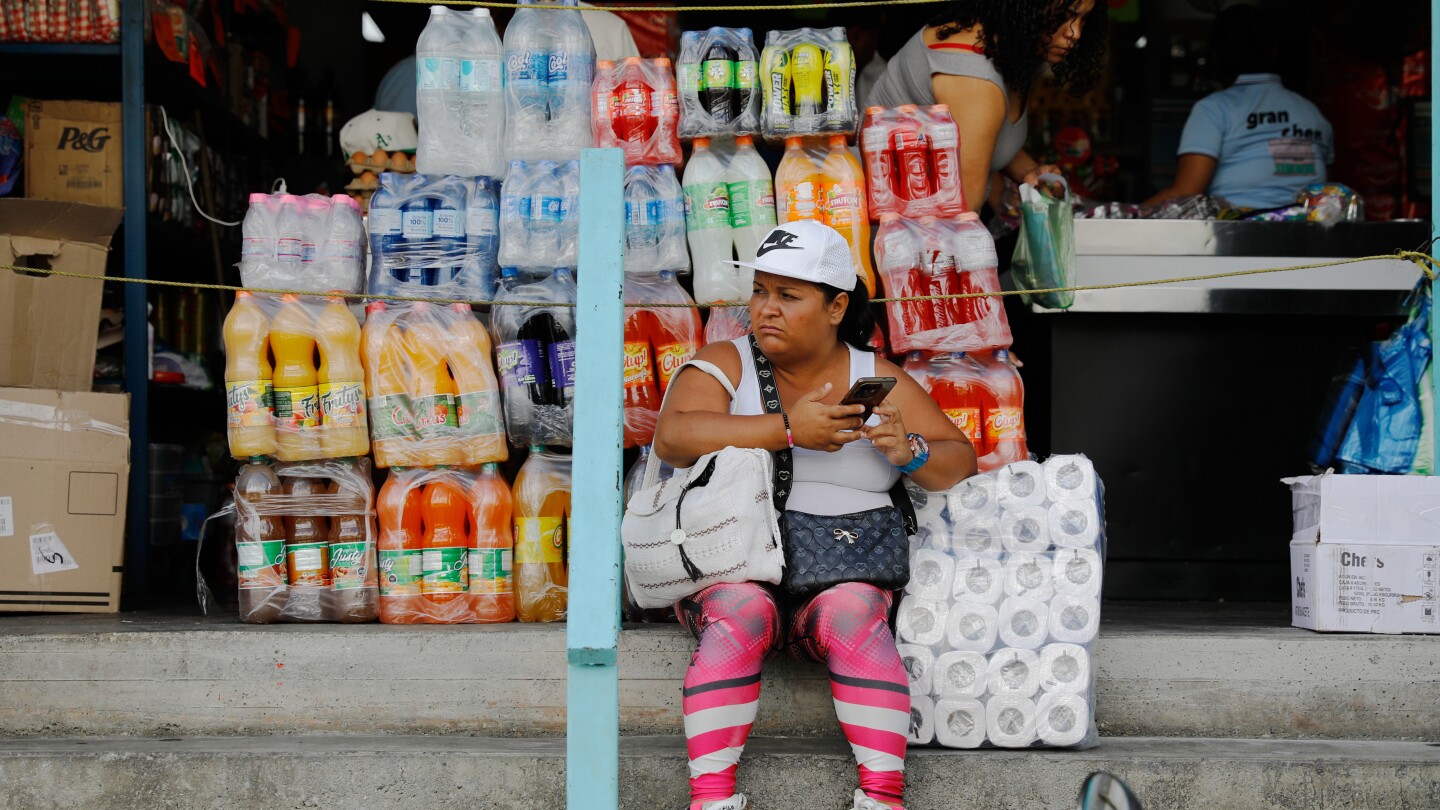
In Caracas, utility worker Ana Calderón struggles to afford basic food items at a local street market. “Everything is so expensive,” she laments, noting that celery now costs twice what it did a few weeks ago, while a kilogram of meat sells for more than $10—equivalent to 25 times the country’s monthly minimum wage.
This stark economic reality contrasts sharply with President Donald Trump’s promises at the White House that American intervention in Venezuela will revitalize infrastructure, rejuvenate the once-thriving oil industry, and usher in prosperity.
The recent capture of former President Nicolás Maduro by U.S. forces has created a complex dynamic of anticipation and uncertainty. “They know that the outlook has significantly changed but they don’t see it yet on the ground. What they’re seeing is repression. They’re seeing a lot of confusion,” explains Luisa Palacios, a Venezuelan-born economist and research scholar at Columbia University’s Center on Global Energy Policy. “People are hopeful and expecting that things are going to change but that doesn’t mean that things are going to change right now.”
The economic devastation in Venezuela has reached catastrophic proportions. The International Monetary Fund estimates the country’s inflation rate at a staggering 682%, the highest of any nation for which it has data. An estimated eight in ten Venezuelans live in poverty, with many working multiple jobs simply to survive.
The currency crisis became so severe that Maduro declared an “economic emergency” in April. Public sector workers typically earn around $160 monthly, while private sector employees average about $237. The monthly minimum wage stands at just 130 bolivars—approximately $0.40—unchanged since 2022 and far below the United Nations’ extreme poverty threshold of $2.15 daily.
These conditions have triggered an exodus, with more than 7.7 million Venezuelans fleeing their homeland in recent years. Those who remain concentrate in urban centers like Caracas, where the once-bustling Catia neighborhood market has grown quieter as prices climb and shoppers stay away.
Neila Roa, who sells cigarettes at the market while carrying her 5-month-old baby, expresses the uncertainty many feel. “Inflation and more inflation and devaluation,” she says. “It’s out of control.” Regarding Maduro’s capture, she adds, “What we don’t know is whether the change is for better or for worse. We’re in a state of uncertainty.”
Trump has pledged that the U.S. will distribute proceeds from Venezuelan oil sales back to its population. However, American interests appear primarily focused on expanding U.S. access to Venezuela’s vast oil reserves—the world’s largest proven deposits—reviving electricity infrastructure, and increasing exports of American goods to the country.
The White House is convening meetings with U.S. oil company executives to discuss investment opportunities in Venezuela’s struggling petroleum sector. Trump himself acknowledged to The New York Times that revitalizing the country’s oil industry would be a long-term process: “The oil will take a while.”
Venezuela’s economic decline began during the later years of Hugo Chávez’s presidency. Despite generating an estimated $981 billion in oil revenues between 1999 and 2011 during high crude prices, corruption, declining production, and unsustainable economic policies eventually triggered a crisis evident by 2012.
After Chávez died of cancer in 2013, his appointed successor Maduro presided over the country’s accelerating political, social, and economic collapse, exacerbated by plummeting oil production and prices. The middle class virtually disappeared under his leadership.
Albert Williams, an economist at Nova Southeastern University, suggests that rehabilitating the energy sector could have significant ripple effects throughout Venezuela’s economy. “If you improve the oil industry, you improve the country,” he notes, though questions remain about implementation and timeline.
Usha Haley, a Wichita State University economist specializing in emerging markets, cautions that immediate relief is unlikely. “Short-term, most Venezuelans will probably not feel any economic relief,” she says. “A single oil sale will not fix the country’s rampant inflation and currency collapse.”
Meanwhile, ordinary Venezuelans continue their daily struggle to survive in an economy where every transaction requires careful calculation. They commonly use the expression “resolver” (“figure it out”) to describe their approach to navigating daily challenges—from boarding buses to purchasing medicine.
For Ana Calderón at the market, these struggles remain immediate and tangible. Unable to afford all the ingredients for her soup, she left with only a bunch of celery, the meat now beyond her means—an all-too-common reality in today’s Venezuela, regardless of grand promises from Washington.
Fact Checker
Verify the accuracy of this article using The Disinformation Commission analysis and real-time sources.

7 Comments
The stark contrast between the government’s rhetoric and the lived reality of Venezuelans is quite troubling. I hope any foreign intervention truly prioritizes the needs and wellbeing of the citizens.
Absolutely. The people’s voices and perspectives must be at the forefront, not just political maneuvering. True progress requires addressing the root economic challenges.
This situation in Venezuela is so complex, with promises of a ‘renaissance’ but the everyday struggles of the people. It will be interesting to see if any real positive change comes from the political upheaval.
Agreed, the people deserve economic stability and prosperity after years of turmoil. Let’s hope the changes lead to meaningful improvements in their lives.
It’s a complex situation with a lot of uncertainty. I hope that whatever changes come about, they genuinely improve the lives of Venezuelans who have suffered so much economic hardship in recent years.
This highlights the challenges of reviving an economy that has been devastated by mismanagement and instability. Rebuilding infrastructure and the oil industry will be crucial, but the daily struggles of citizens must also be the priority.
The economic realities described here paint a very bleak picture for the average Venezuelan. Restoring prosperity will require a sustained, coordinated effort focused on the needs of the people, not just political power.