


Listen to the article
Climate Talks Shift Focus as Urgency Drives Push for Stronger Action
BELEM, Brazil — The United Nations climate conference in Brazil has taken an unexpected turn as mounting pressure for more ambitious action is forcing negotiators to broaden their agenda beyond implementation of existing commitments.
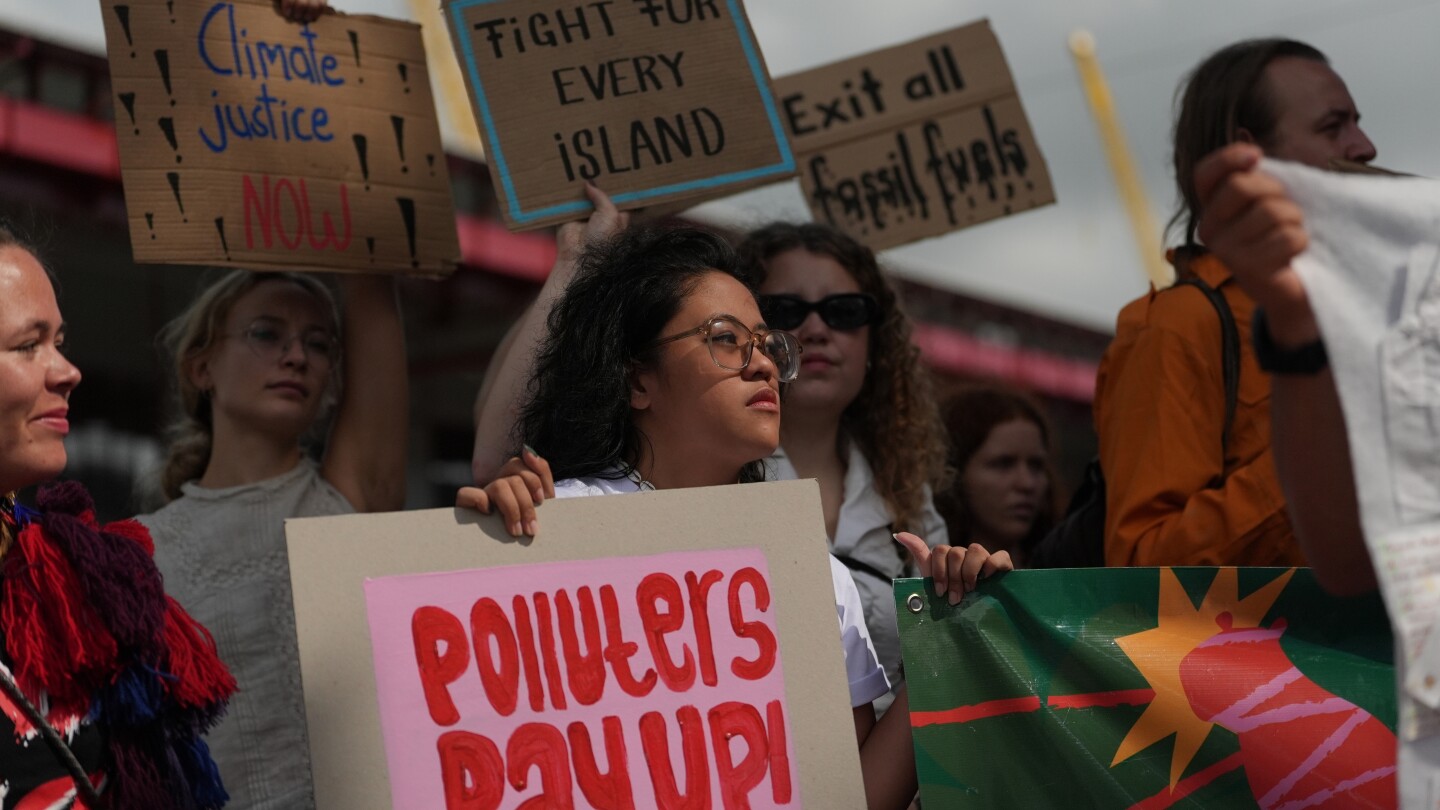
What was initially planned as a conference focused on implementing past promises has evolved into something more substantial, with growing calls for decisive measures on emissions cuts, climate finance, and fossil fuel phase-out.
“I think things have changed, which is a very good thing,” said veteran observer Jean Su of the Center for Biological Diversity. “There’s momentum that we will get some type of decision text, and our hope is that in particular there’s going to be some commitment on phasing out fossil fuels.”
The shift comes partly due to pressure from Brazilian President Luiz Inácio Lula da Silva, who has signaled support for more ambitious outcomes, including a road map for ending fossil fuel dependence. COP30 President André Corrêa do Lago, initially resistant to adding major new elements to the agenda, now acknowledges that parties will decide how to proceed with a potential end-of-conference declaration.
“I would say that what’s at stake now is probably higher than the last several COPs because you’re looking at an ambition gap,” said former Philippine negotiator Jasper Inventor, international program director at Greenpeace International. “There’s a lot of expectation, there’s a lot of excitement here, but there’s also a lot of political signals that’s been sent by President Lula.”
The conference’s midpoint has brought negotiators to a critical juncture. “We’re at the middle of the COP, and at the middle of COP is usually where the negotiators stare each other eye-to-eye. It’s almost like a staring contest,” Inventor explained. “But next week, this is where the negotiations need to happen, where political decisions are made by the ministers.”
While these end-of-conference statements often make headlines, their real-world power remains limited, as evidenced by unfulfilled pledges from previous climate summits regarding financial aid and fossil fuel reductions.
One of the most pressing issues is the inadequacy of current national climate plans. This year marks a crucial moment in the Paris Agreement’s timeline, with countries due to submit updated five-year plans. However, though 116 of 193 countries have filed their plans, analysts find them severely lacking. Both the United Nations and Climate Action Tracker calculate that these pledges would still leave Earth about 0.7°C (1.3°F) above the Paris goal of limiting warming to 1.5°C (2.7°F).
In response, small island nations led by Palau have requested that the conference address this significant ambition gap. Similarly, last year’s pledge by wealthy nations to provide $300 billion annually in climate finance lacks implementation details.
When countries pushed to address these issues early in the conference, do Lago established small working groups to determine if these controversial topics should be added to the formal agenda. On Saturday, the conference deferred the decision to incoming ministers. When asked about the conference’s progress, do Lago offered a candid assessment: “Eh, could be better but not as bad as it could be.”
UN General Assembly President Annalena Baerbock, who has attended ten previous climate conferences, told The Associated Press she sees “new momentum” in Belem. “We can fight the climate crisis only together if we commit to a strong mitigation target,” she said. “This means also transitioning away from fossil fuels, investing into renewable energy.”
The fossil fuel transition remains contentious. Two years ago in Dubai, countries agreed to “transition away from fossil fuels,” but last year’s conference made no mention of this commitment, and no detailed plan has emerged.
Iskander Erzini Vernoit, executive director of the Moroccan IMAL Initiative for Climate and Development, expressed optimism: “I think what we have before us are the ingredients of a potential high-ambition package for the outcome of this conference.”
Meanwhile, Indigenous groups have twice breached and blockaded the conference venue, protesting their limited inclusion in the process despite the event being promoted as the “Indigenous Peoples’ COP.”
“The COP so far was a testament that unfortunately, for Indigenous peoples to be heard, they actually need to be disruptive,” said Aya Khourshid, an Egyptian-Palestinian member of A Wisdom Keepers Delegation, a group representing Indigenous people worldwide.
Indigenous participants have expressed frustration at being excluded from decision-making tables. “There’s an imbalance here at COP30,” said Whaia, a Ngāti Kahungunu Wisdom Keeper. “There’s the privileged and the not-so lucky who don’t get a say on what’s actually going on in their own home.”
As ministers arrive next week for the conference’s final phase, the stage is set for potentially significant decisions that could determine whether the world makes meaningful progress toward its climate commitments or continues to fall short of what science indicates is necessary to avoid the worst impacts of climate change.
Fact Checker
Verify the accuracy of this article using The Disinformation Commission analysis and real-time sources.

16 Comments
A roadmap for ending fossil fuel dependence would be a game-changer, but the devil will be in the details. The timeline, interim targets, and support for affected communities and workers will all be crucial.
Absolutely. The transition away from fossil fuels needs to be carefully managed to ensure it’s just and equitable for all stakeholders. That will be a major challenge for the negotiators.
Interesting shift in focus at the climate talks. It’s encouraging to see growing calls for more ambitious action, including on fossil fuel phase-out. Curious to see what concrete commitments and timelines emerge from the negotiations.
Agreed, the momentum for decisive measures seems to be building. A roadmap for ending fossil fuel dependence would be a significant step forward.
The mining and energy sectors will be closely watching these negotiations, as a fossil fuel phase-out would have major implications for their businesses. I’m curious to see how they respond to the increased climate ambition.
Good point. The mining and energy companies will likely lobby hard to protect their interests, so it will be a battle to get meaningful commitments on fossil fuel phaseout.
The shift towards more ambitious climate action is encouraging, but I’m concerned about the potential impact on commodity markets and the mining sector. Careful planning will be needed to balance climate goals with economic realities.
That’s a valid concern. The transition away from fossil fuels will have ripple effects across the energy and mining industries. Striking the right balance between climate action and economic stability will be crucial.
It’s good to see the conference agenda evolving to address the urgency of the climate crisis. Fossil fuel phase-out needs to be a key priority, but the implementation details will be critical. I hope the negotiators can deliver meaningful commitments.
I share your hope. Concrete targets and timelines for fossil fuel phase-out, backed by robust support mechanisms, will be essential to drive the necessary transformation. The stakes are high, but the potential benefits make it worthwhile.
It’s encouraging to see the conference agenda evolving to address the urgency of the climate crisis. Implementing past promises is important, but we need bolder steps to drive real change.
Agreed, the focus needs to shift towards decisive emissions cuts and a clear path to weaning off fossil fuels. Incremental steps are no longer enough.
While I’m skeptical of the ability of these climate talks to produce transformative outcomes, the shift towards more ambitious action is a step in the right direction. Let’s hope the negotiators can deliver meaningful commitments.
Your skepticism is understandable, but the growing momentum for stronger action is promising. Concrete targets and timelines will be key to judge the success of this conference.
The pressure from President Lula to raise the ambition level is a positive sign. Phasing out fossil fuels needs to be a key priority if we’re going to meet our climate goals.
Absolutely, fossil fuel dependence is one of the biggest barriers to meaningful climate action. A firm commitment to move away from these energy sources is essential.