


Listen to the article
NASA’s upcoming Artemis mission marks humanity’s return to the moon after a half-century hiatus, though the ambitious program faces inevitable comparisons to the iconic Apollo missions that captivated the world in the 1960s.
As four astronauts prepare for liftoff in early April, the contrast between the historic Apollo program and NASA’s new lunar venture becomes increasingly apparent. While Apollo 8 boldly ventured into lunar orbit on mankind’s first journey to the moon, the Artemis II crew will take a more cautious approach, executing an out-and-back slingshot maneuver around the lunar surface.
“There is no way we could be that same mission or ever hope to even be,” acknowledges NASA astronaut Christina Koch, who will be part of the diverse Artemis II crew that includes a woman, a person of color, and a Canadian astronaut—reflecting a significant shift from Apollo’s all-male, all-American teams.
The pace of development between the two programs couldn’t be more different. NASA accomplished the remarkable feat of going from its first manned spaceflight to landing on the moon in just eight years during the Apollo era. Canadian astronaut Jeremy Hansen, part of the upcoming mission, expressed his continued amazement at the Apollo program’s achievements.
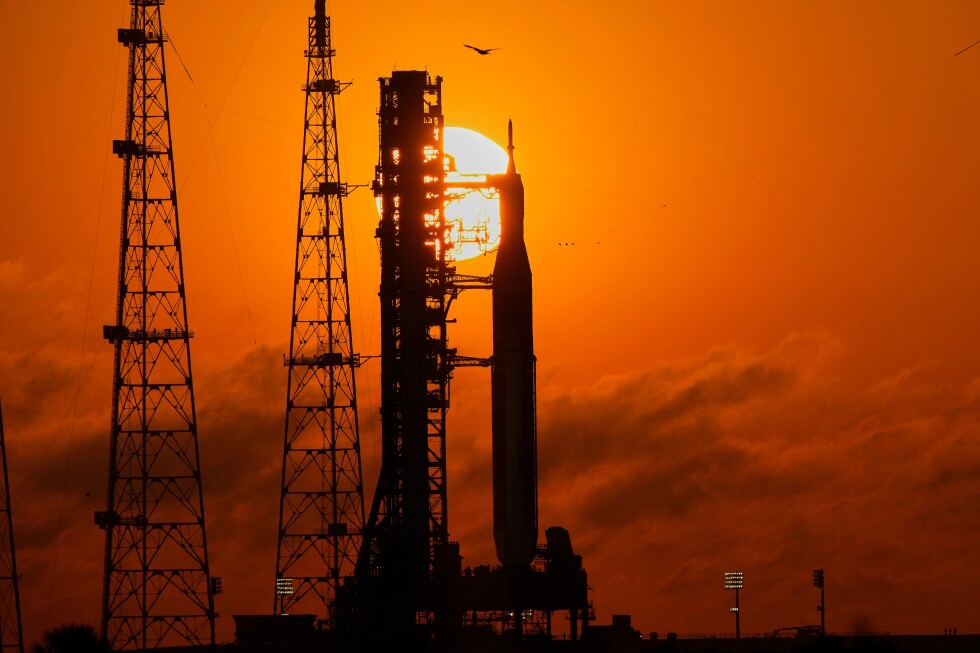
By contrast, Artemis has progressed much more deliberately following decades of shifting priorities between lunar and Martian exploration. The Space Launch System (SLS) rocket, NASA’s new moon vehicle, has flown just once in an unmanned test more than three years ago.
This methodical approach prompted NASA’s new administrator Jared Isaacman to overhaul the Artemis timeline in February. Drawing inspiration from Apollo, he inserted an additional mission between Artemis II and the lunar landing, which has now been rescheduled as Artemis IV in 2028.
The revised Artemis III mission will focus on Earth-orbit operations next year, similar to Apollo 9’s approach in 1969. Rather than attempting a moon landing as initially planned, astronauts will practice docking their Orion capsule with lunar landers being developed by SpaceX and Blue Origin. The rival companies, led by Elon Musk and Jeff Bezos respectively, are accelerating their work to secure the prestigious position of building the first commercial lunar lander.
Political dynamics have shifted dramatically since the Apollo era. Where the Soviet Union once drove America’s lunar ambitions, China has emerged as the new competitor. Beijing has already achieved the historic feat of landing robotic spacecraft on the moon’s far side and aims to put astronauts near the lunar south pole by 2030.
NASA is targeting the same polar region, valuable for its shadowed craters believed to contain ice deposits that could provide vital resources for future lunar bases. Isaacman, like his predecessor, is determined to ensure American astronauts reach this strategic area before their Chinese counterparts.
The rockets powering these missions reflect different engineering approaches. Apollo’s Saturn V stood 363 feet tall with five first-stage engines, while the SLS comes in slightly shorter at 322 feet but generates more liftoff thrust through its four main engines and twin boosters. Launch preparations for Artemis II have faced numerous delays due to hydrogen fuel leaks and helium system issues, pushing the target launch to April.
One notable difference in mission profiles comes from risk assessment. Apollo 8 took the bold step of conducting ten lunar orbits on humanity’s first trip to the moon. NASA has deemed a similar approach too risky for Artemis II, which will instead focus on testing Orion’s life-support systems during a lunar flyby. The mission will trace a figure-eight trajectory around the moon, leveraging a free-return path similar to the one that helped save the Apollo 13 crew after their near-disaster.
Equipment has evolved significantly between the programs. Apollo astronauts used the same bulky white spacesuits for launch, return, and moonwalks due to storage limitations. Artemis crews will have dedicated orange suits for launch and reentry in their more spacious Orion capsule, while Houston-based Axiom Space develops separate white suits for future lunar surface operations.
NASA’s long-term vision extends far beyond Apollo’s flag-planting objectives. Where Apollo’s longest surface stay lasted just 75 hours, future Artemis moonwalkers could spend nearly a week on the lunar surface. The agency envisions sustained lunar habitation leading eventually to Mars exploration, with Isaacman recently unveiling plans for a moon base incorporating habitats, rovers, power stations and more—backed by a $20 billion NASA investment over the next seven years.
As launch preparations continue, the Artemis team recognizes both the shadow cast by Apollo’s legacy and the opportunity to forge their own path in space exploration history.
Fact Checker
Verify the accuracy of this article using The Disinformation Commission analysis and real-time sources.

8 Comments
Fascinating to see how NASA’s moon missions have evolved since the iconic Apollo era. The Artemis program reflects a more diverse and cautious approach, but no less ambitious. Can’t wait to see what new discoveries and scientific breakthroughs come from this next chapter of lunar exploration.
Absolutely. The diversity of the Artemis II crew is a welcome shift from the all-male, all-American teams of Apollo. Should be an exciting mission to follow.
Exciting times ahead for space exploration! While the Artemis program may lack the breakneck speed of Apollo, the opportunity to build on past successes and incorporate new perspectives could lead to groundbreaking breakthroughs. Can’t wait to see what the future holds.
Agreed. Slow and steady may win the race in this case, as Artemis aims to establish a more sustainable lunar presence. The diversity of the crew is a promising sign that NASA is evolving with the times.
I’m curious to see how the Artemis mission compares to the iconic Apollo program in terms of scientific discoveries and technological advancements. The shift to a more diverse crew is a positive step, but the real test will be in the results they bring back from the moon.
The contrast between Apollo and Artemis is intriguing. While Apollo pushed the boundaries with a rapid, daring approach, Artemis seems to be taking a more measured, careful path. I wonder if that will impact the public excitement and engagement this time around.
Good point. The quick pace of Apollo captured the world’s imagination in a way that may be harder to replicate today. Artemis will need to find a way to reignite that sense of wonder and exploration.
The comparison between Apollo and Artemis is an interesting one. While the pace and daring of the Apollo missions captivated the world, Artemis seems to be taking a more cautious and measured approach. I’m curious to see if they can still capture the public’s imagination and inspire the next generation of explorers.