


Listen to the article
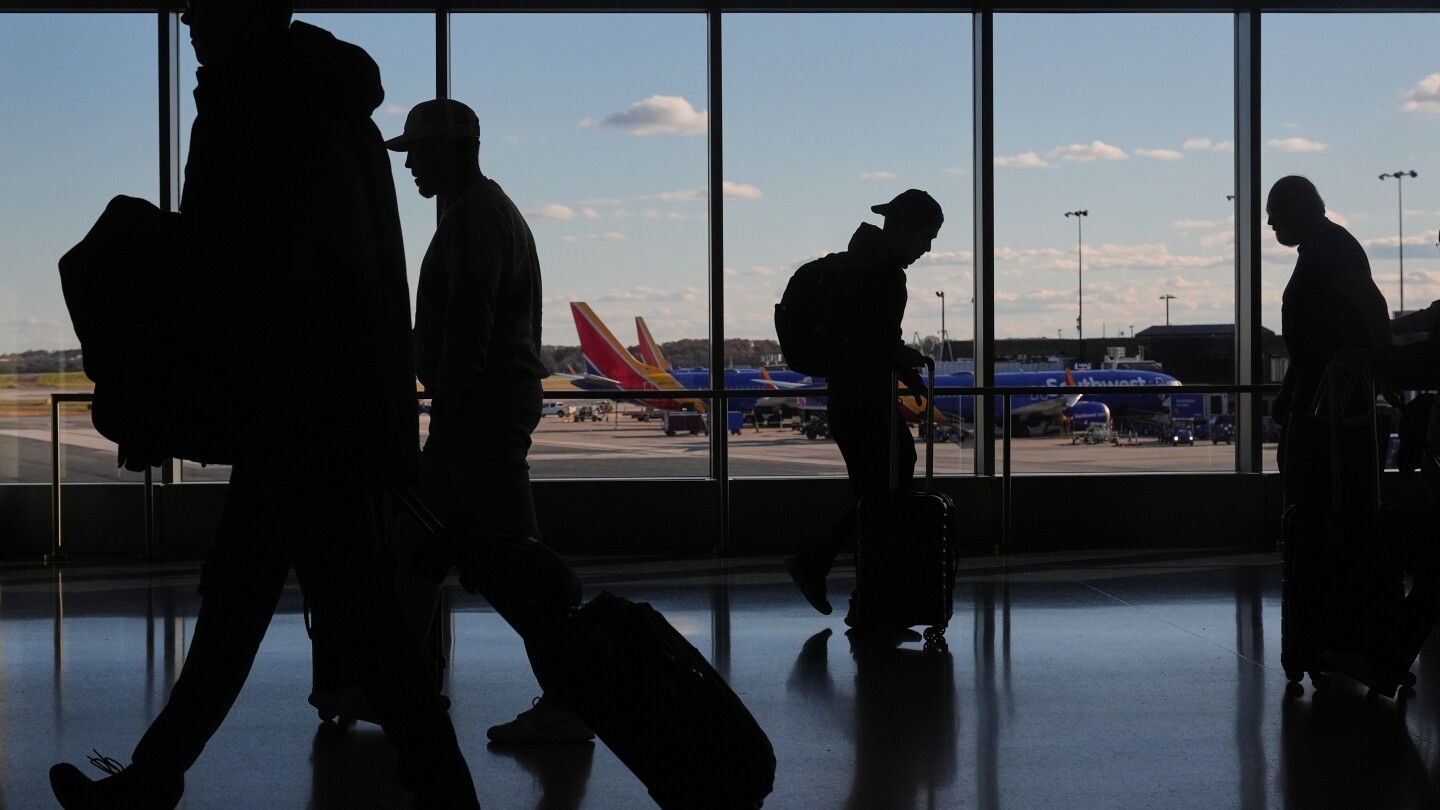
Air travelers across the United States face mounting disruptions as the Federal Aviation Administration escalates its flight reduction requirements amid ongoing staffing challenges caused by the government shutdown.
The FAA initially ordered domestic airlines to cut 4% of flights at 40 major U.S. airports last week, citing increasing absences and stress among air traffic controllers as a public safety concern. That reduction target is set to increase to 6% on Tuesday and will reach 10% by Friday, potentially leading to thousands more cancellations beyond the 7,900 flights already scrapped since Friday.
Aviation analytics company Cirium noted that airlines have actually exceeded the FAA’s initial reduction requirements in recent days. The agency has also expanded restrictions, now barring business jets and many private flights from using a dozen airports already under commercial flight limitations.
Controller shortages continue to cause significant delays nationwide. Chicago O’Hare International Airport experienced arrival delays of approximately five hours on Monday evening, exacerbated by wintry weather earlier in the day. The FAA warned that staffing shortages at over a dozen control towers and centers could delay departures to multiple major destinations including Phoenix, San Diego, New York, and Houston.
Weather conditions are further complicating travel plans, with freezing temperatures forecast for parts of the country on Tuesday potentially causing additional delays and cancellations.
While the Senate passed legislation Monday to reopen the government, the bill must still clear the House, meaning final passage could be days away. Transportation Secretary Sean Duffy has emphasized that flight reductions will remain in effect until the FAA observes stabilization in staffing levels at air traffic control facilities.
Industry experts point out that the disruptions could linger even after restrictions are lifted. Mike Taylor, who leads research on airports and airlines at J.D. Power, explained that many aircraft are not positioned where they need to be, which could delay airlines’ return to normal operations.
The human impact of these disruptions is significant. Todd Walker shared his experience of missing his mother’s 80th birthday due to a weekend flight cancellation. “All of this has real negative consequences for millions of Americans, and it’s 100% unnecessary and avoidable,” he said.
The FAA’s initial decision to apply restrictions to only a small subset of private planes drew criticism. The group Patriotic Millionaires, comprising wealthy Americans advocating for progressive taxation, has called for grounding all private jets during the shutdown. “Rich people are taking their joyrides while average Americans don’t make it to grandma’s bedside in time,” said Erica Payne, the organization’s founder and president. She noted that none of the group’s members who fly private have reported cancellations or delays since the FAA’s order took effect.
For air traffic controllers, Tuesday marks their second missed payday during this shutdown. Some have begun calling out of work, citing stress and the need to take second jobs to cope with their financial situation. Nick Daniels, president of the National Air Traffic Controllers Association, noted that during the 2019 shutdown, it took more than two months for controllers to receive full back pay after the government reopened.
President Donald Trump weighed in on the situation Monday via social media, urging controllers to “get back to work, NOW!!!” He proposed a $10,000 bonus for those who have remained on the job and suggested docking pay for those who haven’t.
Daniels countered that the shutdown has intensified the already demanding nature of controllers’ work, leading to increased fatigue and safety risks. He reported that the number of controllers retiring or quitting is “growing” daily, further straining an already stressed system.
As lawmakers work toward resolving the shutdown, millions of travelers remain caught in a web of uncertainty, facing potential disruptions to both business and personal travel plans in what has become one of the most significant aviation crises in recent years.
Fact Checker
Verify the accuracy of this article using The Disinformation Commission analysis and real-time sources.

21 Comments
Production mix shifting toward Business might help margins if metals stay firm.
Interesting update on Air travelers face frustration as FAA’s further drop in flights takes effect. Curious how the grades will trend next quarter.
Good point. Watching costs and grades closely.
I like the balance sheet here—less leverage than peers.
Good point. Watching costs and grades closely.
Exploration results look promising, but permitting will be the key risk.
Good point. Watching costs and grades closely.
Nice to see insider buying—usually a good signal in this space.
Good point. Watching costs and grades closely.
Exploration results look promising, but permitting will be the key risk.
Good point. Watching costs and grades closely.
Good point. Watching costs and grades closely.
Exploration results look promising, but permitting will be the key risk.
Good point. Watching costs and grades closely.
Good point. Watching costs and grades closely.
Silver leverage is strong here; beta cuts both ways though.
Good point. Watching costs and grades closely.
Interesting update on Air travelers face frustration as FAA’s further drop in flights takes effect. Curious how the grades will trend next quarter.
Uranium names keep pushing higher—supply still tight into 2026.
Good point. Watching costs and grades closely.
Silver leverage is strong here; beta cuts both ways though.