


Listen to the article
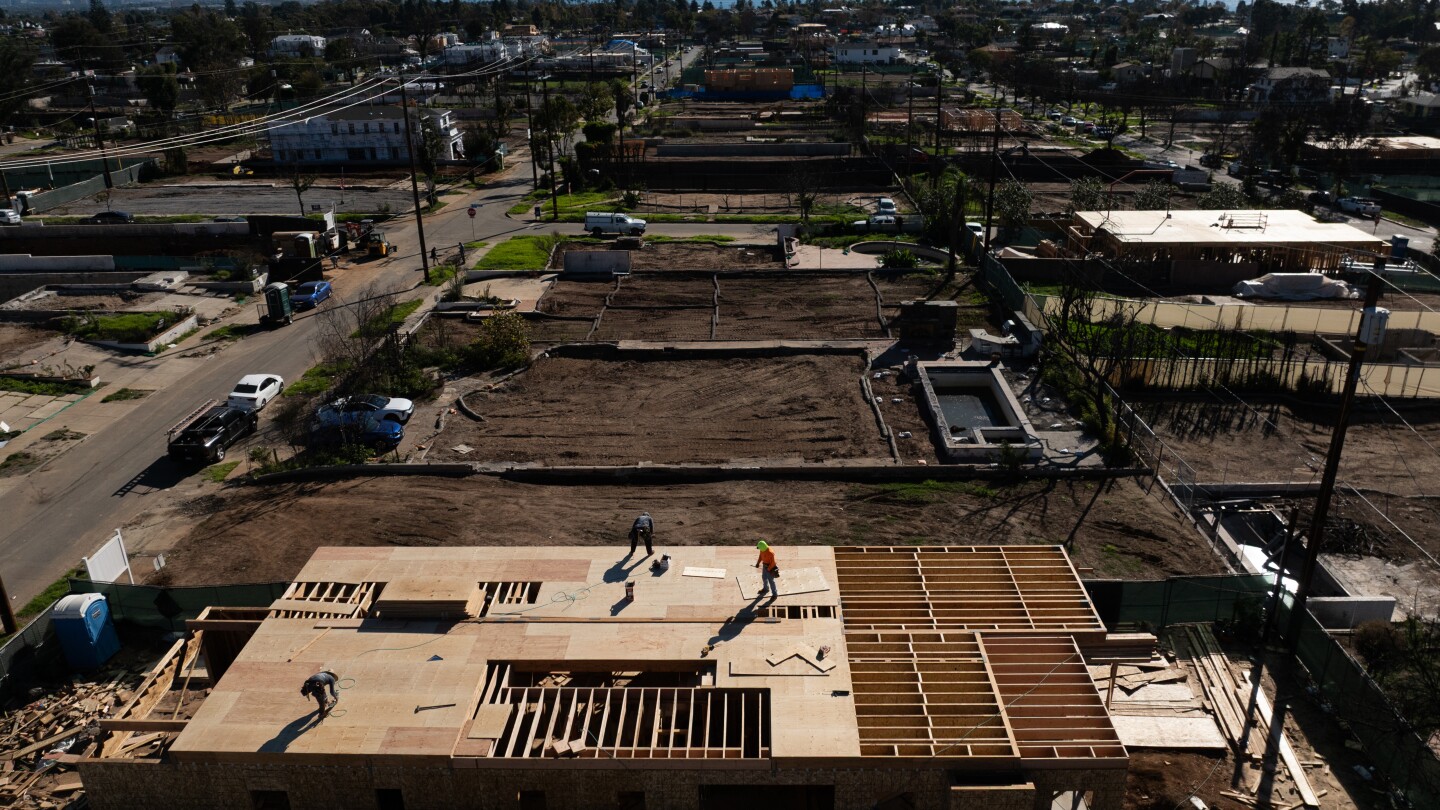
One year after the most destructive wildfires in Los Angeles County’s history, rebuilding efforts remain painfully slow across devastated communities. The landscapes of Pacific Palisades, Altadena, and Malibu largely remain scarred and empty, with fewer than a dozen homes fully reconstructed.
The Palisades and Eaton fires, which erupted on January 7, 2025, claimed 31 lives and destroyed approximately 13,000 homes and residential properties. Fueled by drought conditions and hurricane-force winds, the fires left widespread devastation that continues to challenge recovery efforts.
Ted Koerner stands as a rare exception in this slow-moving recovery. The 67-year-old Altadena resident liquidated about 80% of his retirement holdings to rebuild his home after it was reduced to ash and two chimneys. Unlike many victims, Koerner didn’t wait for insurance payments to begin construction, driven partly by concern for his 13-year-old golden retriever, Daisy Mae.
“That’s the only way we were going to get it done before all of a sudden my dog starts having labored breathing or something else happens,” Koerner explained. His home was completed in just over four months once construction began, allowing Daisy Mae to return to her favorite spot under a 175-year-old Heritage Oak. “We made it,” he said, emotion evident in his voice.
For most fire victims, however, the path forward remains unclear. Neighborhoods throughout affected areas remain eerily dark at night, with few streetlamps replaced. Many salvageable homes sit vacant as families struggle to clear toxic contaminants left by the fires.
About 900 homes are currently under construction, potentially on track for completion later this year. But the financial hurdles facing homeowners are substantial. Insurance payouts frequently fall short of rebuilding costs in California’s expensive construction market, leaving families with impossible financial gaps to bridge.
Joy Chen, executive director of the Eaton Fire Survivors Network, which represents 10,000 fire survivors mostly from Altadena, highlighted the widespread challenge. “We’re seeing huge gaps between the money insurance is paying out, to the extent we have insurance, and what it will actually cost to rebuild and/or remediate our homes.”
By December 2025, less than 20% of people who experienced total home loss had closed out their insurance claims, according to nonprofit Department of Angels. The survey revealed significant dissatisfaction with major insurers, particularly State Farm and the California FAIR plan, citing burdensome requirements and lowball estimates.
In November, Los Angeles County opened a civil investigation into State Farm’s practices, examining potential violations of California’s Unfair Competition law. Chen noted a recent surge in substantial payouts following the announcement of this investigation.
Jessica Rogers discovered only after losing her home that her insurance coverage had been canceled. The mother of two eventually secured a $550,000 low-interest loan from the Small Business Administration, but faces difficult decisions about financing the remaining costs.
“Do I empty out my 401(k) and start counting every penny in a penny jar around the apartment?” wondered Rogers, who now serves as executive director of the Pacific Palisades Long Term Recovery Group. She estimates hundreds of residents in her community face similar challenges, “stuck dealing with FEMA and SBA and figuring out if we could piecemeal something together to build our homes.”
The slow pace of rebuilding mirrors patterns seen after other major disasters. Andrew Rumbach, co-lead of the Climate and Communities Program at Urban Institute, noted similarities to the December 2021 Marshall Fire near Boulder, Colorado. “Around the 18-month mark is when you start to see really significant progress in terms of going from handfuls to hundreds” of homes rebuilt, he explained.
Rumbach warned that inequality in recovery efforts often becomes apparent in the second year following a disaster. “You’re going to start to see some real inequality emerge where certain neighborhoods, certain types of people, certain types of properties are just lagging way far behind.”
This concern is particularly acute in Altadena, a historically significant community for Black homeownership in the Los Angeles region. Before the fires, 81% of Black households in Altadena owned their homes, nearly twice the national Black homeownership rate. However, recent research from UCLA’s Latino Policy & Politics Institute found that, as of August, Black homeowners were 73% more likely than others to have taken no action toward rebuilding or selling damaged properties.
Despite the challenges, some residents remain determined to rebuild. Al and Charlotte Bailey, both in their 70s, have been living in an RV parked on the empty lot where their home of 41 years once stood. They’re financing their rebuild through insurance money, loans, and potential settlements from Southern California Edison, which faces lawsuits claiming its equipment sparked the Altadena fire.
“We decided that, whatever it’s going to cost, this is our community,” said Al Bailey, reflecting the resilience that will be needed as these communities continue their long journey toward recovery.
Fact Checker
Verify the accuracy of this article using The Disinformation Commission analysis and real-time sources.

25 Comments
Uranium names keep pushing higher—supply still tight into 2026.
I like the balance sheet here—less leverage than peers.
Good point. Watching costs and grades closely.
Silver leverage is strong here; beta cuts both ways though.
Good point. Watching costs and grades closely.
If AISC keeps dropping, this becomes investable for me.
Uranium names keep pushing higher—supply still tight into 2026.
Production mix shifting toward Business might help margins if metals stay firm.
Interesting update on A year after LA-area wildfires destroyed thousands of homes, fewer than a dozen have been rebuilt. Curious how the grades will trend next quarter.
Interesting update on A year after LA-area wildfires destroyed thousands of homes, fewer than a dozen have been rebuilt. Curious how the grades will trend next quarter.
Good point. Watching costs and grades closely.
Good point. Watching costs and grades closely.
Interesting update on A year after LA-area wildfires destroyed thousands of homes, fewer than a dozen have been rebuilt. Curious how the grades will trend next quarter.
Interesting update on A year after LA-area wildfires destroyed thousands of homes, fewer than a dozen have been rebuilt. Curious how the grades will trend next quarter.
Good point. Watching costs and grades closely.
Interesting update on A year after LA-area wildfires destroyed thousands of homes, fewer than a dozen have been rebuilt. Curious how the grades will trend next quarter.
Good point. Watching costs and grades closely.
Good point. Watching costs and grades closely.
Nice to see insider buying—usually a good signal in this space.
Good point. Watching costs and grades closely.
Exploration results look promising, but permitting will be the key risk.
Good point. Watching costs and grades closely.
Good point. Watching costs and grades closely.
Exploration results look promising, but permitting will be the key risk.
Good point. Watching costs and grades closely.