


Listen to the article
Ukraine’s President Optimistic About Revised Peace Plan as Diplomatic Efforts Intensify
Ukrainian President Volodymyr Zelenskyy expressed cautious optimism Monday about revisions to the Trump administration’s peace proposal for ending Russia’s nearly four-year war in Ukraine, saying “it looks better” following recent diplomatic discussions in Paris.
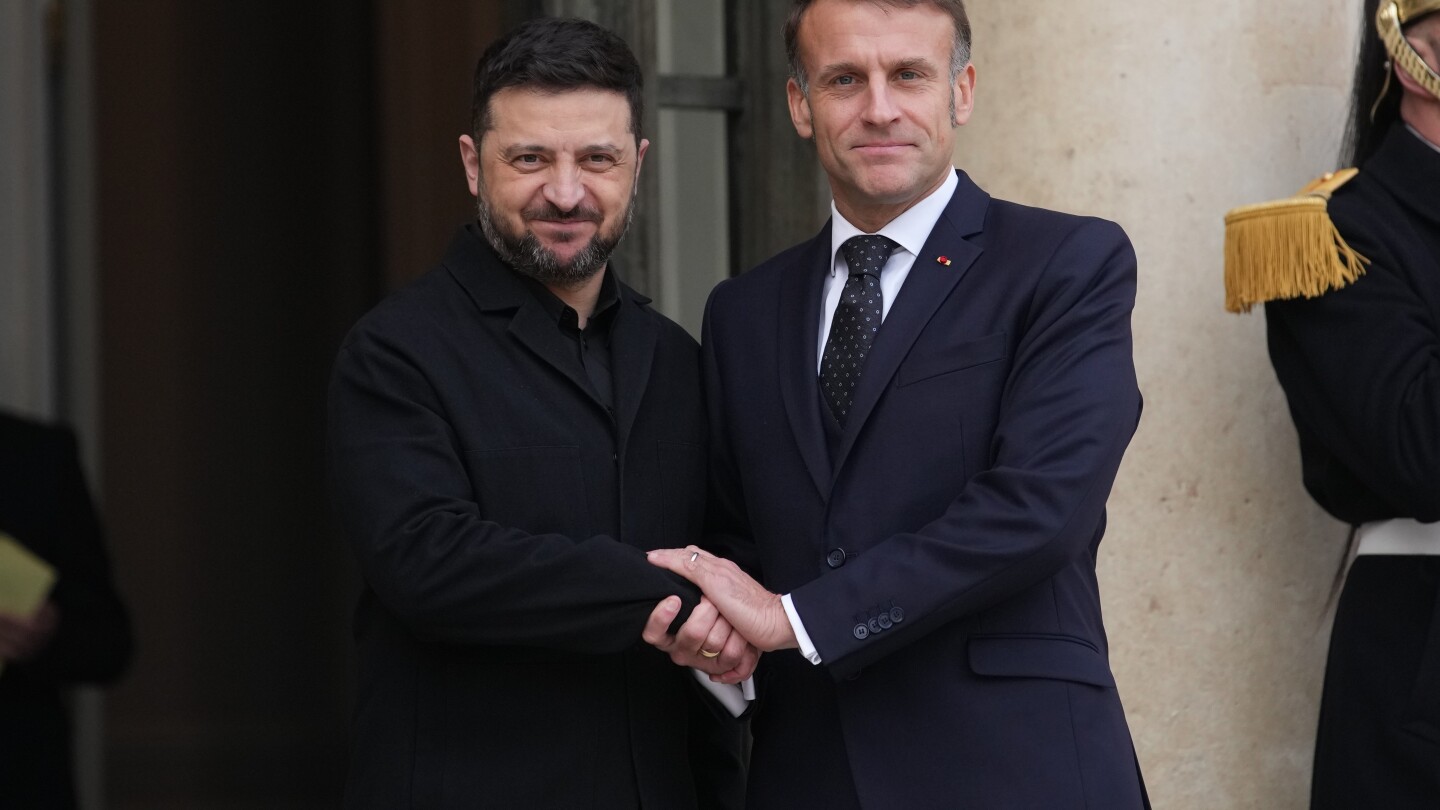
“It’s a process, it’s not over yet,” Zelenskyy said after meeting with French President Emmanuel Macron. He acknowledged that Ukraine’s territorial integrity remains “the most complicated” issue in ongoing negotiations over the plan, which has undergone significant revisions following criticism that it favored Russian demands.
The diplomatic momentum comes as multiple channels of communication have opened between key stakeholders. Russian President Vladimir Putin is scheduled to meet Tuesday with U.S. special envoy Steve Witkoff, whose role came under scrutiny last week following reports he had coached Putin’s foreign affairs adviser on how to pitch the peace plan to President Donald Trump.
Macron characterized the discussions as still in a “preliminary phase” but described the flurry of diplomatic activity as potentially “a turning point” for peace in Ukraine and European security. The French leader praised U.S. peace efforts while emphasizing that any final agreement must include European partners.
“Any peace plan can only be finalized with Europeans around the table,” Macron insisted.
The original U.S.-authored framework, which Trump now describes as a “concept” to be “fine-tuned,” faced widespread criticism for provisions that would have imposed limits on Ukraine’s military, blocked NATO membership, and required territorial concessions. After pushback from Ukraine and European allies, the administration has shown willingness to revise these terms.
Secretary of State Marco Rubio described Sunday’s meeting between Ukrainian and U.S. officials as productive. The discussions reflect ongoing efforts to balance Ukraine’s sovereignty concerns with the Trump administration’s desire to broker an end to the conflict.
European participation in security guarantees remains a critical component of any potential agreement. Macron has advocated for “rock-solid” security assurances for Ukraine, including a possible “reassurance force” deployed on land, sea and in the air to safeguard Ukraine’s security in case of a ceasefire or peace deal.
The French president said Monday that “crucial discussions” will take place in coming days between U.S. officials and Western partners to clarify American participation in security guarantees. His office confirmed that he and Zelenskyy held talks with leaders from Britain, Germany, Poland, Italy, Norway, Finland, Denmark, the Netherlands, as well as European Union and NATO officials.
Not all European officials share Macron’s optimistic outlook. EU foreign policy chief Kaja Kallas expressed concern that bilateral U.S.-Russia talks might ultimately pressure Ukraine to make unacceptable concessions. “I’m afraid that all the pressure will be put on the victim,” Kallas told reporters in Brussels after chairing an EU foreign and defense ministers meeting.
As diplomatic efforts accelerate, military actions continue on both sides. Russia condemned Ukrainian weekend strikes on Russian oil infrastructure, including an attack on a Caspian Pipeline Consortium terminal near Novorossiysk and strikes on two oil tankers in Turkish waters that Ukraine confirmed carrying out.
Kremlin spokesperson Dmitry Peskov described the incidents as “outrageous,” particularly noting that the CPC terminal is “an international facility” with multinational ownership.
Meanwhile, Russian forces reportedly destroyed 32 Ukrainian drones over 11 Russian regions and the Sea of Azov overnight. An apartment block was damaged in Kaspiysk in Russia’s Dagestan region, more than 1,000 kilometers from the front line.
In Ukraine, a Russian missile strike hit central Dnipro around midday Monday, killing four people and wounding 40 others, according to regional administration head Vladyslav Haivanenko. The attack damaged residential high-rises, an educational facility and a humanitarian organization’s storage facility.
Ukraine’s Air Force reported that Russia fired 89 strike and decoy drones overnight Sunday before the Dnipro attack, with Ukrainian forces successfully downing or jamming 63 drones. A monthly report released Monday indicated that throughout November, Russia launched 100 missiles of various types and 9,588 reconnaissance and strike drones into Ukraine.
As winter sets in across the region, the intensified diplomatic efforts represent potential progress toward ending Europe’s most significant armed conflict since World War II, though significant obstacles remain regarding territorial integrity, security guarantees, and implementation of any potential agreement.
Fact Checker
Verify the accuracy of this article using The Disinformation Commission analysis and real-time sources.

12 Comments
Zelenskyy’s cautious optimism is understandable given the complexity of this conflict. Maintaining momentum in the diplomatic process is crucial, even if progress is incremental.
Exactly. Small steps forward are better than stagnation, and keeping the lines of communication open increases the chances of a breakthrough.
Interesting to see Ukraine’s president strike an optimistic tone on the revised peace plan. Negotiations on territorial integrity will likely be the toughest hurdle, but any progress is encouraging.
Agreed. Finding a solution that satisfies both Ukraine and Russia on this sensitive issue will be crucial for any lasting peace.
While the peace plan revisions seem promising, the ultimate test will be whether they can address the core issues of Ukraine’s sovereignty and Russia’s security concerns. Careful diplomacy is clearly still needed.
Absolutely. Any sustainable solution will require nuanced compromises from all sides. The road ahead remains challenging, but continued dialogue offers hope.
The involvement of a U.S. special envoy like Steve Witkoff adds an interesting dynamic to the negotiations. His role will be closely watched for potential biases or conflicts of interest.
A fair point. Ensuring impartiality and transparency in the diplomatic process will be essential to building trust and credibility.
The intensifying diplomatic efforts between key stakeholders like Zelenskyy, Macron, and Putin’s adviser are a positive sign. Navigating the complexities of this conflict will require deft diplomacy.
Absolutely. With so many moving parts, maintaining open communication channels will be critical to bridging the gaps and finding common ground.
While the revised peace plan may look better, the devil will be in the details. Ukraine’s territorial integrity remains a major sticking point that will need to be addressed carefully.
That’s a fair point. Any agreement will need to balance Ukraine’s sovereignty with Russia’s security concerns in a way that both sides can accept.