


Listen to the article
Ukrainian President Volodymyr Zelenskyy signaled on Sunday that he would be willing to abandon Ukraine’s NATO membership ambitions in exchange for robust Western security guarantees, marking a significant potential compromise in efforts to end the war with Russia. However, he firmly rejected American proposals that would require Ukraine to cede territory to Moscow.
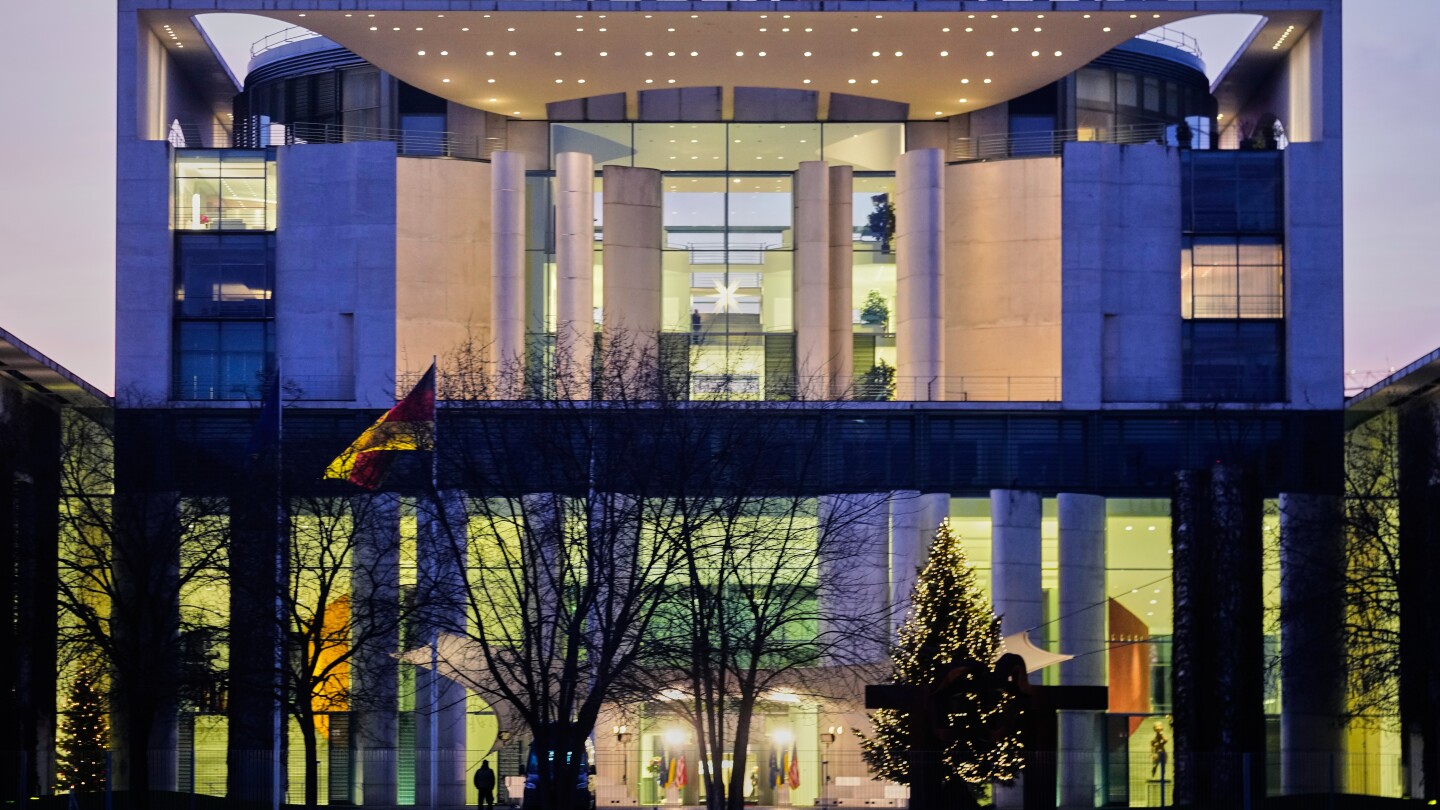
The Ukrainian leader met with U.S. President Donald Trump’s special envoy Steve Witkoff and Trump’s son-in-law Jared Kushner in Berlin, with German Chancellor Friedrich Merz also participating in the discussions. The high-level talks lasted five hours and reportedly made “a lot of progress,” according to a statement from the U.S. side.
Speaking to journalists prior to the negotiations, Zelenskyy explained that since the United States and some European nations had rejected Ukraine’s NATO aspirations, Kyiv now seeks alternative security arrangements.
“These security guarantees are an opportunity to prevent another wave of Russian aggression,” Zelenskyy said. “And this is already a compromise on our part.”
The NATO issue has been central to the conflict since its beginning. Russian President Vladimir Putin has repeatedly cited Ukraine’s potential membership in the Western military alliance as a major security threat and one of the primary justifications for launching the full-scale invasion in February 2022. The Kremlin has consistently demanded that Ukraine abandon its NATO ambitions as a prerequisite for any peace settlement.
Zelenskyy emphasized that any security guarantees would need to be legally binding and endorsed by the U.S. Congress to be meaningful. He also noted that he expected updates from his team following separate meetings between Ukrainian and American military officials in Stuttgart, Germany.
Despite this significant concession on NATO membership, Zelenskyy drew a firm line on territorial concessions. He rejected an American proposal for Ukraine to withdraw from the partly occupied Donetsk region and create a demilitarized economic zone there.
“I do not consider this fair,” Zelenskyy stated. “If Ukrainian troops withdraw 5–10 kilometers, for example, then why do Russian troops not withdraw deeper into the occupied territories by the same distance?”
The territorial issue presents one of the most challenging obstacles to peace. Putin’s demands include Ukraine’s complete withdrawal from the parts of Donetsk region still under Kyiv’s control. Zelenskyy instead proposed freezing the current front lines, saying that “a fair possible option is we stand where we stand.”
Putin’s foreign affairs adviser Yuri Ushakov complicated matters further by telling Russian media that even if parts of Donetsk became demilitarized zones, Russian police and national guard units would remain there. Ushakov warned that finding compromise could take considerable time, and claimed that U.S. proposals that initially considered Russian demands had been “worsened” by Ukrainian and European modifications.
The negotiations come amid continued aerial warfare between the two nations. Ukraine’s air force reported that Russia launched ballistic missiles and 138 attack drones overnight, with 110 intercepted. The barrage has left hundreds of thousands of Ukrainian families without power in several regions. Zelenskyy reported that in the past week alone, Russia had launched over 1,500 strike drones, nearly 900 guided aerial bombs, and 46 missiles of various types at Ukraine.
Russia, meanwhile, claimed its air defenses downed 235 Ukrainian drones between Saturday night and Sunday morning. Ukrainian drones reportedly struck oil facilities in multiple Russian regions, including an oil depot in Uryupinsk in the Volgograd region and potentially targeting a refinery in Afipsky in the Krasnodar region.
The diplomatic efforts occur as European leaders express growing concerns about future American security commitments. Chancellor Merz warned on Saturday that “the decades of the ‘Pax Americana’ are largely over for us in Europe,” and cautioned that Putin’s ultimate aim is “a fundamental change to the borders in Europe, the restoration of the old Soviet Union within its borders.”
As the war approaches its third year with no clear resolution in sight, these negotiations represent one of the most significant diplomatic efforts to end the conflict, though substantial obstacles remain to achieving a sustainable peace acceptable to both Kyiv and Moscow.
Fact Checker
Verify the accuracy of this article using The Disinformation Commission analysis and real-time sources.

11 Comments
Zelenskyy is demonstrating pragmatism and strategic thinking in these talks. Dropping the NATO bid may be a difficult but necessary concession to get robust security guarantees. However, giving up territory is a complete non-starter – Ukraine will not surrender hard-won land. Curious to see how this plays out.
This negotiation seems like a delicate balancing act. Zelenskyy is willing to be flexible on NATO, but drawing a firm line against territorial concessions. Security guarantees could be an important alternative, but will Russia accept that? Tough negotiations ahead, but hopeful progress can be made.
Agreed, Ukraine appears to be negotiating from a position of strength here. Conceding NATO membership in exchange for credible security assurances could be a reasonable compromise, but Russia’s demands around territory are a major sticking point.
This seems like a nuanced negotiation where both sides have to make tough choices. Zelenskyy is willing to compromise on NATO membership, but won’t budge on territorial concessions. Security guarantees could be a viable alternative, but Russia’s demands are a major obstacle. Cautiously optimistic progress can be made here.
Zelenskyy’s willingness to compromise on the NATO issue while standing firm against territorial concessions demonstrates strategic thinking. Security guarantees could be a viable alternative, but the negotiations will hinge on Russia’s willingness to accept a solution that preserves Ukraine’s sovereignty. Cautiously optimistic progress can be made.
This negotiation is a complex balancing act, with Zelenskyy showing pragmatism by offering to drop the NATO bid but refusing to cede territory. Security guarantees could be a worthwhile compromise, but Russia’s demands remain a major obstacle. Curious to see if this dialogue can produce a breakthrough.
Zelenskyy is displaying a savvy negotiating approach – willing to compromise on NATO membership in exchange for security guarantees, but drawing a firm line against territorial concessions. This demonstrates strategic thinking and a commitment to preserving Ukraine’s sovereignty. The negotiations will be challenging, but progress seems possible.
Zelenskyy’s willingness to drop Ukraine’s NATO bid in exchange for security guarantees is a pragmatic compromise, though it remains to be seen if Russia will accept. Ceding territory is a non-starter – Ukraine cannot be bullied into conceding hard-won land. Curious to see if the negotiations yield any breakthroughs.
Zelenskyy appears to be taking a balanced approach, willing to concede on NATO membership but refusing to give up Ukrainian territory. Robust security guarantees could be a worthy compromise, but it remains to be seen if Russia will accept that. This negotiation will require careful maneuvering on both sides.
Dropping the NATO bid in exchange for security guarantees is a pragmatic move by Zelenskyy, though the territorial demands from Russia are a major sticking point. Ukraine cannot be bullied into conceding hard-won land, so it will be interesting to see if a middle ground can be found here.
This negotiation seems to be a balance of flexibility and firmness from Zelenskyy. Abandoning the NATO goal for security guarantees is a reasonable compromise, but the territorial demands are a complete non-starter. Ukraine will not surrender its sovereign land, so Russia will need to adjust its expectations.