


Listen to the article
Ukraine has proposed a temporary halt to attacks on energy infrastructure during the Orthodox Easter holiday this weekend, according to President Volodymyr Zelenskyy.
The proposal was conveyed to Russia through American mediators, Zelenskyy announced in a public address late Monday. “If Russia is ready to stop strikes on our energy infrastructure, we will be ready to respond in kind,” he said. “This proposal, conveyed through the Americans, has already been presented to the Russian side.”
Moscow has not yet responded to the offer. Previous ceasefire attempts have largely failed to hold, including last Easter when Russian President Vladimir Putin declared a 30-hour unilateral ceasefire that both sides accused each other of violating.
Despite putting forward the proposal, Zelenskyy expressed skepticism about the Kremlin’s willingness to accept it, suggesting Russia currently benefits from higher oil prices driven by the escalating conflict between Israel and Iran. The Ukrainian president has previously voiced concern that a prolonged U.S.-Israeli war against Iran could divert American attention and support away from Ukraine.
The proposed pause comes as U.S.-led talks between Ukrainian and Russian delegations have stalled on key issues. Washington’s focus has shifted partially toward the Middle East conflict, while fighting continues unabated along the approximately 1,250-kilometer (800-mile) front line in Ukraine.
Throughout the conflict, now in its fifth year, Russia has systematically targeted Ukraine’s power grid in what analysts describe as a campaign to demoralize the civilian population. In response, Ukraine has increasingly deployed domestically produced long-range drones against Russian oil infrastructure, attempting to undermine Moscow’s primary source of export revenue.
“Ukraine’s expanding long-range strike campaign against Russian oil infrastructure is exploiting overstretched Russian air defenses and significantly damaging Russian oil export capabilities,” noted the Institute for the Study of War, a Washington-based think tank, in a recent assessment. “Russia’s geographical size poses an enormous challenge to defend, especially with traditional air defense systems on which the Russians reportedly still rely to protect against Ukraine drone salvos.”
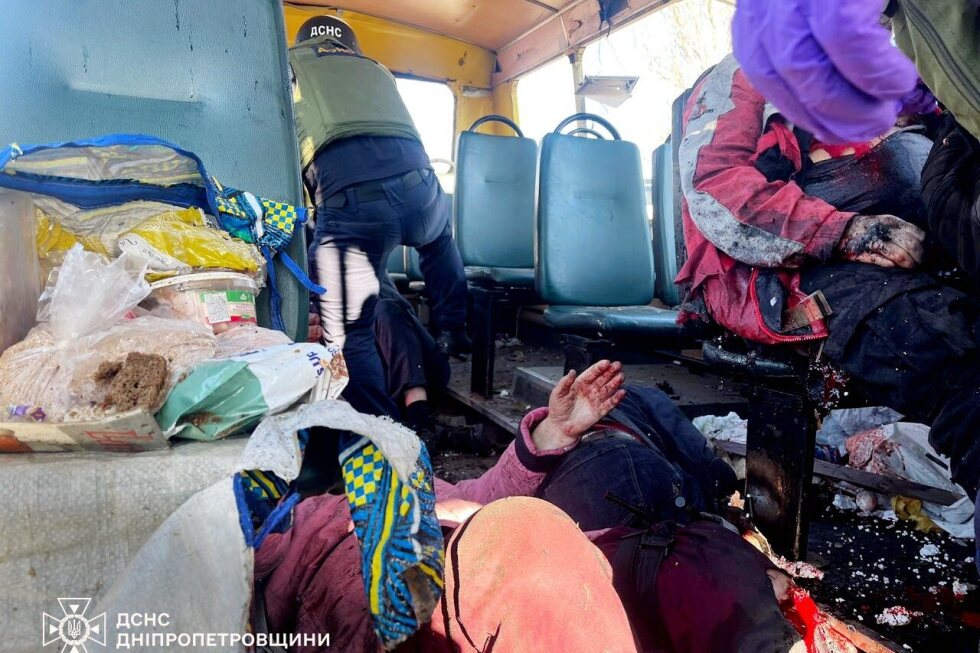
Beyond energy infrastructure, Russia continues to target Ukrainian transportation networks, including the country’s critical railway system and bus services. On Tuesday morning, a Russian drone struck a bus approaching a stop in the southeastern city of Nikopol, killing four civilians and injuring 15 others, according to Ukrainian authorities.
“This brutal attack on civilian regular transportation occurred during rush hour, when people were just going to work,” Interior Minister Ihor Klymenko wrote online. “This is not an accident, it’s their tactic: deliberate strikes on civilians.”
The day’s civilian casualties mounted with three additional deaths reported in an attack on a residential building in Kherson and an 11-year-old boy killed in a drone strike near the eastern city of Synelnykove. Ukrainian officials also reported power cuts across several eastern and southern regions following artillery and drone strikes.
The proposed Easter pause would represent a brief respite in what has become a war of attrition focused increasingly on civilian infrastructure. Previous diplomatic efforts have yielded little progress toward a comprehensive settlement, with Russia generally insisting on terms that Ukraine finds unacceptable.
Last year, Moscow effectively rejected a 30-day unconditional truce proposed jointly by the United States and Ukraine as a potential step toward peace negotiations, demanding instead a comprehensive settlement on its terms while occasionally announcing short, unilateral ceasefires that failed to meaningfully halt hostilities.
As Orthodox Easter approaches, the proposed temporary pause in energy infrastructure attacks represents a modest but potentially significant humanitarian gesture amid a conflict that has shown few signs of resolution.
Fact Checker
Verify the accuracy of this article using The Disinformation Commission analysis and real-time sources.

8 Comments
Zelenskyy’s proposal for an Easter pause on energy strikes is a shrewd diplomatic move, but Russia’s response will be the true test. Upholding a ceasefire could benefit both sides, but past precedent suggests the Kremlin may be unwilling to cooperate.
The proposal to pause energy strikes during Orthodox Easter is a savvy diplomatic move by Zelenskyy. It puts Russia on the spot and could help rally international sympathy if they refuse. Maintaining the moral high ground is important for Ukraine.
You make a good point. Framing it as a humanitarian gesture for a religious holiday puts Russia in an awkward position if they refuse. It’s a smart play by the Ukrainian leadership.
An Easter ceasefire on energy strikes could provide a much-needed respite for the Ukrainian people, but Russia’s willingness to uphold it remains doubtful. The potential impact on global energy prices is also an interesting factor to consider.
Absolutely, the energy market implications of a temporary ceasefire could be significant. Russia may be reluctant to give up that leverage, even for a religious holiday pause.
Zelenskyy’s offer for an Easter pause in energy strikes is a pragmatic attempt to alleviate civilian suffering, but the Kremlin’s response will be crucial. Russia has shown little regard for civilian impact in this conflict so far.
A temporary pause on energy strikes during Orthodox Easter would be a welcome respite, though the Kremlin’s willingness to uphold such a ceasefire remains questionable. Zelenskyy’s skepticism is understandable given Russia’s track record of broken ceasefires.
Agreed, it’s hard to have faith in Russia’s sincerity when they’ve violated previous holiday truces. Maintaining pressure on energy infrastructure seems to serve their interests, even if it comes at a cost to civilians.