


Listen to the article
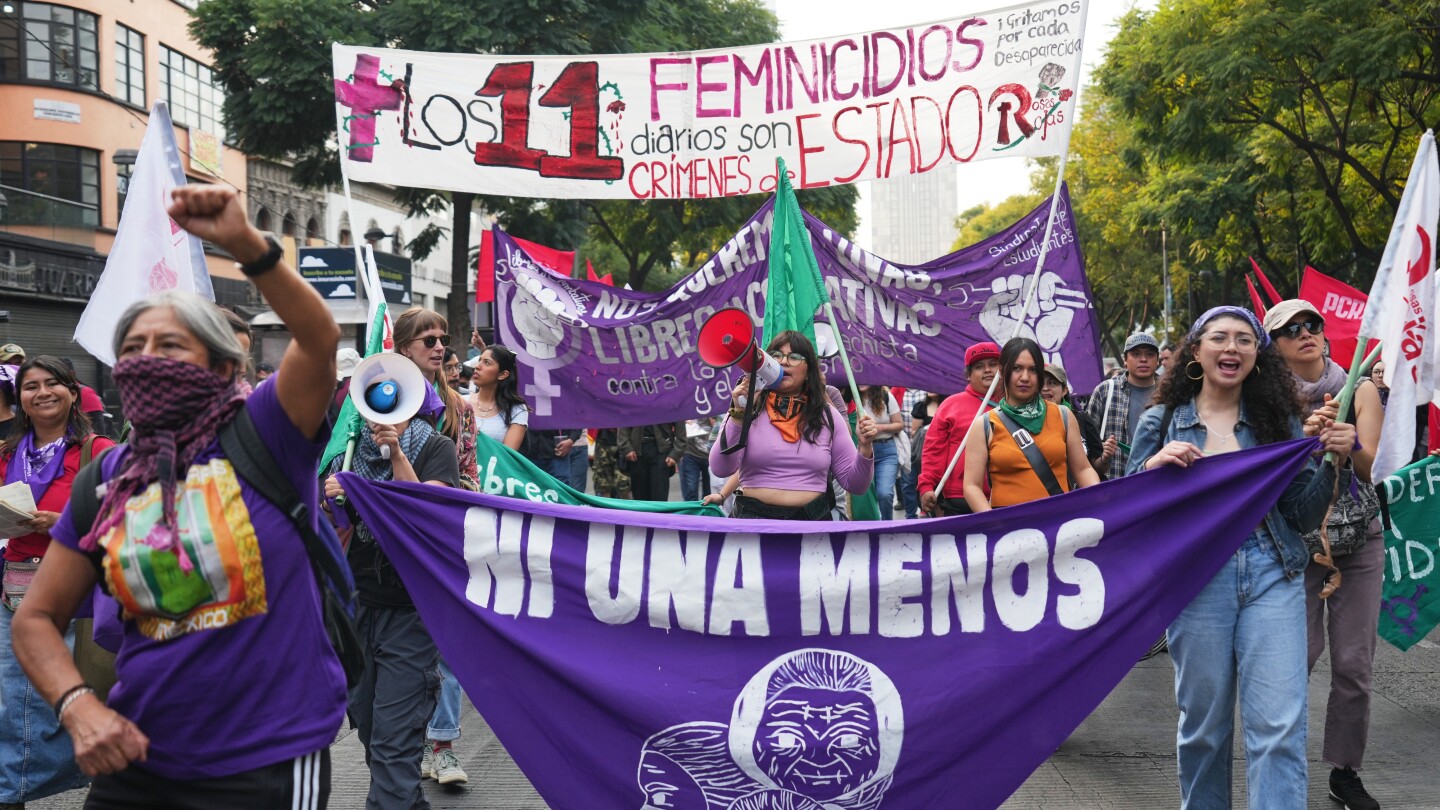
Hundreds of women took to the streets of Mexico City on Tuesday in a powerful demonstration against gender violence, highlighting a persistent issue that continues to plague Mexican society despite recent political progress.
The march, coinciding with the International Day for the Elimination of Violence Against Women, saw participants dressed in symbolic purple attire or wearing green bandanas, many beating drums and carrying signs with messages like “Today I am the voice of those who are asking for help.”
Alin Rocha, a 41-year-old teacher who participated in the demonstration, expressed deeply personal motivations for joining the protest. “I am here for my grandmother, for my mother, for all of the women who aren’t here anymore, for all the women who report violence and aren’t supported,” she told reporters amid the crowd of marchers.
The protest comes at a significant moment in Mexico’s history, with President Claudia Sheinbaum, the country’s first female leader, now in office. Her election last year was widely viewed as a potential turning point for women’s rights in the nation. However, the persistent nature of gender violence was starkly illustrated when Sheinbaum herself became a victim earlier this month, being groped by an intoxicated man while walking in Mexico City’s historic center.
On the same day as the march, Sheinbaum convened governors from all 32 Mexican states to discuss progress on legislation that would make sexual harassment a crime throughout the country. “Changing the laws is not enough, but it is necessary,” the president acknowledged, signaling her administration’s commitment to addressing the issue through legal reform.
Despite these efforts, many protesters expressed skepticism about meaningful change. Miriam González, a 41-year-old doctor attending the march, voiced her disappointment, stating that even though a woman had ascended to the presidency, “nothing has changed” regarding the treatment of women in Mexican society.
The scope of gender violence in Mexico remains alarming. According to data from the National Institute of Statistics and Geography, 70% of Mexican women and girls over the age of 15 reported experiencing some form of violence as of 2021, with nearly half of these incidents being sexual in nature. These statistics underscore the entrenched nature of the problem despite increasing awareness and advocacy.
Mexico has long struggled with high rates of femicide – the killing of women because of their gender – and other forms of gender-based violence. Activists have consistently demanded more robust protections for women and accountability for perpetrators, often expressing frustration with what they perceive as insufficient action from authorities.
The protest in Mexico City is part of a broader movement across Latin America, where women’s rights activists have been increasingly vocal and visible in recent years. Similar demonstrations occur regularly in countries like Argentina, Chile, and Colombia, often using shared symbols like the green bandanas seen in Tuesday’s march, which have become associated with the fight for women’s rights across the region.
The persistence of gender violence despite having a female president highlights the complex, systemic nature of the problem, which extends beyond symbolic representation in government to deeply rooted cultural attitudes and institutional practices.
As the march concluded, organizers vowed to continue pressing for comprehensive reforms, including better implementation of existing laws, increased resources for survivors, and educational initiatives aimed at changing societal attitudes toward women.
Fact Checker
Verify the accuracy of this article using The Disinformation Commission analysis and real-time sources.

7 Comments
It’s encouraging to see women in Mexico taking a stand against the pervasive issue of gender violence. Raising awareness and demanding change is crucial to addressing this systemic problem. I hope this march leads to meaningful progress and better support for victims.
The symbolism of the purple attire and green bandanas worn by the marchers is a powerful visual representation of this movement. It’s crucial that these public demonstrations continue to apply pressure for meaningful change, both in Mexico and globally.
Absolutely. The persistence of gender violence, even at the highest levels of government, shows how much work remains to be done. I hope this march galvanizes further activism and policy reforms to address the root causes and provide justice for victims.
The courage and determination of the protesters is admirable. Gender-based violence is a global scourge that requires coordinated, multi-faceted solutions. I hope this march in Mexico City inspires similar movements around the world to demand safer, more equitable communities for all.
The personal stories shared by participants like Alin Rocha underscore the deeply human toll of gender violence. It’s heartbreaking to hear of the pain and loss experienced by so many women. This protest is an important step, but much more work is needed to create a safer, more equitable society.
I agree. The fact that the country’s first female president has also faced violence highlights how entrenched this issue is. I hope her leadership can inspire and guide the necessary reforms to better protect women’s rights and safety.
While the election of Mexico’s first female president was a significant milestone, it’s clear that entrenched cultural and institutional barriers to gender equality remain. This march is an important reminder that progress requires sustained, collective action from all parts of society.