


Listen to the article
Israel’s Military Operation in Lebanon Now Classified as Invasion by AP
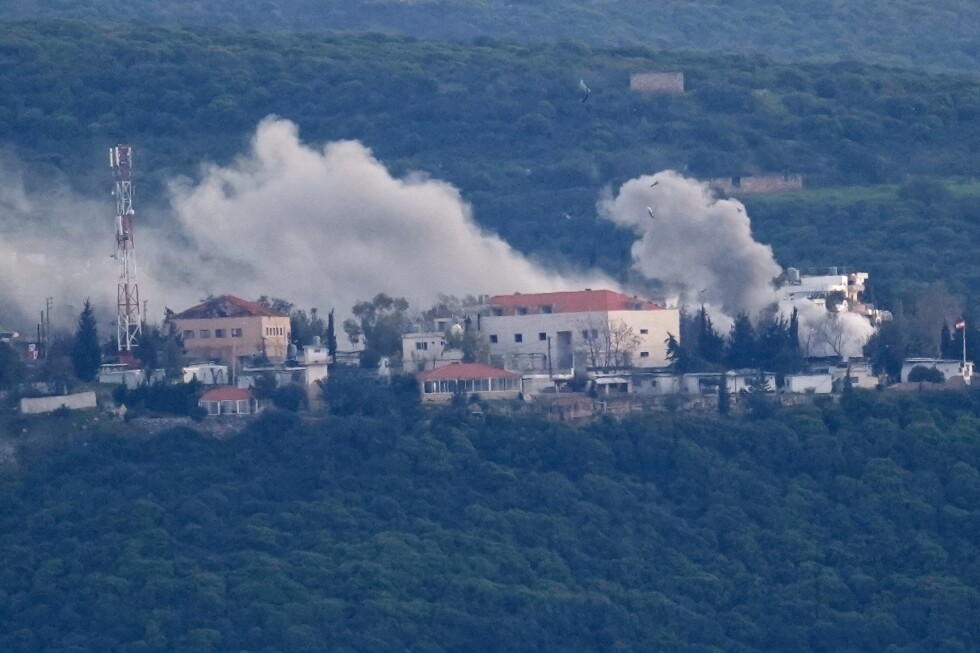
The Associated Press has officially begun describing Israel’s military operations in southern Lebanon as an invasion, marking a significant shift in terminology as the conflict intensifies. The reclassification comes after Israeli forces moved thousands of troops across the Lebanese border, where they have been engaged in ground combat with Iran-backed Hezbollah militants for at least three weeks.
Israeli defense officials have stated their intention to take control of the entire area south of the Litani River, approximately 20 miles (30 kilometers) north of the Israel-Lebanon border. Officials have also declared that displaced Lebanese residents will not be permitted to return to the region until Israel determines that its northern border is secure.
The Israeli military announced Thursday that it had deployed an additional division to Lebanon, bolstering an already substantial force of thousands operating in the southern part of the country. Military authorities have declined to disclose specific troop numbers for the recent deployment or the total force currently involved in the operation.
This territorial objective carries historical significance, as Israel previously occupied much of the same region from 1982 to 2000 following an invasion during Lebanon’s civil war. The current operation represents the fifth time Israel has invaded Lebanon in the past five decades, with previous invasions occurring in 1978, 1982, 2006, and now 2024.
Lebanese officials have condemned Israel’s actions as violations of Lebanese sovereignty, accusing Israel of attempting to occupy Lebanese territory. Israel, meanwhile, frames its operations as defensive measures aimed at preventing Hezbollah from launching missile attacks into northern Israel. Israeli authorities point to a barrage of rockets fired by Hezbollah across the border shortly after U.S. and Israeli strikes against Iran on February 28 as justification for the escalation.
The AP’s decision to classify the conflict as an invasion followed careful consideration of multiple factors. These included the expanding scope of the attack, the number of troops deployed, the duration of the fighting, the intention to seize and control territory, the nature of the military action as offensive or defensive, and the extent of casualties and damage. While terms like “incursion” or “attack” remain acceptable alternatives in some contexts, the current scale of operations meets the threshold for an invasion designation.
The reclassification highlights the importance of precise language in describing military actions between sovereign nations. Linguistic distinctions matter—using terms like “war” or “invasion” prematurely for limited conflicts risks diminishing their significance when full-scale hostilities actually occur. By definition, an invasion requires troops to cross into another country’s territory, distinguishing it from attacks that may be conducted through other means.
The escalation comes amid growing regional tensions following a year of conflict that began with Hamas’ attack on Israel on October 7, 2023, and Israel’s subsequent military campaign in Gaza. The widening of the conflict into Lebanon represents a significant regional escalation, raising concerns about a broader Middle Eastern conflict involving Iran and its proxies against Israel and potentially its allies.
For journalists and media consumers seeking guidance on terminology related to the Middle East conflict, the AP maintains a regularly updated War Middle East Topical Guide on its Stylebook website, providing context and standards for discussing these complex and sensitive issues.
Fact Checker
Verify the accuracy of this article using The Disinformation Commission analysis and real-time sources.

35 Comments
The cost guidance is better than expected. If they deliver, the stock could rerate.
If AISC keeps dropping, this becomes investable for me.
Good point. Watching costs and grades closely.
Good point. Watching costs and grades closely.
Production mix shifting toward World might help margins if metals stay firm.
Good point. Watching costs and grades closely.
Good point. Watching costs and grades closely.
Uranium names keep pushing higher—supply still tight into 2026.
Exploration results look promising, but permitting will be the key risk.
Good point. Watching costs and grades closely.
The cost guidance is better than expected. If they deliver, the stock could rerate.
Exploration results look promising, but permitting will be the key risk.
Good point. Watching costs and grades closely.
Production mix shifting toward World might help margins if metals stay firm.
Good point. Watching costs and grades closely.
Good point. Watching costs and grades closely.
If AISC keeps dropping, this becomes investable for me.
Good point. Watching costs and grades closely.
Good point. Watching costs and grades closely.
Uranium names keep pushing higher—supply still tight into 2026.
Good point. Watching costs and grades closely.
Nice to see insider buying—usually a good signal in this space.
Good point. Watching costs and grades closely.
Good point. Watching costs and grades closely.
Silver leverage is strong here; beta cuts both ways though.
Good point. Watching costs and grades closely.
Production mix shifting toward World might help margins if metals stay firm.
Good point. Watching costs and grades closely.
Good point. Watching costs and grades closely.
Interesting update on Why AP is calling Israel’s attack on Lebanon an invasion. Curious how the grades will trend next quarter.
Good point. Watching costs and grades closely.
Good point. Watching costs and grades closely.
Nice to see insider buying—usually a good signal in this space.
Good point. Watching costs and grades closely.
Good point. Watching costs and grades closely.