


Listen to the article
Iran Names Son of Late Supreme Leader as Successor Amid Escalating Regional Conflict
Iran has appointed Mojtaba Khamenei, son of its late supreme leader, as his successor, marking a significant power transition during an ongoing regional conflict. U.S. President Donald Trump has already expressed disapproval, calling the younger Khamenei “unacceptable” as the Islamic Republic’s war strategy gains a new commander. The influential Revolutionary Guard has promptly pledged allegiance to the new leader.
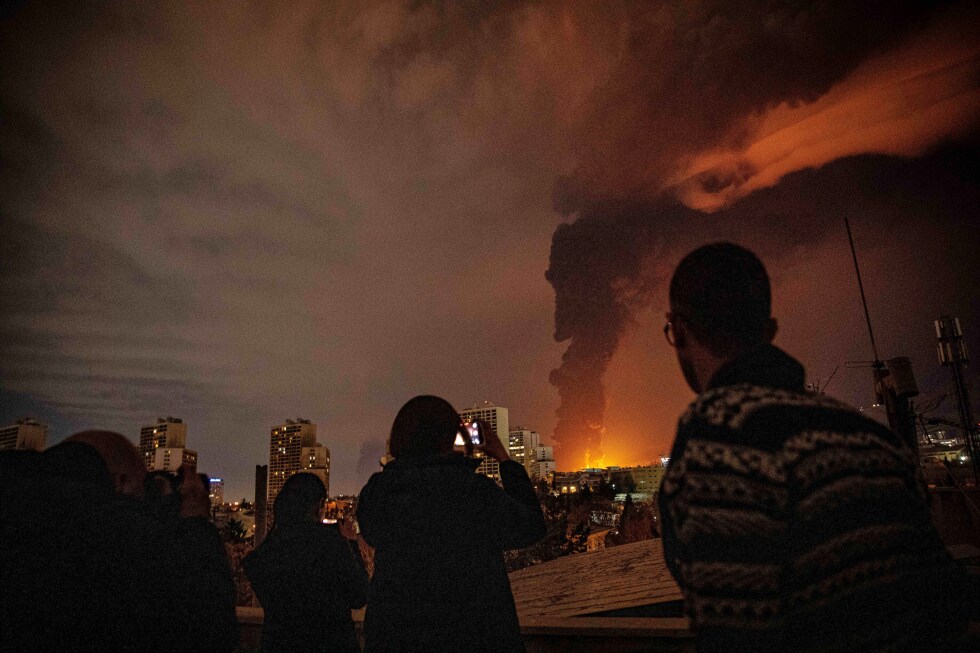
Oil markets reacted dramatically to the news, with prices surging above $100 a barrel as hostilities intensified over the weekend. Both sides launched fresh attacks, including strikes against civilian targets. Bahrain accused Iran of targeting one of its critical desalination plants, essential for providing drinking water throughout Gulf countries. In response, Israel conducted strikes against oil depots in Tehran, generating thick smoke and triggering environmental alerts across the Iranian capital.
The human toll continues to mount. The United States confirmed another soldier’s death, bringing their total casualties to seven. Saudi Arabia reported its first fatalities – an Indian citizen and a Bangladeshi national killed by falling military projectiles. Anger has intensified across Arab nations as Iran launched hundreds of missiles and drones throughout the region, prompting Israel’s military chief of staff to warn that the conflict “will take a long time.”
Iran’s leadership appears increasingly divided as the war enters its tenth day. President Masoud Pezeshkian apologized for attacks on neighboring countries, but hardliners swiftly criticized this conciliatory gesture and insisted the war strategy would continue unabated.
The new supreme leader has maintained a low profile since hostilities began, making no public appearances or statements in his new role. Mojtaba Khamenei inherits not only the ongoing conflict but also significant domestic unrest following Iran’s recent crackdown on some of the largest protests the country has experienced in half a century. Iranian officials have not updated the death toll beyond the previously reported 1,200, while some citizens continue to flee the country.
Israel has intensified operations against both Iran and Iranian-backed Hezbollah in Lebanon, where authorities report over half a million people displaced and more than 300 killed. Israeli Prime Minister Benjamin Netanyahu promised “many surprises” in the next phase of the war, claiming his forces have destroyed the Revolutionary Guard Air Force headquarters responsible for ballistic missile command and targeted missile production facilities.
Inside Israel, eleven people have died since the conflict began. Warning sirens continue to sound multiple times daily across the country as incoming projectiles – most intercepted by defense systems – approach Israeli territory.
The United States military has warned Iranian civilians to remain indoors, claiming Iran is launching attacks from densely populated areas. Evidence continues to emerge suggesting U.S. involvement in a controversial strike on a girls’ school in Iran during the war’s first day, though Trump has suggested Iran bears responsibility.
Families of U.S. detainees in Iran have expressed growing concern for their loved ones’ safety amid the escalating conflict. Military analysts note that Iran may be strategically conserving some of its missile arsenal, as the rate of launches has declined sharply according to U.S. military reports.
Regional impact continues to spread beyond the primary combatants. The head of the Arab League condemned Iran’s war strategy as “reckless” as Gulf nations and others report intercepting Iranian missiles and drones in areas without U.S. military presence. Kuwait reported two border guards killed, while the United Arab Emirates confirmed a driver’s death. Foreign residents and workers constitute most of the reported casualties in Gulf states, with over a dozen fatalities recorded.
The economic repercussions are being felt globally. The U.S. government has attempted to reassure Americans that surging fuel prices represent only a temporary problem, while Russia appears to be profiting from the price surge. Travel disruptions persist throughout the Middle East, with the U.S. State Department reporting that over 32,000 Americans have evacuated the region since fighting began.
Major travel hubs remain on high alert. Passengers at Dubai International Airport were moved to train tunnels after explosions were heard nearby, while Kuwait reported drone attacks targeting fuel tanks at Kuwait International Airport.
The conflict’s scope continues to widen, with Ukrainian President Volodymyr Zelenskyy announcing plans to send experts to advise U.S. and Middle Eastern allies on countering Iranian drone attacks in the coming week.
Fact Checker
Verify the accuracy of this article using The Disinformation Commission analysis and real-time sources.

5 Comments
With rising oil prices, this conflict could have major implications for the global economy. I hope the key players can find a way to de-escalate and return to the negotiating table. Maintaining stability in the region should be the top priority at this critical juncture.
This is a rapidly evolving situation with high stakes for the entire region. I’m curious to see how other major powers like the U.S., Russia, and China respond and whether they can exert influence to end the hostilities. The potential for further escalation is deeply concerning.
This conflict appears to be escalating rapidly, with both sides ratcheting up military actions. The power transition in Iran is an ominous sign, as the new leader may pursue an even more aggressive regional strategy. The impact on oil markets and civilian infrastructure is very concerning.
The toll on human lives is tragic. I hope diplomacy can prevail to deescalate the situation before more are lost. The regional instability is worrying, and I fear the economic fallout could be severe if this conflict continues to intensify.
The involvement of Iran, Israel, and other Gulf countries makes this a complex geopolitical situation. I wonder what role the international community can play to broker a ceasefire and push for a diplomatic resolution. The environmental impact of the strikes is also deeply troubling.