


Listen to the article
Iranian-backed Houthi rebels claimed responsibility for a missile launch toward Israel early Saturday, marking their first attack since the outbreak of the Middle East war. Israeli military officials confirmed they intercepted the projectile.
The conflict, now reaching its one-month milestone, began after the United States and Israel struck Iran, which responded with attacks against Israel and neighboring Gulf Arab states. The war has severely disrupted global air travel, hampered oil exports, and caused fuel prices to spike worldwide. Iran’s control over the strategically vital Strait of Hormuz has further amplified the economic consequences of the conflict.
On Friday, Israel struck Iran’s nuclear facilities after threatening to “escalate and expand” its campaign against Tehran. Iran promptly vowed retaliation and launched an attack on a base in Saudi Arabia, wounding more than two dozen U.S. service members and damaging aircraft.
Before Saturday’s missile launch, there appeared to be a potential diplomatic breakthrough when Tehran agreed to allow humanitarian aid and agricultural shipments through the Strait of Hormuz.
The Houthis’ military spokesman, Brig. Gen. Yahya Saree, announced the attack in a statement broadcast on the rebels’ Al-Masirah satellite television. He claimed the group fired multiple ballistic missiles targeting “sensitive Israeli military sites” in southern Israel. The attack followed a vague statement by Saree on Friday suggesting the rebels would join the war.
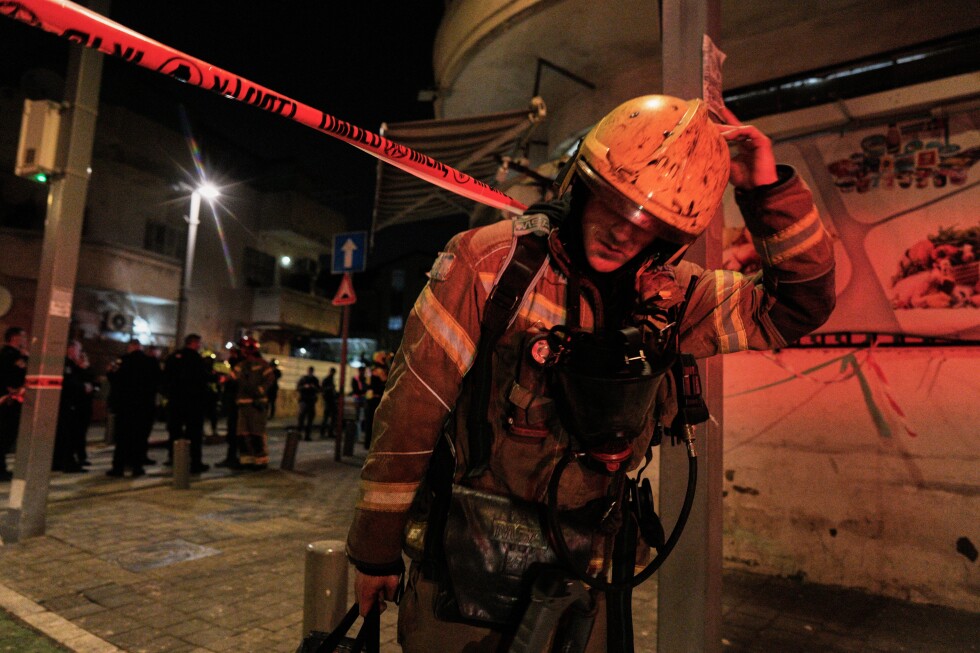
Air raid sirens sounded around Israel’s southern city of Beer Sheba and the area near Israel’s main nuclear research center as Iran and Hezbollah continued to fire on Israel overnight. Loud explosions were reported in Tel Aviv, with Israel’s Fire and Rescue Service responding to 11 different impact sites across the metropolitan area.
The Houthi attack raises questions about whether the rebels will resume targeting commercial shipping in the Red Sea corridor, as they did during the Israel-Hamas war. Those previous attacks severely disrupted shipping routes through the Red Sea, which normally handles approximately $1 trillion worth of goods annually.
The Houthis have controlled Yemen’s capital, Sanaa, since 2014 and had maintained an uneasy ceasefire with Saudi Arabia, which launched a military campaign against the group in 2015 on behalf of Yemen’s exiled government.
U.S. troops have been increasingly affected by the expanding conflict. According to sources familiar with the situation, more than two dozen American troops have been wounded in Iranian attacks on Saudi Arabia’s Prince Sultan Air Base in the past week alone. Friday’s attack, involving six ballistic missiles and 29 drones, injured at least 15 troops, with five suffering serious wounds. The base, located about 60 miles from Riyadh, came under attack twice earlier in the week, including a strike that wounded 14 U.S. service members.
Diplomatic efforts continue amid the escalating violence. President Trump claimed that peace talks were progressing “very well” and stated he had given Tehran until April 6 to reopen the Strait of Hormuz. Iran, however, maintains it has not engaged in any negotiations.
With economic consequences extending far beyond the Middle East, Trump faces mounting pressure to end Iran’s blockade of the strait. Pakistan announced that top diplomats from Saudi Arabia, Turkey, and Egypt will arrive in Islamabad on Sunday for a two-day visit aimed at de-escalating regional tensions.
The U.S. reportedly delivered a 15-point “action list” to Iran for a possible ceasefire, including proposals to restrict Iran’s nuclear program and reopen the strait. Tehran rejected this proposal and presented its own five-point plan demanding reparations and recognition of its sovereignty over the waterway.
Meanwhile, U.S. military forces continue to build up in the region. Ships carrying approximately 2,500 Marines are approaching the area, and at least 1,000 paratroopers from the 82nd Airborne Division have been deployed to the Middle East. Secretary of State Marco Rubio asserted that the U.S. “can achieve all of our objectives without ground troops.”
The war’s death toll continues to rise. Iranian authorities report more than 1,900 people killed in their country, while 19 deaths have been confirmed in Israel. In Lebanon, where Israel has launched a southern invasion, officials say more than 1,100 people have died since the conflict began. The U.S. has lost 13 service members, while Iraq has reported 80 security forces killed. In Gulf states, 20 fatalities have been recorded, with four additional deaths in the occupied West Bank.
The UN’s International Organization for Migration reported Friday that 82,000 civilian buildings in Iran have been damaged, including hospitals and homes affecting 180,000 people.
In a significant development, Iran has agreed to allow humanitarian aid and agricultural shipments through the Strait of Hormuz following a UN request. Ali Bahreini, Iran’s ambassador to the UN in Geneva, said Iran would “facilitate and expedite” such movements. The waterway typically handles one-fifth of global oil shipments and nearly one-third of the world’s fertilizer trade. While much attention has focused on oil and natural gas disruptions, the restriction of fertilizer ingredients threatens global food security.
Fact Checker
Verify the accuracy of this article using The Disinformation Commission analysis and real-time sources.

9 Comments
The involvement of Iran, Israel, and other regional powers makes this conflict highly complex. De-escalation and diplomatic solutions should be the top priority to avoid further damage to the global economy.
The strategic importance of the Strait of Hormuz and Iran’s control over it highlights how this regional conflict could ripple through global energy and commodity markets. Careful diplomacy is needed to manage this crisis.
Absolutely, the global economic impacts are concerning. Stable energy and trade flows must be the priority to avoid further disruption and harm to businesses and consumers worldwide.
As an investor, I’m closely watching how this developing situation in the Middle East may impact commodity and energy markets. Stability in the region is crucial for ensuring reliable supply and pricing of key resources.
Agreed, the potential for market volatility is a serious concern. Investors will be closely monitoring any further military actions or disruptions to energy and trade that could roil global commodity prices.
Concerning escalation in the Middle East. This conflict has severe global implications, disrupting energy and trade flows. I hope diplomatic efforts can find a peaceful resolution to avoid further escalation and economic turmoil.
Agreed, de-escalation is critical given the far-reaching consequences. All parties should exercise restraint and focus on humanitarian aid and diplomatic solutions.
This conflict has the potential to severely disrupt global supply chains, especially for critical commodities like oil, metals, and minerals. I hope the parties involved can find a diplomatic path forward to deescalate tensions.
I share your concerns. The repercussions for the global economy could be quite severe if this conflict escalates further and disrupts crucial resource flows. Diplomatic solutions are the best way forward.