


Listen to the article
Trump Administration Escalates Pressure on Venezuela’s Maduro Regime Through Oil Blockade
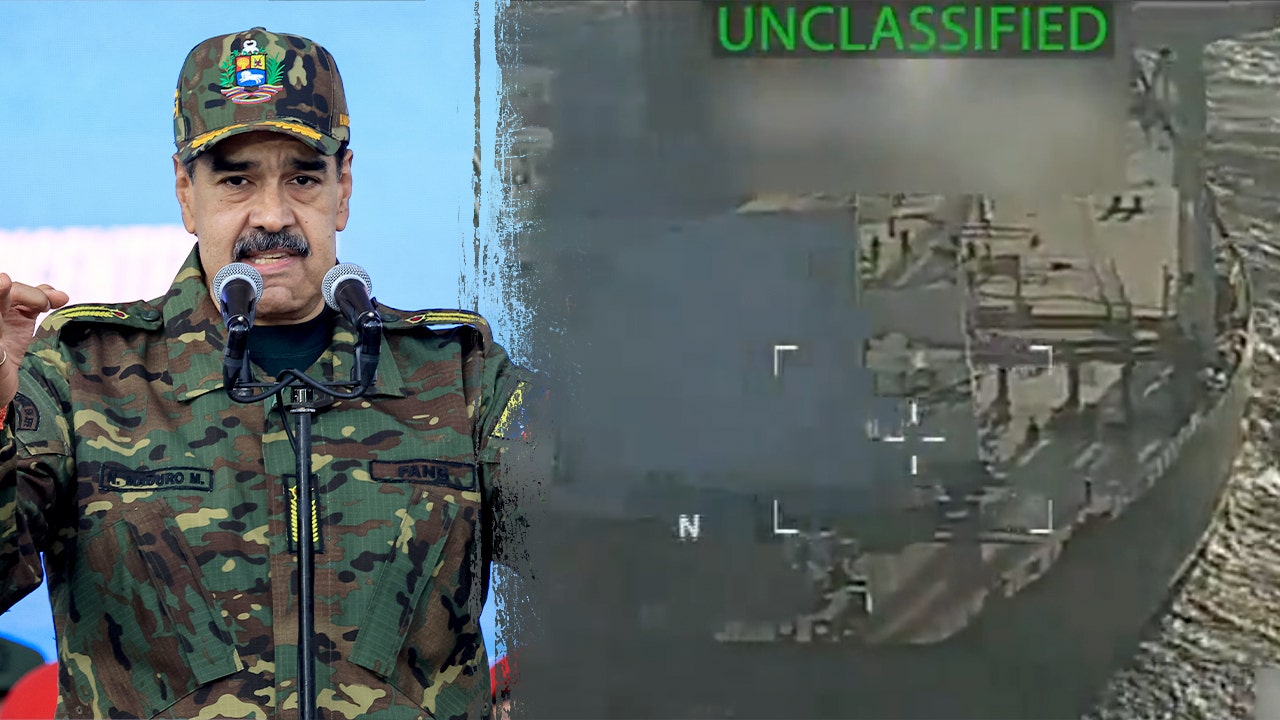
For years, Venezuelan dictator Nicolás Maduro has defied predictions of collapse, weathering sanctions, diplomatic isolation and internal unrest. But the Trump administration’s latest moves—including the seizure of a Venezuelan crude tanker and enforcement of a blockade on sanctioned vessels—have struck at the regime’s most vulnerable point: its oil trade.
“One thing is clear: the Maduro regime can’t sustain itself without oil revenue,” said Melissa Ford Maldonado, director of the Western Hemisphere Initiative at the America First Policy Institute, in an interview with Fox News Digital.
The escalation has raised concerns among European allies, who warn that the blockade could undermine regional stability and complicate efforts toward a political resolution in Venezuela. However, proponents argue the approach directly targets Maduro’s power structure.
“What we’re seeing now with President Trump’s order for a total blockade of all sanctioned oil tankers entering and leaving Venezuela is a direct hit against Maduro’s revenue streams,” Ford Maldonado explained. “He needs the oil money from these tankers to buy loyalty and pay off generals, cartel partners and political enforcers to stay in power. That pipeline is finally being cut.”
The impact is already evident. According to Reuters, approximately 11 million barrels of Venezuelan crude are currently stranded aboard 39 tankers anchored offshore, unable to reach their destinations.
Jorge Jraissati, president of the Economic Inclusion Group, noted that this development “fundamentally changes the economics of Venezuela’s oil exports.”
“That oil is neither sold nor paid for,” Jraissati said. “Until those cargoes move, they generate no cash flow for PDVSA and deepen Maduro’s liquidity strain.” PDVSA is Venezuela’s state-run oil company.
Venezuela’s extreme dependence on oil makes the country particularly vulnerable to such measures. Oil accounts for more than 80% of exports and roughly 90% of government revenue, leaving the nation extraordinarily exposed when crude shipments falter.
“After years of economic collapse as a result of Venezuela’s socialist policies, virtually all other sectors of the economy are bankrupted,” Jraissati observed.
While U.S. sanctions on Venezuelan oil have been in place since 2019, enforcement was often inconsistent, allowing PDVSA to continue moving crude through intermediaries and opaque trading networks, primarily to Asian markets. The recent tanker seizure appears to have fundamentally changed this dynamic.
The Trump administration reported that the seized vessel was headed for Cuba, though Jraissati contended China was the more likely destination. “Tankers of that size are typically deployed on long-haul routes, and China accounts for roughly 60% percent of Venezuela’s oil exports,” he explained.
Beyond blocking exports, the sanctions have forced Venezuela to sell its crude at steep discounts—up to $21 per barrel below Brent benchmark prices, according to sources cited by Jraissati and confirmed by Reuters reporting.
“The seizure is already reshaping Venezuela’s oil trade,” Jraissati said. “PDVSA is facing stuck cargoes, rising price discounts and new demands from buyers to renegotiate spot contracts.”
Oil tankers carrying cargoes worth tens of millions of dollars now face significant risk when entering Venezuelan waters. This has sent buyers and shipowners scrambling for insurance and new contractual terms.
For years, Venezuela has relied on a “shadow” or “dark” fleet—vessels that disable tracking systems, swap names, and change flags—to circumvent sanctions. But even these tactics are becoming more difficult as insurers and ports grow increasingly wary of vessels with connections to Venezuelan crude.
The human toll of Venezuela’s economic collapse has been devastating. “Eighty percent of people in Venezuela are in poverty,” Jraissati said. “Fifty percent are in extreme poverty, meaning they don’t make even $3 a day.” He added that more than 30% of the population—approximately 8 million people—have fled the country amid the ongoing crisis.
Cale Brown, chair of Polaris National Security and a former State Department principal deputy spokesperson, noted that authoritarian regimes typically respond to sanctions by shifting toward illicit revenue streams.
“Regimes like Maduro’s display little concern about the impact of sanctions on their own people, and when traditional sources of income dry up, they seek other lifelines, as Maduro has with narcotics and other forms of illicit finance,” Brown said.
While experts caution that oil pressure alone may not topple Maduro, the current combination of sanctions, seizures, and diplomatic isolation represents an unprecedented challenge to his regime. By targeting the financial mechanisms that allow Maduro to maintain power, the Trump administration aims to weaken his ability to pay security forces, sustain patronage networks, and keep the state functioning.
“President Trump is right to identify Venezuela as ground zero for many of the problems we are concerned with in the Western Hemisphere,” Brown added, referring to broader security concerns including drug trafficking, human trafficking, and hostile foreign influence in the region.
“It’s very important that we continue to emphasize that Venezuela’s oil does not belong to Maduro or his cronies,” Ford Maldonado concluded. “It belongs to the Venezuelan people who made their choices clear at the ballot box last year and have been robbed blind by the regime which continues to enrich itself and hijack the country’s primary economic lifeline to stay in power. Cutting off that cash is the fastest way to weaken the regime, and weakening the regime helps the Venezuelan people!”
Fact Checker
Verify the accuracy of this article using The Disinformation Commission analysis and real-time sources.

8 Comments
The Trump administration’s oil sanctions on Venezuela are a bold move to cut off Maduro’s regime from its main source of revenue. It will be interesting to see how the regime responds and whether this escalation leads to greater regional instability.
Cutting off Maduro’s oil revenue is a critical step in pressuring his authoritarian rule. However, the impact on ordinary Venezuelans is concerning and the geopolitical fallout remains uncertain.
This is a high-stakes game of chicken between the Trump administration and Maduro’s regime. The oil sanctions are a powerful weapon, but the humanitarian costs could be severe. I hope cooler heads can prevail and find a negotiated solution to this crisis.
The oil sanctions are a significant escalation in the US pressure campaign against Maduro. While the regime’s survival depends on oil revenue, the human toll of this economic warfare is deeply concerning. Finding a political solution that restores democracy in Venezuela remains elusive.
Maduro’s grip on power has proven remarkably resilient so far, but the oil sanctions could be the tipping point. However, the humanitarian fallout is worrying, and this crisis seems far from resolution. I hope diplomatic efforts can find a peaceful path forward.
The US is really turning the screws on Maduro with these oil sanctions. While the goal of restoring democracy is understandable, the impact on ordinary Venezuelans is deeply troubling. A political solution seems essential to avoid further suffering.
This is a high-stakes game of economic warfare, with the Trump administration trying to choke off Maduro’s financial lifeline. The consequences for Venezuela’s economy and people could be severe, but the administration seems determined to force a change in regime.
The blockade of Venezuelan oil exports is a risky move that could backfire and worsen the country’s humanitarian crisis. I hope the US and its allies can find a way to support the Venezuelan people without causing further suffering.