


Listen to the article
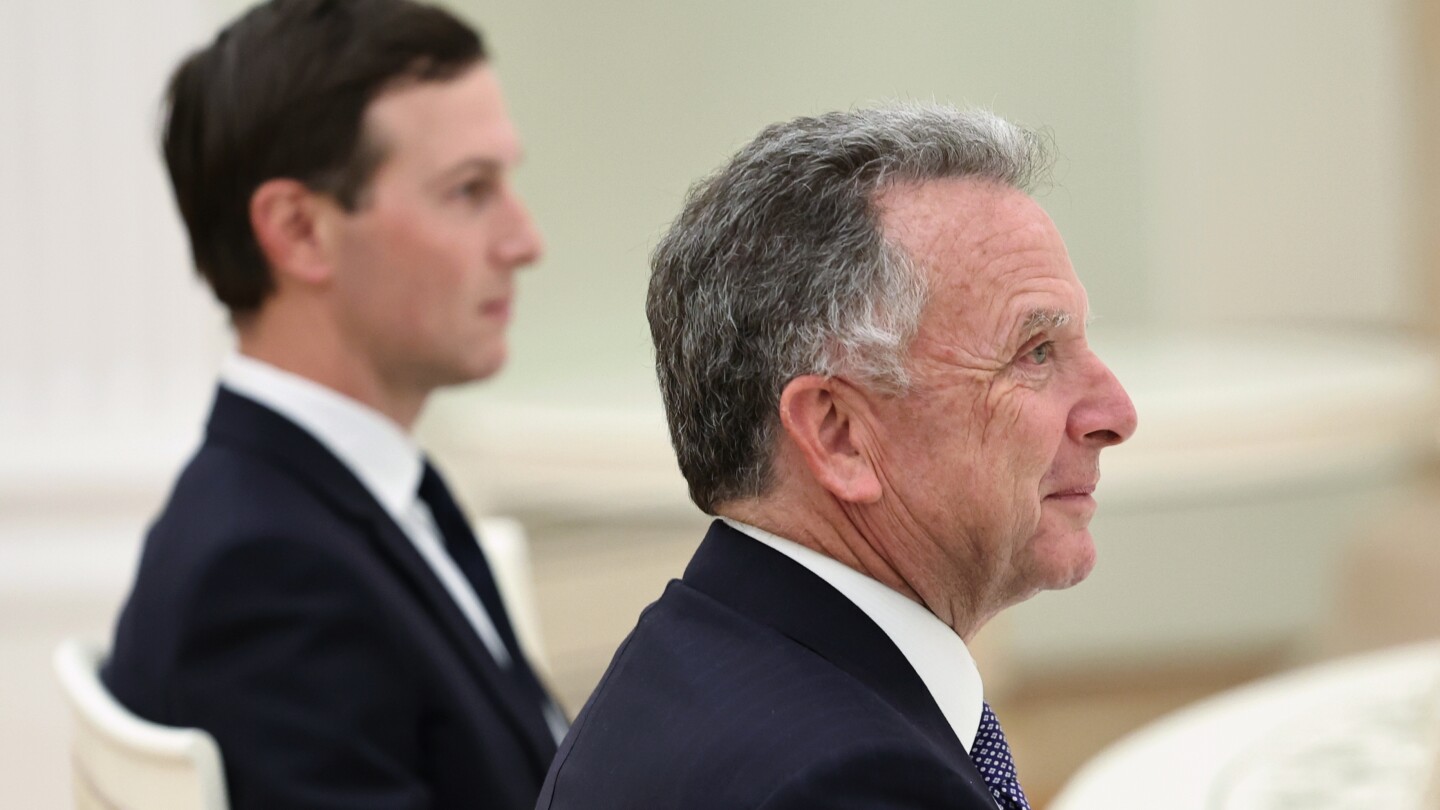
U.S. and Ukrainian officials made progress in Florida talks on a post-war security framework for Ukraine, with plans to meet for a third day on Saturday, according to a joint statement. The discussions, led by U.S. special envoy Steve Witkoff and Jared Kushner on the American side, and Ukrainian negotiators Rustem Umerov and Andriy Hnatov, followed initial discussions with Russian President Vladimir Putin at the Kremlin earlier this week.
The negotiating parties acknowledged that meaningful advancement toward a peace agreement would ultimately require “Russia’s readiness to show serious commitment to long-term peace, including steps toward de-escalation and cessation of killings.” They also reviewed plans for Ukraine’s post-war reconstruction, joint economic initiatives, and recovery projects.
Friday’s discussions took place at the Shell Bay Club in Hallandale Beach, an upscale private venue owned by Witkoff’s real estate company, where the officials continued exploring “deterrence capabilities” Ukraine would need to maintain peace.
These diplomatic efforts represent President Donald Trump’s push to broker a U.S.-mediated solution to end nearly four years of devastating conflict between Russia and Ukraine. The talks follow previous unsuccessful peace attempts, with most details of the current negotiations being kept confidential, though Trump’s initial 28-point plan was reportedly leaked.
Ukrainian President Volodymyr Zelenskyy said his delegation in Florida was particularly interested in hearing about the U.S. team’s earlier meeting with Putin. Zelenskyy and European leaders have consistently accused the Russian leader of deliberately stalling peace talks while Russian forces continue their military operations. In a video address Thursday, Zelenskyy questioned “what other pretexts Putin has come up with to drag out the war and to pressure Ukraine.”
In a notable development, Kremlin foreign affairs adviser Yuri Ushakov praised Kushner’s potential role in ending the conflict, stating, “If any plan leading to a settlement is put on paper, it will be the pen of Mr. Kushner that will lead the way.” The flattering remarks came as Putin appears to be attempting to create divisions between Trump and Ukraine’s European allies.
Putin described his five-hour meeting with the American envoys as “necessary” and “useful,” while acknowledging that some proposals remained unacceptable to Moscow.
Kushner, Trump’s son-in-law who served as a senior adviser during Trump’s first term, played a critical role in developing the Abraham Accords between Israel and several Arab nations. Although his role is more informal during Trump’s second administration, he partnered with Witkoff on recent ceasefire negotiations between Israel and Hamas before turning attention to the Russia-Ukraine conflict.
European concerns have featured prominently in discussions about any potential peace agreement. Ushakov criticized European nations, claiming they were “constantly putting forward demands that are unacceptable to Moscow” and “don’t help Washington and Moscow reach a settlement on the Ukrainian issues.”
French President Emmanuel Macron reported making progress during a visit to Beijing in securing Chinese leader Xi Jinping’s support for peace efforts. Macron emphasized Ukraine’s need for guarantees against future Russian aggression and stressed the importance of European involvement in negotiations, saying, “The unity between Americans and Europeans on the Ukrainian issue is essential.”
Meanwhile, the violence continues on the ground. Russian drone strikes killed a 12-year-old boy in central Ukraine’s Dnipropetrovsk region and injured two women. The Ukrainian air force reported that Russia launched 137 drones of various types during nighttime attacks.
Ukrainian forces conducted their own long-range drone strikes against a port in Russia’s Krasnodar region and the Syzran oil refinery in Samara region, approximately 500 miles from the Ukrainian border. These operations are part of Ukraine’s campaign to disrupt Russian logistics. The Russian Defense Ministry claimed to have intercepted 85 Ukrainian drones over Russian territory and occupied Crimea.
As diplomatic efforts continue, the conflict rages on with civilian casualties and infrastructure damage on both sides, underscoring the urgency of finding a sustainable peace solution.
Fact Checker
Verify the accuracy of this article using The Disinformation Commission analysis and real-time sources.

8 Comments
These talks seem to be progressing quickly, with a third day of negotiations already scheduled. That’s a positive sign, but the devil will be in the details when it comes to a long-term security arrangement for Ukraine. I’ll be following this closely.
It’s encouraging to see the parties acknowledge that meaningful progress requires Russia’s genuine commitment to peace. Sustaining a ceasefire and de-escalation will be crucial. I’m curious to hear more about the specifics of the proposed security framework.
The involvement of high-level US and Ukrainian officials signals the importance of these talks. Establishing a robust security framework for Ukraine’s future will be critical to maintaining stability in the region. I wonder what specific deterrence capabilities are being discussed.
Agreed, the deterrence capabilities will be a key part of any framework. Ukraine will need a strong military and security apparatus to deter future aggression from Russia.
Reconstruction and economic recovery will be just as important as the security aspects. Ukraine will need significant international support to rebuild after the devastation of this conflict. I hope the talks can address both the security and economic challenges.
The scope of the talks, covering security, economic recovery, and reconstruction, indicates the complexity of the challenges facing Ukraine. Balancing all these priorities while securing a durable peace will require skilled diplomacy and compromise from all sides.
Interesting development on the Ukraine security framework negotiations. It’s good to see progress being made, though the path to a lasting peace agreement will likely be challenging. I’m curious to see how the talks unfold and what kind of framework emerges.
The involvement of Trump’s envoys suggests the US is trying to take a more active role in brokering a solution. However, past attempts at US-mediated peace deals have had mixed results. I hope this process can avoid the pitfalls of previous efforts.