


Listen to the article
U.S. Marines Board Commercial Vessel During Iran Blockade, Release Ship After Inspection
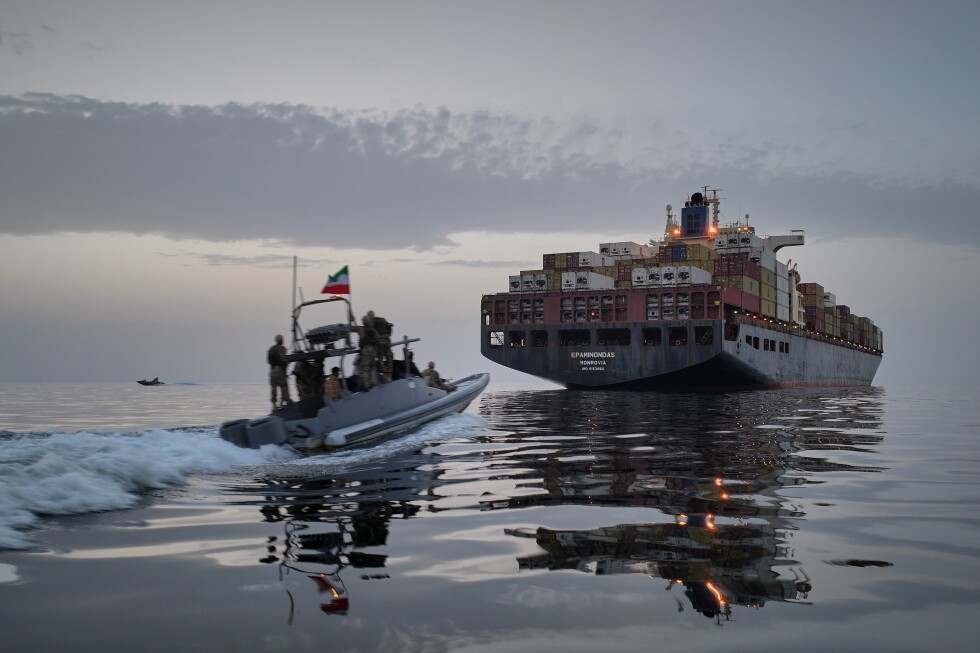
U.S. Marines boarded a commercial vessel in the latest enforcement action of the naval blockade against Iran but, unlike previous incidents, allowed the ship to continue its journey after inspection.
According to U.S. Central Command, Marines boarded the Blue Star III on Tuesday and conducted a thorough search of the vessel. After confirming that the ship’s voyage would not include an Iranian port call, U.S. forces released it to continue its journey. Video footage released by the military showed American forces fast-roping from helicopters onto the ship’s deck during the operation.
The Blue Star III is at least the fourth merchant ship to be boarded since the Trump administration began enforcing its blockade of Iranian shipping over two weeks ago. However, it marks the first instance where a vessel was not taken into U.S. custody after inspection.
Ship tracking data indicates the Blue Star III departed from Pakistan’s Port Qasim and was en route to Sohar, Oman, when the interception occurred. The military did not disclose what specifically prompted suspicion of the vessel or why it was targeted for boarding.
The naval blockade represents a significant escalation in U.S. policy toward Iran, aiming to increase economic pressure on Tehran amid ongoing regional tensions. Iran’s threat to cut off access to the Strait of Hormuz—through which roughly 20% of the world’s oil supply passes—has raised concerns about potential global economic disruptions, particularly in energy markets.
U.S. Central Command has been increasingly vocal about what it describes as the effectiveness of the blockade, regularly updating the number of merchant ships it claims have been turned away from Iranian ports. On Tuesday, the command made the bold assertion that “U.S. forces cut off economic trade going into and coming out of Iran,” though this claim has drawn skepticism from maritime security experts.
The scope of the blockade appears expansive. Gen. Dan Caine, chairman of the Joint Chiefs of Staff, previously stated that enforcement actions would extend beyond Iranian territorial waters and the area typically under U.S. Central Command’s jurisdiction. This suggests a significantly broader enforcement zone than traditional naval blockades.
The military has also issued a comprehensive list of contraband goods subject to seizure from merchant vessels “regardless of location.” A formal notice states that any “goods that are destined for an enemy and that may be susceptible to use in armed conflict” are “subject to capture at any place beyond neutral territory.”
Maritime experts have raised questions about the practical effectiveness of the blockade. Salvatore Mercogliano, a professor at Campbell University and shipping expert, points out that Iranian vessels have multiple ways to potentially evade enforcement, including spoofing their location tracking data or traveling through Pakistani territorial waters where U.S. forces may have limited jurisdiction.
Mercogliano also highlighted the logistical challenges of screening the high volume of shipping traffic in the region, noting that maintaining comprehensive coverage requires significant naval resources.
Despite these concerns, U.S. Central Command maintains the blockade is working. Capt. Tim Hawkins, a spokesman for the command, stated that the boarding of the Blue Star III “demonstrates our thorough enforcement of the blockade.”
The incident underscores the increasing maritime tensions in the Middle East and represents a significant development in U.S. naval operations aimed at isolating Iran economically. As the blockade continues, shipping companies and regional powers are closely monitoring how enforcement actions will impact regional trade and stability.
Fact Checker
Verify the accuracy of this article using The Disinformation Commission analysis and real-time sources.

5 Comments
Good to see the US military exercise some discretion here. Boarding and detaining every ship would be an overreach. As long as they can verify a vessel’s cargo and itinerary doesn’t violate the blockade, allowing it to continue seems sensible. Flexibility is key when enforcing complex sanctions regimes.
Interesting development in the Iran blockade. I wonder what led the US military to board the ship but then let it go after inspection. Was there not enough evidence to detain it, or did they decide the cargo wasn’t a concern? Curious to learn more about the reasoning behind this decision.
The fact that they released the ship after inspection suggests the cargo and voyage plans checked out. Likely just a precautionary boarding to enforce the blockade, rather than finding anything suspicious.
This appears to be a more measured approach compared to previous boardings where ships were detained. The military seems to be selectively enforcing the blockade, only taking action when there is clear cause. Balancing security concerns with avoiding unnecessary disruption to commercial shipping.
Agreed, a pragmatic and proportionate response. Maintaining the blockade without overzealously interdicting every vessel is probably the best way to achieve their objectives without causing unnecessary economic harm.