


Listen to the article
Serbian Protesters Demand Withdrawal from Eurovision Over Israel’s Participation
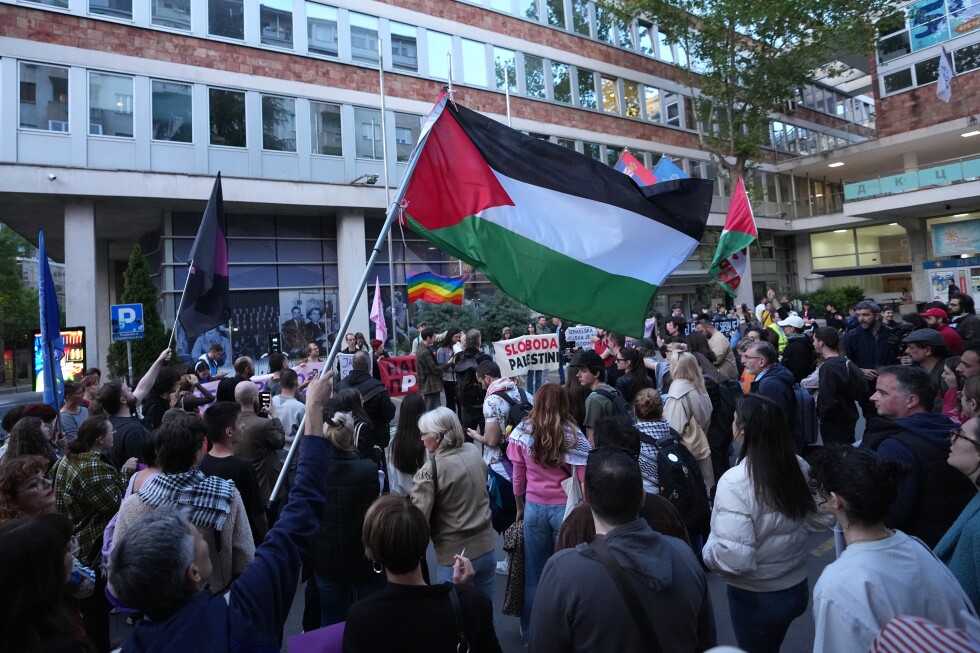
Dozens of protesters gathered outside the Serbian state broadcaster RTS headquarters in Belgrade on Tuesday, calling for Serbia’s withdrawal from this year’s Eurovision Song Contest due to Israel’s participation amid the ongoing conflict in Gaza.
Demonstrators waved Palestinian flags and displayed banners condemning Israel’s military actions in Gaza. The protest organizers issued a statement emphasizing that “a Eurovision without Israel would mean defending the ideals that this event proclaims,” urging RTS not to broadcast the competition and asking Serbian citizens to boycott the show.
The 2024 Eurovision Song Contest, scheduled for May 12-16 in Vienna, will feature 35 competing countries. Serbia plans to participate with Lavina, a six-member metal band representing the Balkan nation. The Serbian state broadcaster has not yet responded to the protesters’ demands.
The demonstration highlights growing international tensions surrounding Israel’s participation in cultural events during the Gaza conflict. Serbia has historically maintained close diplomatic and economic ties with Israel, making any potential withdrawal particularly significant in terms of bilateral relations.
Eurovision’s organizing body, the European Broadcasting Union, decided in December to permit Israel’s participation despite mounting pressure from various quarters to exclude them from the competition. This decision contrasts with the organization’s previous action against Russia, which was expelled from the contest in 2022 following its invasion of Ukraine.
The controversy has already created rifts among participating nations. Several countries have expressed discontent with Israel’s inclusion, with broadcasters from Slovenia, Iceland, Ireland, the Netherlands, and Spain staging walkouts in protest. Slovenia’s public broadcaster, RTV Slovenia, has announced it will air Palestinian-focused programming during the Eurovision broadcast as an alternative.
This latest protest in Belgrade represents part of a broader pattern of cultural boycotts and demonstrations that have emerged since the intensification of the Gaza conflict. Cultural events like Eurovision, while designed to transcend politics through music and entertainment, increasingly find themselves at the center of geopolitical disputes.
Eurovision has long struggled to maintain its stated mission of keeping politics separate from its musical competition. The contest’s organizers have consistently faced challenges in navigating international conflicts while attempting to provide a neutral platform for artistic expression.
The situation places Serbia in a delicate position between maintaining its Eurovision participation—an important cultural showcase for the country—and responding to domestic pressure regarding the Israel-Palestine conflict. The protest also reflects the increasing globalization of the Israel-Gaza issue, which continues to resonate far beyond the Middle East.
As the May competition approaches, similar demonstrations may emerge in other participating countries, potentially creating further complications for Eurovision organizers who are already managing significant political tensions surrounding this year’s event.
The Belgrade protest, while modest in size, represents part of a growing international movement questioning cultural and sporting engagement with Israel during the ongoing conflict—a movement that has spread across Europe and beyond in recent months.
The Serbian government, which maintains diplomatic relations with both Israel and Palestine, has not officially commented on the protest or indicated any change to its Eurovision participation plans.
Fact Checker
Verify the accuracy of this article using The Disinformation Commission analysis and real-time sources.

8 Comments
Protests against Israel’s involvement in Eurovision are not new, but the calls for Serbia to boycott add an interesting regional dynamic to the issue. It reflects the complexities of national allegiances and global politics.
The demands for Serbia to withdraw from Eurovision due to Israel’s participation raise valid questions about the role of cultural events in geopolitical conflicts. There are reasonable arguments on both sides of this issue.
The demands for Serbia to withdraw from Eurovision due to Israel’s participation highlight the challenges of balancing political conflicts with cultural events. There are valid arguments on both sides that deserve careful consideration.
You raise a fair point. Eurovision has always aimed to bring people together through music, even amidst geopolitical tensions. It will be telling to see how the Serbian broadcaster navigates this delicate situation.
While I understand the protesters’ concerns, boycotting cultural events like Eurovision is a complex and often divisive approach. These events can actually provide platforms for dialogue and understanding, even amid political conflicts.
That’s a thoughtful perspective. Eurovision has historically aimed to bring people together through music, transcending borders and politics. It will be interesting to see how Serbia navigates this sensitive situation.
It’s interesting to see the ongoing tensions surrounding Israel’s participation in Eurovision. While the protesters have a right to voice their concerns, boycotting cultural events is a complex issue that often does more harm than good.
I agree, these types of boycotts can sometimes polarize issues further rather than promote dialogue and understanding. It will be worth watching how Serbia ultimately responds.