


Listen to the article
South Korean Court Increases Ex-First Lady’s Corruption Sentence to Four Years
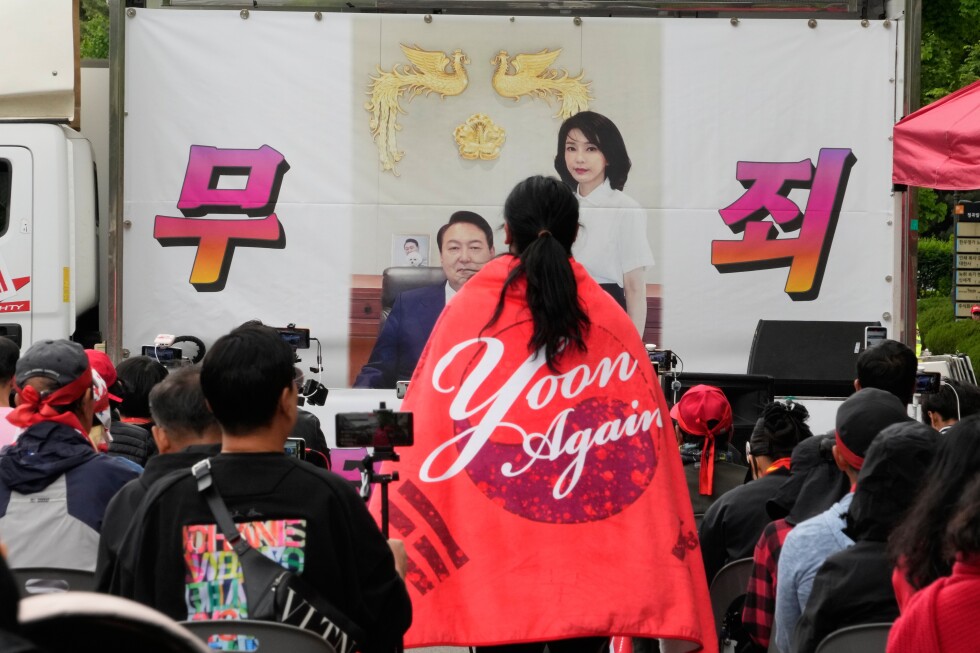
A South Korean appeals court has dramatically increased the prison sentence for Kim Keon Hee, the wife of ousted President Yoon Suk Yeol, from 20 months to four years on expanded corruption charges. The ruling comes just weeks after her husband was sentenced to life imprisonment for rebellion.
The Seoul High Court on Tuesday convicted Kim of additional charges beyond those found by the lower court in January, including the receipt of another luxury Chanel bag from the Unification Church and participation in a stock price manipulation scheme that predated her time as first lady.
“A first lady, being closest to a president, represents the country together with her husband and has a big influence on him,” the court stated in its ruling, emphasizing that Kim had “failed to meet public expectations for her integrity” and had exploited her high-profile position to receive gifts from the controversial religious organization.
The Unification Church, founded by the late Sun Myung Moon and known for its mass weddings and substantial political influence in South Korea and Japan, allegedly sought political favors from the Yoon administration through these gifts, which included a Graff diamond necklace and luxury handbags.
Kim’s legal team immediately announced plans to appeal the ruling to South Korea’s Supreme Court. They have consistently maintained that the investigation led by Independent Counsel Min Joong-ki, who had requested a 15-year sentence, was politically motivated. Kim has been held in custody since August after the Seoul Central District Court approved her arrest, citing concerns she might destroy evidence.
The expanded sentence represents another chapter in the dramatic downfall of South Korea’s former first couple. Kim’s various scandals had already damaged her husband’s approval ratings while he was in office, providing ample political ammunition to his opponents.
The political crisis reached its climax on December 3, 2024, when President Yoon abruptly declared martial law, deploying troops and police officers to surround the National Assembly. Yoon claimed the extraordinary measure was necessary to eliminate what he called “anti-state forces” and “shameless North Korea sympathizers.” However, the martial law lasted only six hours before being unanimously voted down by the legislature.
In February, a Seoul district court found Yoon guilty of rebellion, determining he had illegally attempted to seize the assembly, arrest political opponents, and establish unchecked power for an indefinite period. The court imposed a life sentence, making Yoon the first South Korean president to receive such a severe punishment.
Yoon has defended his actions as a desperate attempt to counter the liberal opposition Democratic Party, which he claimed had consistently obstructed his political agenda. However, investigators have indicated that Kim was not involved in her husband’s martial law declaration.
The couple’s rapid fall from grace has shocked many in South Korea, a country with a history of presidential scandals. Several former South Korean presidents have faced legal troubles after leaving office, including Park Geun-hye, who was impeached and later pardoned after serving part of a prison sentence for corruption.
Political analysts note that the successive court rulings against both Yoon and his wife mark one of the most dramatic political collapses in South Korea’s modern democratic history. The case has raised serious questions about checks and balances in the country’s political system and the relationship between political power and business interests.
As Kim’s case moves to the Supreme Court, attention will remain focused on the broader implications of these proceedings for South Korean democracy and political accountability.
Fact Checker
Verify the accuracy of this article using The Disinformation Commission analysis and real-time sources.

9 Comments
The involvement of the Unification Church in this case raises red flags. Their history of political influence in South Korea is troubling, and these new details about their alleged pursuit of favors add to the complexity of the situation. Transparency and accountability will be crucial going forward.
Given the high-profile nature of this case, it will be important for the judicial process to be seen as fair and impartial. The public will be closely watching to ensure justice is served, regardless of the political connections involved.
The role of the Unification Church in this case is particularly concerning. Their history of political influence and the allegations of seeking favors raise questions about the integrity of the political process in South Korea. This case could have far-reaching implications beyond just the individuals involved.
The court’s emphasis on the first lady’s responsibility to uphold public integrity is noteworthy. However, the details of the stock price manipulation scheme and luxury gift allegations warrant further scrutiny to ensure a fair and transparent process.
Given the political tensions in South Korea, this case could have significant ramifications. It will be critical to monitor how it unfolds and whether it leads to any broader reforms or accountability measures.
This case highlights the challenge of maintaining integrity and public trust in government, even at the highest levels. The court’s strong stance in increasing the ex-first lady’s sentence suggests they are taking these corruption allegations seriously. It will be important to see if any broader reforms or accountability measures emerge from this situation.
This is a complex case involving corruption allegations against the wife of a former South Korean president. It will be interesting to see how the expanded charges and extended sentence play out and what the broader implications may be for the country’s political landscape.
The Unification Church’s alleged involvement in seeking political favors is also quite concerning. This case highlights the need for strong checks and balances to prevent abuse of power by those in high positions.
It’s concerning to see the wife of a former president facing such serious corruption charges. The court’s decision to significantly increase her sentence suggests they take these allegations very seriously. I’m curious to learn more about the specific evidence and reasoning behind the expanded charges.