


Listen to the article
Iran’s Leadership Faces Crucial Test in Peace Negotiations Following War
After devastating U.S.-Israeli strikes eliminated Iran’s supreme leader and much of its top leadership, the Islamic Republic has managed to maintain stability through a newly empowered governing council. However, ongoing peace negotiations with the United States are now testing the resilience of this restructured power system.
For decades, Supreme Leader Ayatollah Ali Khamenei successfully managed Iran’s competing power factions, balancing rival opinions while maintaining ultimate authority. Following his death in the recent conflict, that clear leadership structure has been replaced by what appears to be committee rule, raising questions about who truly holds decision-making power among the civilian officials and Revolutionary Guard generals now steering the country.
The Supreme National Security Council has emerged as Iran’s central governing body, with Parliament Speaker Mohammad Bagher Qalibaf serving as its public face and chief negotiator with the United States. This council includes figures spanning Iran’s political spectrum—from reformist President Masoud Pezeshkian to hard-line Revolutionary Guard commanders like Ahmad Vahidi and Mohammad Bagher Zolghadr.
“Factionalism is just built into the DNA of this system,” explains Ali Vaez, Iran director at the International Crisis Group. This inherent structure of multiple overlapping power centers has allowed the Islamic Republic to withstand the assassination campaign that targeted its leadership.
The current ceasefire negotiations present perhaps the greatest challenge to this restructured leadership. The U.S. is demanding significant concessions regarding Iran’s nuclear program, which Iran has consistently maintained is peaceful while asserting its right to uranium enrichment. The talks, with Pakistani mediation, are attempting to move forward this week amid tensions that could expose internal rifts within Iran’s leadership.
Iran’s negotiating strategy hinges on its control of the Strait of Hormuz, a critical passageway for global oil shipments. By threatening this chokepoint, Iranian officials believe they can drive up fuel prices worldwide, creating economic pressure that gives them leverage against the United States. Senior Iranian officials have projected confidence, suggesting they can withstand economic pain longer than their adversaries.
However, signs of internal disagreement have already emerged. Last weekend, Foreign Minister Abbas Araghchi announced on social media that Iran was reopening the Strait of Hormuz to commercial traffic as part of the ceasefire agreement. Hours later, when the U.S. declared it would continue its naval blockade to maintain pressure on Iran, the Iranian military countermanded the foreign minister’s statement and announced the strait would remain closed.
This public contradiction triggered criticism in Iranian media, with outlets close to the Revolutionary Guard suggesting Araghchi had projected weakness. The Foreign Ministry was forced to defend itself, stating it “does not take any action without coordinating with higher-level institutions.”
Qalibaf, the 64-year-old parliament speaker who has emerged as Iran’s chief negotiator, appears uniquely positioned to bridge these divides. With a background as both a Revolutionary Guard general and a pragmatic former mayor of Tehran, he maintains relationships across Iran’s political spectrum. During his tenure as Tehran’s mayor from 2005 to 2017, he gained a reputation for practical problem-solving despite facing allegations of corruption and human rights abuses.
“He has the conservatives on his side. But he also now has very robust backing from the reformists and the centrists,” notes Arash Azizi, an Iranian journalist who has written extensively about Qalibaf and the Revolutionary Guard.
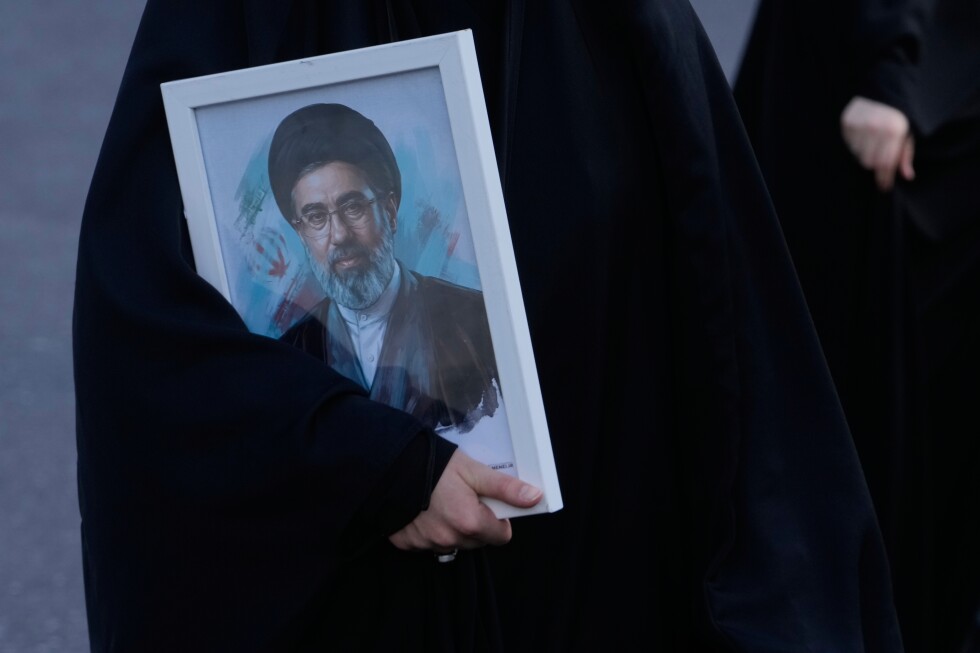
Qalibaf’s close ties to the Khamenei family—both hailing from the eastern shrine city of Mashhad—may also strengthen his position. Though Ayatollah Mojtaba Khamenei succeeded his father as supreme leader, he remains in hiding after reportedly being wounded in the initial strikes and has not appeared in public since taking the position.
The outcome of these negotiations carries immense stakes for Iran’s leadership. The war and U.S. blockade have further devastated an already struggling economy, potentially fueling domestic unrest that has periodically challenged the regime. Economic hardship has previously sparked protests that openly called for the Islamic Republic’s overthrow.
As Pakistan attempts to host a new round of negotiations this week, Iran’s restructured leadership faces a critical balancing act: securing enough concessions to relieve economic pressure while not appearing to compromise on core principles that could expose divisions within the ruling system.
Fact Checker
Verify the accuracy of this article using The Disinformation Commission analysis and real-time sources.

12 Comments
This is a complex situation for Iran’s leadership. Balancing competing factions and negotiating an end to the conflict will require skillful navigation. It will be interesting to see how the new governing council manages this crucial test.
The shift from a single supreme leader to a committee-based system raises questions about the stability and decision-making processes within Iran. This transition will be closely watched.
The elimination of Iran’s top leadership must have been a devastating blow. It’s admirable that they’ve been able to maintain stability, but the peace negotiations will be a true test of the new power structure’s resilience.
The composition of the Supreme National Security Council, spanning different political factions, suggests an effort to balance competing interests. This will be crucial in navigating the complex path to peace.
Iran’s ability to maintain stability after such a devastating blow to its leadership is impressive. The peace negotiations will be a true test of the new governing council’s capabilities and unity.
The inclusion of figures from across Iran’s political spectrum in the Supreme National Security Council suggests an effort to build consensus. This will be crucial in navigating the complex path to peace.
This is a critical juncture for Iran as it seeks to end the conflict through negotiations. The new leadership’s ability to balance competing factions and interests will be put to the test.
The shift to a more collective decision-making process is a significant change for Iran. It will be important to see how this new system functions under the pressure of high-stakes peace talks.
Interesting to see how Iran has adapted its leadership structure in the wake of the conflict. The role of the Supreme National Security Council and its diverse membership will be key to successfully concluding peace talks.
The shift from a single supreme leader to a more collective decision-making process is a significant change. It will be important to observe how this new system operates under the pressure of high-stakes negotiations.
The transition from a single supreme leader to a committee-based system raises intriguing questions about Iran’s new power dynamics. It will be fascinating to observe how this restructured leadership navigates the peace talks.
The presence of both reformist and hard-line elements in the governing council could lead to challenging internal debates. Effective compromise and decision-making will be essential for successful negotiations.