


Listen to the article
US Military Eyes Strategic Somaliland Base Amid Red Sea Tensions
JOHANNESBURG — A strategically important air base and port in Somaliland have been offered to the United States as regional tensions mount, with Iran-backed threats targeting critical maritime chokepoints and a blockade of the Strait of Hormuz underway.
U.S. Air Force Gen. Dagvin Anderson, commander of U.S. Africa Command (AFRICOM), recently led a delegation to the self-declared republic, meeting with Somaliland President Abdirahman Mohamed Abdullahi and visiting facilities in Hargeisa and Berbera. The November visit signals growing American interest in the region as maritime security concerns intensify.
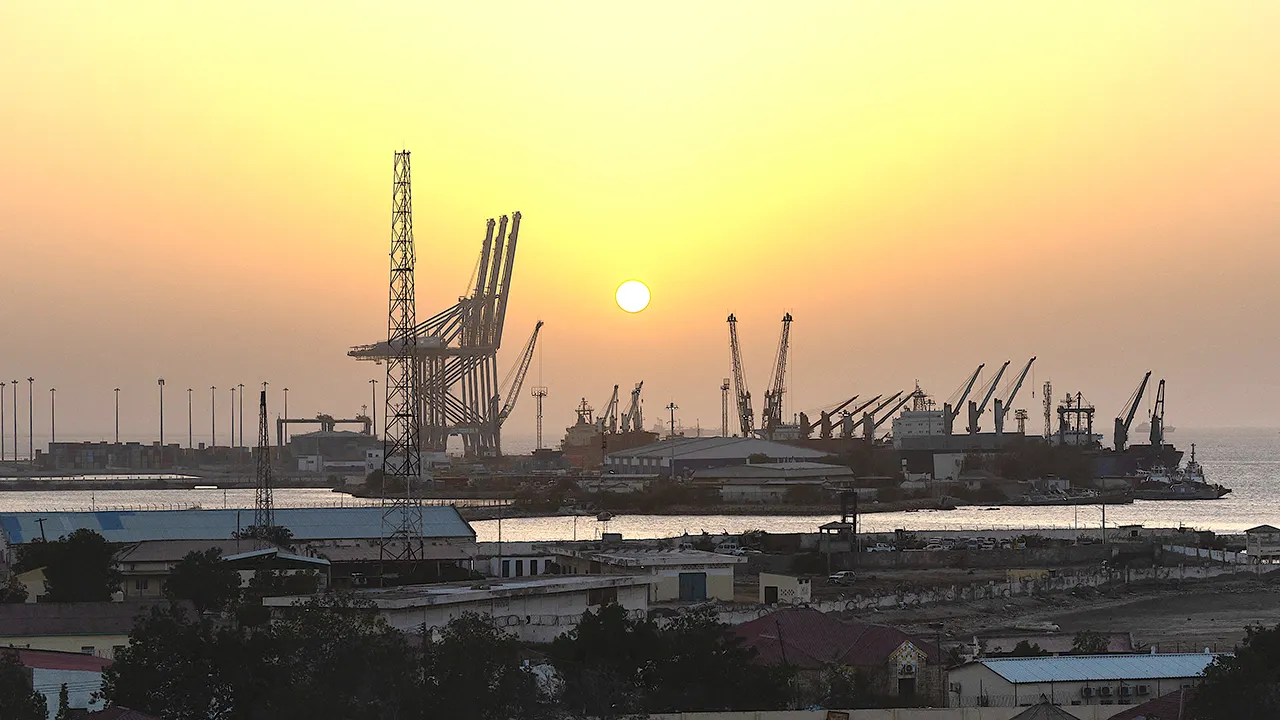
Somaliland, which declared independence from Somalia in 1991 but remains internationally unrecognized by most nations, has positioned itself as a pro-Western ally in a strategically vital region. The territory’s Berbera port and airbase could provide the U.S. with a crucial foothold near the Bab el-Mandeb Strait, a narrow waterway connecting the Red Sea to the Gulf of Aden.
“Berbera obviously has huge strategic potential,” Edmund Fitton-Brown, a former UK ambassador to Yemen and senior fellow at the Foundation for Defense of Democracies, told Fox News Digital. The port sits along a critical shipping lane connecting the Red Sea to the Indian Ocean, while its airstrip—one of Africa’s longest runways, originally developed as a NASA emergency landing site—offers significant military potential.
The timing of the American interest is noteworthy. With the Strait of Hormuz effectively closed, the Bab el-Mandeb Strait—Arabic for “gate of tears”—has become the main route for Middle Eastern oil shipments to Asia. Bloomberg News reports that Saudi Arabia has diverted potentially up to 7 million barrels of oil daily from its Yanbu port through the strait. Approximately 14% of global shipping now passes through this 16-mile-wide waterway.
The U.S. already maintains a military base in neighboring Djibouti, but according to Fitton-Brown, that government has grown “increasingly uncomfortable” with some American policies. “Djibouti becomes an increasingly reluctant, unwilling ally to the U.S. in helping enforce sanctions on the Houthis,” he said. “Somaliland, which is almost equally well-placed to address issues on the western and southwestern coasts of Yemen, can help the U.S., Israel and the UAE combat the Houthis.”
Iran has been pushing Yemen’s Houthi rebels to escalate operations in the Red Sea. In March, the Islamic Revolutionary Guard Corps-linked Tasnim news agency warned that “insecurity in other straits, including the Bab al-Mandab Strait and the Red Sea, is one of the options of the Resistance Front, and the situation will become much more complicated than it is today for the Americans.”
The primary controversy surrounding potential U.S. military presence in Somaliland involves diplomatic recognition. Last August, then-President Donald Trump told reporters, “We’re looking into that right now,” when asked about recognizing Somaliland’s independence. However, the State Department recently reaffirmed that “the United States continues to recognize the sovereignty and territorial integrity of the Federal Republic of Somalia, which includes the territory of Somaliland.”
Israel became the first country to recognize Somaliland’s independence last year, further complicating the diplomatic landscape.
Regional experts caution that recognizing Somaliland could strain U.S. relations with key Arab allies. Baraa Shaiban, a Houthi expert at the Royal United Services Institute, warned that recognition “will upset the U.S. relationship with Arab countries like Saudi Arabia and Egypt, many of which are U.S. allies. It would be unwise for the United States to upset its allies in the region just to gain access to Somaliland ports.”
An AFRICOM spokesperson stated that “the U.S. is not seeking to establish new basing, as such actions do not align with the America First security framework articulated by the President and Secretary of War.” However, analysts suggest that behind the public statements, discussions may be ongoing regarding using Somaliland’s facilities without formal recognition.
Somaliland’s top diplomatic representative in Washington, Bashir Goth, recently highlighted the territory’s growing strategic importance at a Foreign Policy Research Institute debate. “The war in the Middle East has elevated Somaliland’s strategic importance. U.S. military interest has been very strong. Every month, there has been a delegation from AFRICOM to Hargeisa,” he noted.
As tensions persist in the Red Sea and surrounding waterways, the potential partnership between the U.S. and Somaliland represents a significant geopolitical development in an increasingly contested region where maritime security and access to strategic chokepoints have become critical to global trade and military positioning.
Fact Checker
Verify the accuracy of this article using The Disinformation Commission analysis and real-time sources.

10 Comments
The US has been increasingly focused on securing its interests in the Horn of Africa, especially amid tensions with Iran. A military base in Somaliland would give them a valuable foothold in this geopolitically crucial area.
Agreed. Establishing a presence in Somaliland could be an important strategic move for the US, helping to project power and influence in a volatile region.
This is a complex geopolitical situation, with the US seeking to counter Iran’s regional ambitions. A military base in Somaliland could be a valuable asset, but it remains to be seen how this would impact the broader regional dynamics.
Interesting development in the Horn of Africa. A strategic military base in Somaliland could help the US counter threats from Iran and Houthi rebels in the region. Securing access to the Bab el-Mandeb Strait is crucial for maritime security.
While Somaliland is not officially recognized, its pro-Western stance and location make it an attractive partner for the US military. This could be a savvy move to counter Iran’s regional influence and the Houthi threat.
This potential military base in Somaliland is an interesting development, as the US seeks to counter Iran’s influence and secure vital maritime chokepoints. It will be important to watch how this unfolds and impacts the regional geopolitics.
The US is clearly trying to strengthen its position in the Horn of Africa to address security concerns related to Iran and the Houthi rebels. Securing access to Berbera port and airbase in Somaliland could be a key part of this strategy.
Yes, the strategic importance of this region is undeniable. The US will likely want to leverage Somaliland’s location to bolster its presence and counter potential threats in the area.
The US is likely eyeing Somaliland’s Berbera port and airbase as a way to gain a foothold in this strategically important region. Establishing a presence there could help safeguard vital shipping lanes and deter potential aggression.
Absolutely, controlling that maritime chokepoint is a key strategic priority. The US will want to ensure uninterrupted access and freedom of navigation in the region.