


Listen to the article
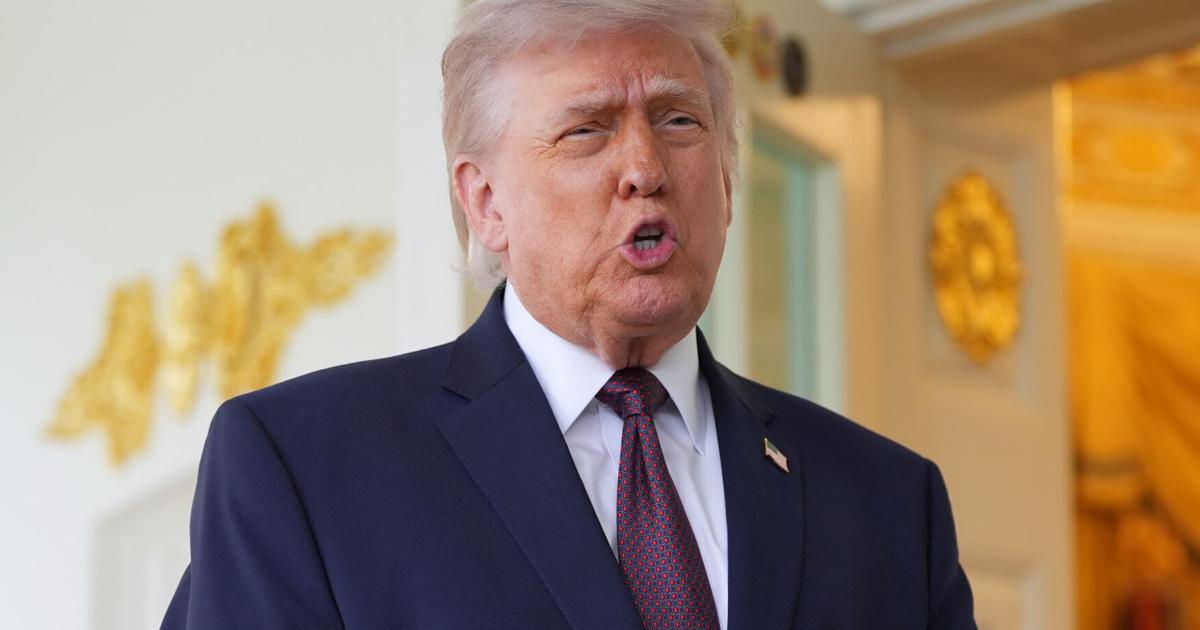
In the wake of former President Donald Trump’s rally speech in Virginia, Democratic Rep. Abigail Spanberger has mounted a forceful rebuttal against what she describes as a “volume of misinformation” regarding Democratic policies and positions.
Speaking at a campaign event for Virginia’s 7th Congressional District, Spanberger addressed Trump’s recent criticisms point by point, defending Democratic stances on border security, inflation, and energy policy that had been characterized in ways she deemed inaccurate during the former president’s appearance.
“What we witnessed was a classic example of political rhetoric that distorts reality,” Spanberger told attendees at the community forum. “It’s important that voters understand the actual policies we support rather than caricatures designed to inflame rather than inform.”
The congresswoman, known as a moderate Democrat who has occasionally broken with her party on select issues, emphasized her own record on border security, noting her support for increased funding for border patrol personnel and technology-based surveillance systems. This stands in contrast to Trump’s portrayal of Democrats as uniformly supporting open borders.
“I’ve consistently advocated for strong border enforcement alongside humane immigration policies,” Spanberger stated. “The narrative that Democrats want open borders is simply false, and my voting record proves that.”
The exchange highlights the intensifying political climate in Virginia, a state that has emerged as a battleground in recent elections. Once reliably Republican in presidential contests, Virginia has voted Democratic in every presidential election since 2008, though Republicans made significant gains in the 2021 gubernatorial race with Glenn Youngkin’s victory.
Political analysts note that Spanberger’s district, which includes suburbs of Richmond and extends to the outskirts of Northern Virginia, represents exactly the type of swing territory that both parties see as crucial in the upcoming election cycle. The district was redrawn after the 2020 census, altering its political makeup.
“Representative Spanberger is executing a strategy we’re seeing from moderate Democrats across the country,” explained Jennifer Richardson, a political science professor at Virginia Commonwealth University. “They’re directly confronting mischaracterizations of their positions rather than allowing those narratives to take hold unchallenged.”
On economic issues, Spanberger highlighted her work on inflation-reduction measures and supply chain improvements, countering Trump’s claims that Democratic policies have solely driven price increases. She pointed to global factors affecting inflation, including pandemic disruptions and international conflicts that have impacted energy markets.
“The economic challenges we face have complex origins that cross party lines and national boundaries,” Spanberger said. “Simplistic narratives don’t solve problems – detailed policy solutions do.”
The congresswoman also addressed energy policy, emphasizing her support for an “all-of-the-above” approach that includes traditional energy sources alongside renewable development. This positions her between progressive Democrats who advocate more rapid transitions away from fossil fuels and Republicans who often resist clean energy initiatives.
“Energy independence and environmental responsibility aren’t mutually exclusive goals,” she stated. “My focus has always been on policies that ensure affordable, reliable energy while acknowledging climate realities.”
Spanberger’s response reflects growing concern among Democrats about misinformation spreading through campaign rhetoric, particularly as social media amplifies political messaging without consistent fact-checking.
Public opinion polls suggest this approach may resonate with swing voters. Recent surveys indicate that voters in competitive districts express frustration with hyperbolic campaign rhetoric from both parties and respond positively to politicians who directly address policy misrepresentations.
As the electoral calendar advances toward November, political observers expect increasingly direct confrontations between candidates over policy characterizations, particularly in competitive districts like Virginia’s 7th.
“What we’re witnessing is the beginning of a campaign season where the battle over narratives may be just as important as the battle over policies themselves,” Richardson noted. “Representatives like Spanberger are recognizing that allowing mischaracterizations to go unchallenged can be politically costly in closely divided districts.”
Fact Checker
Verify the accuracy of this article using The Disinformation Commission analysis and real-time sources.

11 Comments
It’s refreshing to see a politician like Spanberger try to correct misinformation and provide a more nuanced perspective on the policy differences between the parties. More of this, please!
Inflation and energy policy are certainly hot-button topics that warrant substantive debate. I’m curious to learn more about Spanberger’s specific policy proposals in these areas.
Me too. Fact-based discussions on economic and energy issues are crucial, especially given the real-world impacts on families and businesses.
It’s good to see elected representatives engage in substantive debates on policy issues rather than just trading political barbs. Spanberger’s rebuttal of Trump’s ‘misinformation’ sounds like a reasonable attempt to clarify Democratic positions.
Agreed, we need more fact-based dialogue from our leaders, even when they disagree. Voters deserve an accurate understanding of the policy differences.
It’s encouraging to see elected officials like Spanberger try to counter political rhetoric with facts and clarity. Voters deserve an honest assessment of policy differences, not just partisan mudslinging.
As someone with an interest in energy and commodities, I’m curious to learn more about Spanberger’s positions on issues like mining, fossil fuels, and renewable energy. Factual debates in these areas are important.
Interesting to hear Spanberger defend her record on border security, in contrast to how Democrats are often portrayed. Nuance is important when discussing complex issues like immigration.
Yes, it’s good that Spanberger is willing to break from her party on select issues where she feels their positions don’t align with her constituents’ interests.
While I may not agree with all of Spanberger’s positions, I respect her willingness to engage directly with Trump’s criticisms and defend her record. Open dialogue is key to a healthy democracy.
Spanberger’s comments about the need to inform voters, rather than inflame them, ring true. We’d all benefit from more substantive, good-faith discussions of policy from our elected leaders.