


Listen to the article
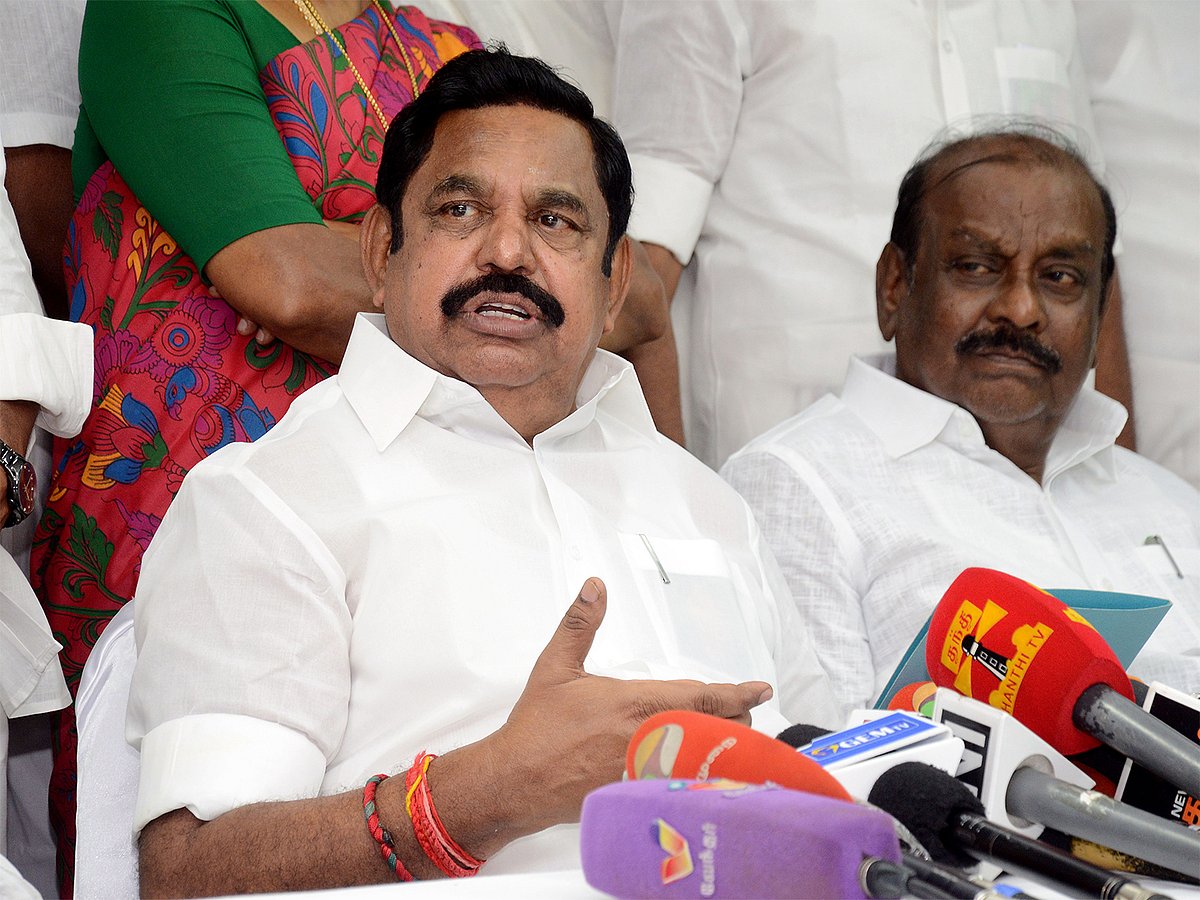
In a sharp rebuttal to former Union Finance Minister P. Chidambaram’s recent criticisms, AIADMK leader Edappadi K. Palaniswami questioned the Congress veteran’s contributions to Tamil Nadu during his tenure at the Centre. “He criticised my statements. What has he done for Tamil Nadu despite being a Union minister for years?” Palaniswami remarked at a campaign event.
The former Tamil Nadu Chief Minister also took aim at DMK parliamentarians, accusing them of ineffectively representing the state’s interests in Delhi. In a pointed comparison, he recalled the AIADMK’s more aggressive approach to advocacy, noting that “AIADMK MPs once stalled Parliament for 22 days over Cauvery water rights” – highlighting the party’s historical willingness to fight for Tamil Nadu’s interests on national issues.
The NEET examination, a contentious issue in Tamil Nadu politics, featured prominently in Palaniswami’s comments. He emphasized that the medical entrance exam was introduced during the Congress-DMK coalition government, criticizing what he called their “double standard” in opposing it now after implementing it while in power.
Palaniswami’s criticism of the current DMK administration under Chief Minister M.K. Stalin was wide-ranging and severe. He alleged significant deterioration in living standards for Tamil Nadu residents, pointing to “steeply risen” prices of essential commodities, electricity tariffs, and taxes under the DMK government. This comes at a time when inflation concerns have been growing across India, with Tamil Nadu’s consumer price indices showing particular pressure on household budgets.
The law and order situation in the state also came under Palaniswami’s scrutiny. “There has been a rise in crime and drug-related issues,” he claimed, suggesting a correlation between the change in administration and public safety metrics. Recent crime statistics from Tamil Nadu have shown mixed trends, though drug-related arrests have indeed increased substantially over the past two years.
Infrastructure development, a key metric for measuring government performance in rapidly developing states like Tamil Nadu, was another area where Palaniswami claimed the DMK had failed. He alleged that numerous development projects initiated during his AIADMK administration had stalled under the current government. Specifically, he mentioned the Avinashi–Athikadavu water scheme, various drinking water initiatives, metro rail expansion plans, airport development, and industrial park projects.
The AIADMK leader also addressed what he characterized as the DMK’s attempt to frame the upcoming state election as a “Delhi versus Tamil Nadu” narrative. “Why bring Delhi into a State election?” he questioned, pushing back against regional sentiment being used as an electoral strategy. Palaniswami reminded voters that when the National Democratic Alliance (NDA) was formed, Union Home Minister Amit Shah had clearly established that the AIADMK would lead the coalition in Tamil Nadu with Palaniswami as the chief ministerial candidate.
Looking forward, Palaniswami announced that Prime Minister Narendra Modi would visit Coimbatore on April 18, encouraging voters to attend the rally. “Listen to him. A strong India and a prosperous Tamil Nadu will be created,” he stated, attempting to align national and state prosperity in voters’ minds.
If returned to power, Palaniswami promised the revival of popular welfare schemes initiated during the previous AIADMK government, including Amma mini clinics and canteens under direct chief ministerial supervision. He also pledged to strengthen law and order, improve infrastructure, and create job opportunities – addressing key voter concerns in a state with significant industrial and service sector employment.
In a final pointed remark reflecting the intense political climate in Tamil Nadu, Palaniswami alleged political persecution, claiming police had filed false cases against AIADMK members under pressure from the current administration. “When we return to power, we will reopen these cases and take strict action against the officials involved,” he warned, signaling potential administrative consequences should political power shift back to the AIADMK.
Fact Checker
Verify the accuracy of this article using The Disinformation Commission analysis and real-time sources.

8 Comments
While I don’t necessarily agree with all of Palaniswami’s criticisms, I appreciate his attempt to hold the current administration accountable. Transparency and honest debate are important for a healthy democracy.
Palaniswami raises some valid points about the AIADMK’s past advocacy efforts on issues like Cauvery water rights. However, I’m not sure attacking the current DMK administration is the most constructive approach.
You make a fair observation. Healthy criticism is good, but it needs to be balanced and solution-oriented rather than just political point-scoring.
Interesting to see the political back-and-forth on important issues like delimitation and NEET. It’s always good to hear different perspectives, even if we don’t agree with them all.
I agree, it’s important to have robust debates on these complex topics that impact the people. Curious to see how this all plays out.
The NEET exam is certainly a contentious issue in Tamil Nadu politics. I can understand the frustration over the apparent ‘double standard’ of implementing it and then opposing it later. These kinds of policy shifts can be confusing for the public.
Palaniswami’s comments about the AIADMK’s past willingness to fight for Tamil Nadu’s interests are interesting. It’s important for political parties to be strong advocates for their constituents, even if it means taking bold actions.
Agreed. Effective representation at the national level is crucial for states to have their voices heard and interests protected.