


Listen to the article
U.S. Considers Sending Afghan Allies from Qatar to Congo Amid Resettlement Challenges
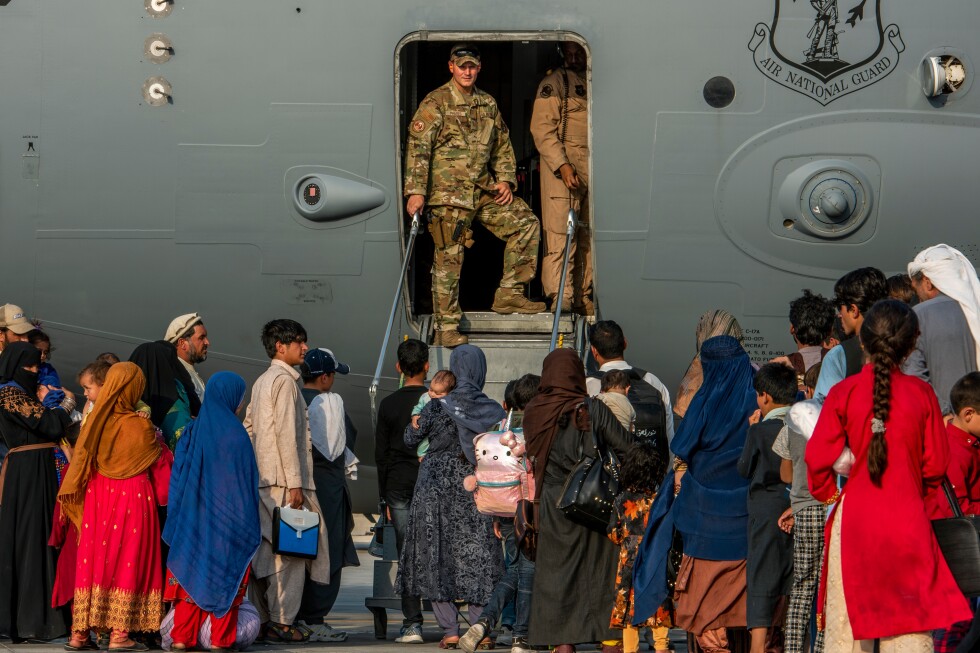
The Trump administration is engaged in discussions to relocate more than 1,000 Afghan refugees currently housed at a U.S. base in Qatar to a third country, with the Democratic Republic of Congo emerging as a potential destination. These refugees, who assisted American forces during the war in Afghanistan, have been stranded at Camp As-Sayliyah in Doha for over a year.
Among the 1,100 refugees are former interpreters, individuals who worked with Special Operations Forces, and immediate family members of more than 150 active-duty U.S. military personnel. Their situation has grown increasingly precarious since President Trump paused his predecessor’s Afghan resettlement program upon returning to the White House.
The State Department confirmed Wednesday that it is exploring options to “voluntarily” resettle these refugees in a third country but did not specify which nations were under consideration. According to Shawn VanDiver, a Navy veteran who leads the #AfghanEvac coalition supporting Afghan resettlement, U.S. officials have informed advocacy groups about ongoing negotiations with Congo.
“You cannot call a choice voluntary when the two options are Congo and the Taliban, civil war or an oppressor who wants to kill you,” VanDiver said during a virtual press conference. “That is not a choice. That is a confession extracted under duress.”
Before Congo became the apparent focus, the U.S. had reportedly approached several other nations, including Botswana and Malaysia. According to an executive at a refugee resettlement agency who requested anonymity, discussions with Botswana’s leadership had initially shown promise but ultimately fell through. By early April, Congo had emerged as the primary option under consideration.
The situation reflects the broader impact of the administration’s immigration policies. When President Trump suspended the refugee program shortly after returning to office, thousands who had already undergone extensive vetting processes were left in limbo worldwide.
Jon Finer, who served as deputy national security adviser under President Biden, emphasized that the Qatar facility “was always intended as a transit platform. It was never designed to hold families for months or years, which is the situation that people are currently in.”
Human rights advocates and former U.S. officials have expressed alarm about the prospect of resettling these Afghan allies in Congo, a nation the United Nations describes as facing “one of the most acute humanitarian emergencies in the world.” The country has been devastated by decades of conflict, particularly in its eastern regions where government forces continue to battle Rwanda-backed rebels.
Congo’s potential involvement is not entirely unexpected. It is among at least eight African nations that received millions of dollars through controversial agreements with the Trump administration to accept migrants deported from the U.S. to countries other than their own. Congolese authorities have not yet responded to requests for comment on the current discussions.
Sean Jamshidi, an Afghan American who served in the U.S. military and was previously deployed to Congo, voiced serious concerns about his brother potentially being sent there. “I saw the security situation and what it looked like there. I saw the displacement camps… I stood in places where the United Nations has counted the dead,” Jamshidi said. “The Democratic Republic of the Congo is not a place you send vetted Afghan allies and their children to live.”
Meanwhile, the refugees themselves remain largely uninformed about their fate. Negina Khalili, a former Afghan prosecutor who escaped during the 2021 U.S. withdrawal, told The Associated Press that her father, brother, and stepmother have been at the Doha base since January 2025. When she spoke with them about the possibility of being sent to Congo, they expressed deep concern.
“They are not giving them any information or updates regarding which countries they will go to,” Khalili said. “They were so stressed and worried about it and said that Congo is not a safe place either. They don’t know if it’s a temporary location for them there or a permanent location.”
Adding to the uncertainty, Khalili reported that U.S. officials at the camp have been suggesting that refugees return to Afghanistan, even offering financial incentives to do so—an option that would likely expose many to persecution or death at the hands of the Taliban for their past work with American forces.
As negotiations continue, the future remains uncertain for these Afghan allies who risked their lives to support American military efforts, only to find themselves caught in a complex diplomatic and humanitarian dilemma.
Fact Checker
Verify the accuracy of this article using The Disinformation Commission analysis and real-time sources.

8 Comments
I’m curious to learn more about the specific factors driving the decision to potentially relocate these Afghan refugees to Congo. While I understand the challenges the U.S. faces, the security and long-term prospects for these individuals should be the top priorities. I hope a more suitable solution can be found.
This is a complex issue with no easy answers. While resettling the refugees in Congo may seem expedient, I hope the U.S. is thoroughly vetting that option and considering the refugees’ perspectives. Their security and long-term integration should be the top priorities.
It’s admirable that the U.S. is trying to uphold its commitment to the Afghan allies who risked their lives to assist American forces. However, relocating them to Congo, a country with its own security challenges, seems like a risky proposition. I hope the State Department is exploring all viable alternatives.
This situation with the Afghan refugees is quite concerning. The U.S. has an obligation to support those who aided their forces, but relocating them to Congo raises many questions about logistics, security, and cultural integration. I hope a viable long-term solution can be found soon.
The plight of these Afghan refugees is heartbreaking. While I understand the logistical difficulties the U.S. faces, sending them to Congo raises serious concerns about their safety and wellbeing. I hope the administration can find a more stable and suitable resettlement location.
This is a concerning development. The U.S. has an ethical obligation to support the Afghan allies who risked everything to assist American forces. Relocating them to Congo, a country with its own instability, seems like an inadequate solution. I hope the administration reconsiders this plan.
It’s good that the U.S. is exploring options to resettle these Afghan refugees, but Congo seems like an odd choice given the instability there. I wonder what other countries are being considered and how the refugees’ preferences and needs are being factored in.
You raise a fair point. The U.S. should prioritize the refugees’ safety and wellbeing in finding a suitable resettlement location, not just convenience for itself.