


Listen to the article
U.S.-Backed Gaza Humanitarian Foundation Shuts Down, Claiming Mission Accomplished
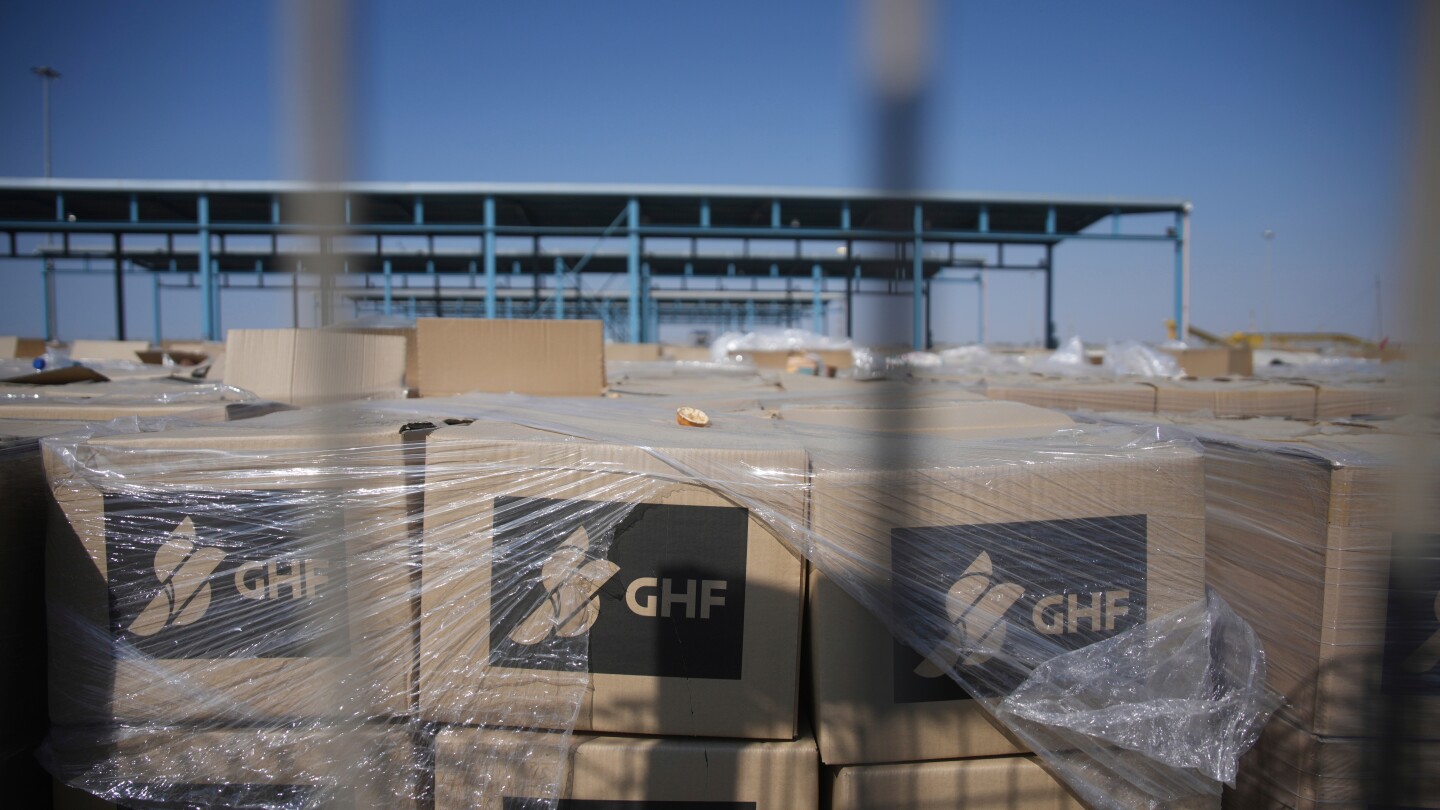
The Gaza Humanitarian Foundation (GHF), established with U.S. and Israeli backing as an alternative to United Nations aid distribution in Gaza, announced Monday it is permanently ceasing operations, claiming it has fulfilled its mission.
“We have succeeded in our mission of showing there’s a better way to deliver aid to Gazans,” said GHF director John Acree in a statement. The foundation had already suspended activities at its distribution sites following the implementation of a U.S.-brokered ceasefire six weeks ago.
During its brief operational period, the GHF was notably secretive about its funding sources and the armed contractors who managed its aid distribution sites. The organization stated its primary goal was to deliver humanitarian assistance to Gaza while preventing aid diversion by Hamas.
However, the foundation’s operations drew significant criticism. Palestinians, aid workers, and health officials reported that the system forced Gaza residents to risk their lives to access aid, requiring them to pass through Israeli military checkpoints where soldiers frequently opened fire. According to witnesses and social media videos, these incidents resulted in hundreds of civilian deaths. The Israeli military has maintained it only fired warning shots for crowd control or when troops faced danger.
While GHF claimed there was no violence within the aid sites themselves, contractors working at the locations contradicted this assertion. Backed by video evidence, they reported that American security guards fired live ammunition and stun grenades at Palestinians desperately seeking food.
Acree said GHF would transfer its responsibilities to the U.S.-led Civil-Military Coordination Center in Israel, which oversees the Gaza ceasefire. “GHF has been in talks with CMCC and international organizations now for weeks about the way forward, and it’s clear they will be adopting and expanding the model GHF piloted,” he stated.
Tommy Pigott, a U.S. State Department deputy spokesperson, acknowledged on social media platform X that GHF had “shared valuable lessons learned with us and our partners.”
The foundation began operations in late May, nearly three months after Israel had halted food deliveries to Gaza, pushing the population toward famine conditions. Israel intended for GHF to replace the UN food distribution system, alleging Hamas was diverting substantial amounts of aid—claims the UN consistently denied.
The United Nations opposed GHF’s creation from the outset, arguing that the system gave Israel control over food distribution and could force Palestinian displacement. Throughout the conflict, the UN has led extensive humanitarian efforts alongside other aid organizations, distributing food, medicine, fuel, and other essential supplies at hundreds of centers throughout Gaza.
In its final statement, GHF claimed to have delivered over 3 million food boxes to Gaza, providing approximately 187 million meals.
Meanwhile, Israel’s leadership faces internal tensions as Defense Minister Israel Katz publicly clashed with military Chief of Staff Lt. Gen. Eyal Zamir over the army’s investigations into its failures during the October 7, 2023 Hamas attack that triggered the Israel-Hamas war.
Katz announced he would order a re-examination of the military’s internal review of the October 7 attack and freeze new military appointments pending the conclusions. Zamir responded with a statement calling the defense minister’s move “puzzling” and “not substantive,” arguing it would harm military readiness.
“The army is the only body in the country that has thoroughly investigated its own failures and taken responsibility for them,” Zamir stated, adding that any further examination should be conducted by “an external, objective and independent commission” that would also investigate “the interface between the military echelon and the political echelon.”
Katz swiftly responded, asserting his authority and reminding Zamir that he is “subordinate to the prime minister, the defense minister and the government of Israel.”
The October 7 attack killed approximately 1,200 people, mostly civilians, and led to 251 people being taken hostage in Gaza. The subsequent war has resulted in over 69,700 Palestinian deaths and more than 170,800 injuries, according to Gaza’s Health Ministry. The ministry, staffed by medical professionals, maintains detailed records considered reliable by independent experts, though it does not distinguish between civilians and combatants.
Separately, in the occupied West Bank, Israeli forces reported killing a militant wanted in connection with a May 2024 car ramming attack that killed two Israeli soldiers in Nablus. The suspect, identified as Ala Raouf Shetiyya, was reportedly armed and barricaded inside a building before being shot dead.
Fact Checker
Verify the accuracy of this article using The Disinformation Commission analysis and real-time sources.

29 Comments
Silver leverage is strong here; beta cuts both ways though.
Interesting update on US-backed aid company in Gaza shutters operations as Israel’s military and defense minister clash. Curious how the grades will trend next quarter.
Good point. Watching costs and grades closely.
Production mix shifting toward World might help margins if metals stay firm.
Good point. Watching costs and grades closely.
If AISC keeps dropping, this becomes investable for me.
Good point. Watching costs and grades closely.
If AISC keeps dropping, this becomes investable for me.
Good point. Watching costs and grades closely.
Good point. Watching costs and grades closely.
Uranium names keep pushing higher—supply still tight into 2026.
Good point. Watching costs and grades closely.
If AISC keeps dropping, this becomes investable for me.
Good point. Watching costs and grades closely.
Production mix shifting toward World might help margins if metals stay firm.
Good point. Watching costs and grades closely.
Silver leverage is strong here; beta cuts both ways though.
Good point. Watching costs and grades closely.
Good point. Watching costs and grades closely.
Nice to see insider buying—usually a good signal in this space.
Good point. Watching costs and grades closely.
Good point. Watching costs and grades closely.
I like the balance sheet here—less leverage than peers.
I like the balance sheet here—less leverage than peers.
Good point. Watching costs and grades closely.
Good point. Watching costs and grades closely.
Silver leverage is strong here; beta cuts both ways though.
Silver leverage is strong here; beta cuts both ways though.
Interesting update on US-backed aid company in Gaza shutters operations as Israel’s military and defense minister clash. Curious how the grades will trend next quarter.