


Listen to the article
Climate Crisis Emerges as Foremost Threat to Global Security, UN Assembly President Warns
The climate crisis represents the greatest threat to international peace and security in our century, according to United Nations General Assembly President Annalena Baerbock. Speaking from the edge of the Amazon rainforest during the UN climate talks in Belem, Brazil, Baerbock delivered a stark message about the interconnection between climate change and global stability.
“To those who are arguing that in these times we have to focus more on peace and security, one can only say the climate crisis is the biggest security threat of our century,” Baerbock told The Associated Press in an interview. The former German foreign minister emphasized that lasting peace depends on collective action against climate change and sustainable development.
Baerbock highlighted how climate-related disasters create cascading crises in vulnerable regions. She pointed specifically to severe droughts affecting Chad, Syria, and Iraq, where crop failures lead to food insecurity, forced migration, and ultimately competition over increasingly scarce resources like water.
“This is a vicious circle,” she explained. “If we do not stop the climate crisis it will fuel hunger and poverty, which will fuel again displacement and by that will challenge regions in a different way, leading again to instability, crisis and most often also conflict.”
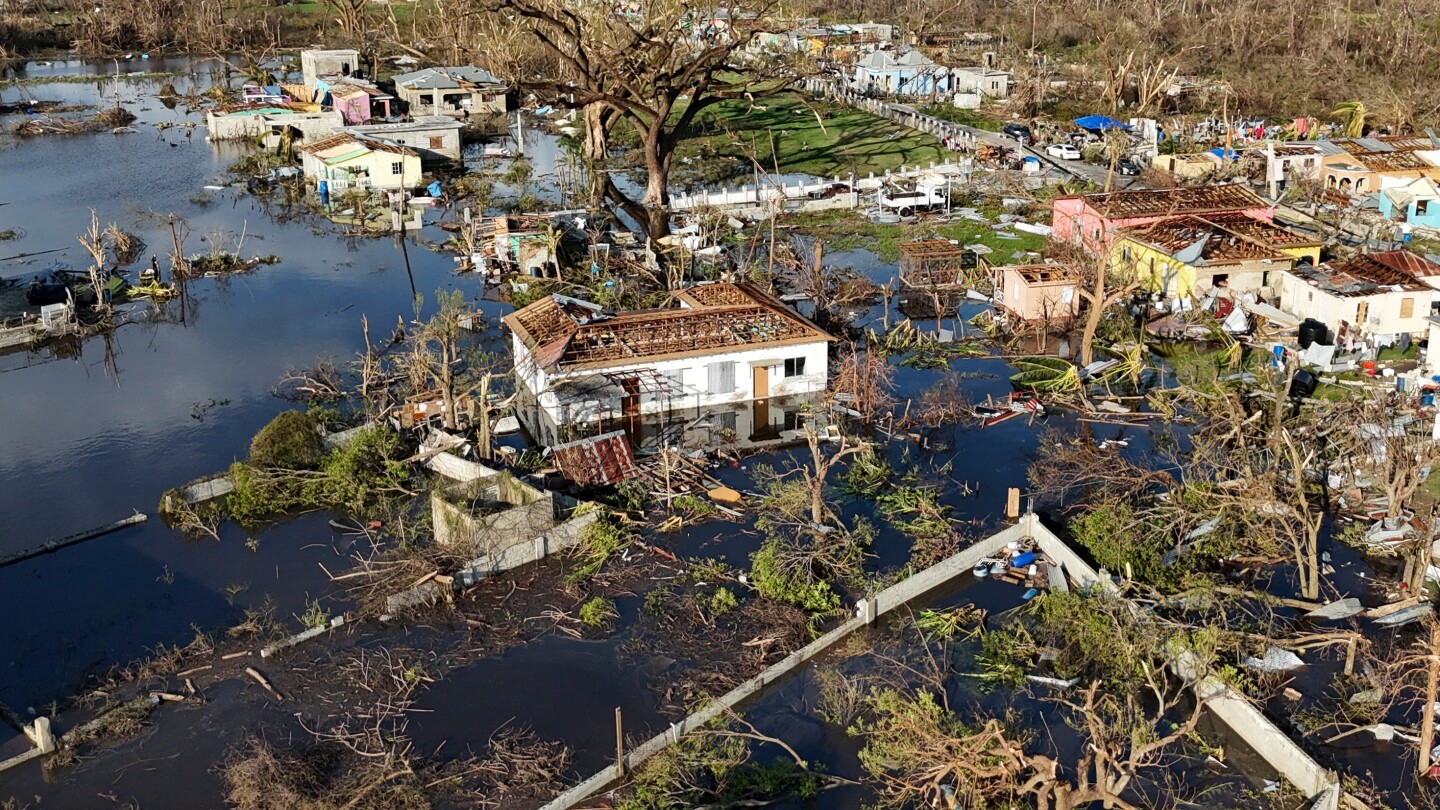
The timing of her remarks comes as several regions experience devastating climate-related catastrophes. Last month’s Hurricane Melissa decimated Jamaica, while the Philippines endured the impact of two powerful typhoons. Such extreme weather events, intensified by Earth’s warming atmosphere, can erase years of development progress “in just hours,” Baerbock noted.
While emphasizing the threats, Baerbock also pointed to climate cooperation as a pathway to peace. She cited water agreements in Central Asia that transformed resource competition into “a booster for peaceful cooperation and peaceful settlement.” This suggests that addressing climate challenges collaboratively can actually strengthen regional security rather than merely preventing its deterioration.
The Assembly President also highlighted the growing influence of climate litigation as a tool for global action. She referenced the landmark case brought by young activists from small island nations to the International Court of Justice. The court’s July ruling, which affirmed that action must be taken to limit warming, “shows the power of the world if it works together,” according to Baerbock.
Small island nations now plan to take the court’s decision to the UN General Assembly, where decisions are made by majority vote rather than requiring consensus as in UN climate talks or being subject to veto power as in the Security Council. This represents a potential strategic shift in how climate action may be advanced within the UN system.
“The vast majority of member states has called not only at the last climate conferences but also here in Belem for transitioning away from our fossil world, not because of the climate crisis, but because they underline that this is the best security investment for all of us,” Baerbock said.
Her message reframes climate action not merely as an environmental necessity but as essential global security policy. By linking climate resilience and adaptation funding to international stability, Baerbock argues that investments from wealthy nations to help vulnerable countries cope with climate impacts are ultimately “investments in stable societies and regions.”
As climate impacts intensify worldwide, from droughts in Syria to hurricanes in the Caribbean, the relationship between climate change and global security appears increasingly impossible to ignore, suggesting that effective climate policy may become central to maintaining international peace in the decades ahead.
Fact Checker
Verify the accuracy of this article using The Disinformation Commission analysis and real-time sources.

10 Comments
The warning about climate change fueling conflict, resource competition, and forced migration is concerning but not surprising. Multilateral cooperation to tackle climate change is essential for safeguarding global peace and security.
Absolutely. The UN and national leaders must prioritize climate action as a vital component of their security and foreign policy strategies going forward.
This is a timely and important warning. The climate crisis represents a grave threat to global security that cannot be ignored. Collaborative action to curb emissions and build resilience is urgently needed.
Curbing climate change is indeed crucial for promoting lasting peace and security globally. The links between environmental degradation, resource scarcity, and conflict are well-established. Decisive action is needed.
It’s good to see the UN Assembly president highlighting the profound security implications of the climate crisis. Ignoring this threat will only lead to more instability and conflict down the line.
Agreed. Policymakers need to take this warning seriously and ramp up their efforts to transition to renewable energy, protect ecosystems, and build climate resilience in vulnerable regions.
This is an important message from the UN General Assembly president. Climate change is a major threat to global security and stability. Addressing it will be crucial for promoting lasting peace and security worldwide.
I agree, the connections between climate change, resource scarcity, conflict, and migration are well-documented. Taking meaningful action to curb climate change is in the interests of all nations and peoples.
The UN Assembly president makes a compelling case for why climate change mitigation should be a top security priority. Addressing this threat is essential for safeguarding global stability and peace.
Absolutely. Tackling climate change and its impacts needs to be at the forefront of international security strategies and diplomacy.