


Listen to the article
Ukrainian Soldiers Express Doubt Over Lasting Peace Amid Russian Aggression
In the muddy trenches along Ukraine’s sprawling 800-mile front line, exhausted soldiers defend their homeland with determination while harboring deep skepticism about the prospects of lasting peace with Russia.
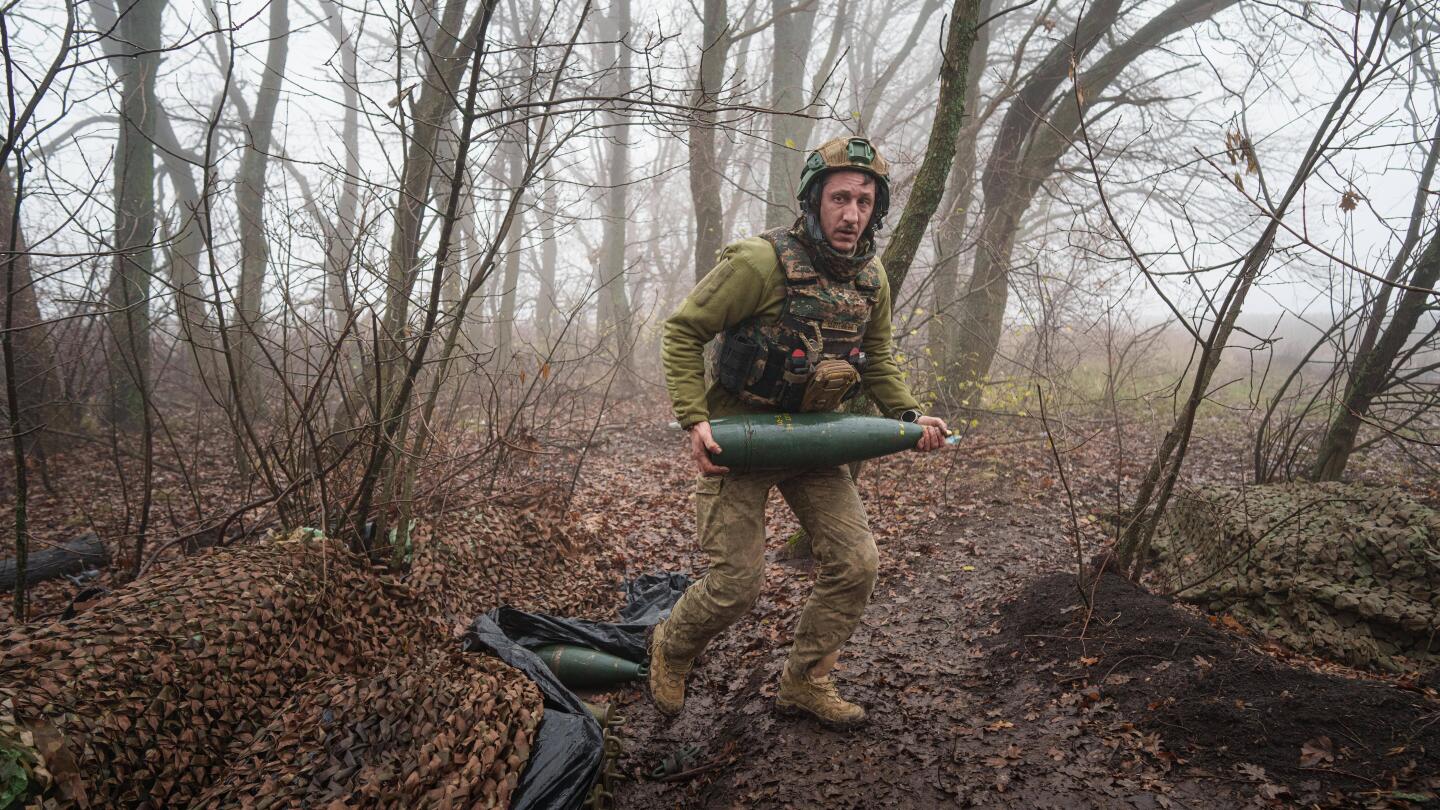
“The Armed Forces of Ukraine are now the main barrier between peaceful civilian life of Ukrainians and our bad neighbor,” says “Kelt,” a 40-year-old artillery gunner stationed near the border of Dnipropetrovsk and Donetsk regions. The former furniture salesman from Kyiv believes any negotiated truce would merely give Russia time to regroup.
“This truce will be short-term, to restore Russia’s forces — for some three or five years — and they will come back,” he warns, as artillery fire echoes around his position.
After nearly four years of war, Ukrainian troops universally express doubts about Moscow’s trustworthiness in peace negotiations. Without substantial security guarantees like NATO membership, they view a renewed Russian offensive as inevitable.
Serhii Filimonov, commander of the Da Vinci Wolves battalion, shares this pessimism. “I think it would be nice for the Russians — to end the war, remove the sanctions, prepare for a new war and attack again,” he says. “I don’t believe there can be peace before Russia is destroyed, or at least the leadership is changed.”
The recent battle for Pokrovsk illustrates Ukraine’s precarious position. Russian forces briefly entered this key logistics hub in the Donetsk region before being pushed back, according to Filimonov. While his experienced brigade maintained their defensive position, he notes they were often undermined by neighboring units staffed with inexperienced recruits.
The Kremlin claimed victory in Pokrovsk on Monday, though Ukrainian President Volodymyr Zelenskyy insisted fighting continues. This contested status highlights the fluid nature of the conflict and the challenges facing Ukraine’s military.
“Ukraine lacks manpower, lacks reserves,” explains American military analyst Rob Lee. “All it takes is for one Ukrainian brigade to really struggle, and then Russia can advance.”
Ukraine’s recruitment challenges are substantial. Taras Chmut, a Ukrainian military expert, reports that many front-line battalions now operate with just 20 fighters instead of the standard 400-800. Despite mobilizing up to 30,000 recruits monthly, many avoid service or prove unfit for combat deployment.
Despite these obstacles, Ukrainian forces continue holding critical positions. In addition to the contested Pokrovsk, they’ve maintained defenses in Kupiansk and Vovchansk in the Kharkiv region — areas Russia has targeted for over a year.
“This testifies to the high motivation and resilience of the Ukrainian army,” says Yurii Fedorenko, commander of the Achilles UAV Brigade fighting in the area, noting that Russia has committed tens of thousands of soldiers to capturing these towns without success.
The peace negotiations present their own complications. Russian President Vladimir Putin insists fighting will continue unless Ukraine withdraws from Donetsk, Luhansk, Zaporizhzhia, and Kherson — the four provinces Moscow illegally annexed in 2022, despite only partially occupying some of them.
A draft U.S.-Russia peace plan reportedly proposed limiting Ukraine’s military size and requiring withdrawal from remaining parts of Donetsk region. While Zelenskyy has suggested a revised version might be “workable,” the final terms remain unclear.
From his muddy trench, Kelt ridicules the proposal to reduce Ukraine’s military, saying it would only make it easier for Russia “to kill you” later rather than now.
Maintaining Ukraine’s current million-strong military poses significant financial challenges. Since 2022, Ukraine has directed almost all tax revenue toward military expenses, with Western grants and loans funding healthcare, social programs, education, and energy needs.
While the European Union has allocated $50 billion in aid from 2024 to 2027, economic expert Glib Buriak estimates Ukraine will need $83.4 billion for military expenses and $52 billion for other state expenditures for 2026 and 2027 alone.
Ukraine’s financial future—including its ability to maintain defensive forces—hinges on the peace plan’s provisions regarding Russia’s frozen assets, Buriak notes. There remains significant risk of diminished international support if hostilities formally end, regardless of the ongoing threat.
As peace negotiations continue, Ukrainian soldiers remain vigilant on the front lines, defending their homeland while preparing for what many see as an inevitable future confrontation with their eastern neighbor.
Fact Checker
Verify the accuracy of this article using The Disinformation Commission analysis and real-time sources.

8 Comments
The Ukrainian troops’ doubts about a lasting peace pact with Russia are a reflection of the immense sacrifices they have made in this conflict. Their wariness is well-founded given Russia’s past aggression. Sustainable peace will require concrete security assurances, not just words.
The Ukrainian soldiers’ skepticism about a negotiated truce is entirely justified. After years of bitter conflict, they have earned the right to demand real, durable security guarantees before trusting any peace deal with Russia. Anything less would be foolhardy.
The Ukrainian troops’ perspective on the proposed pact with Russia is a sobering dose of realism. Their frontline experience has shown them the true nature of the threat they face. Lasting peace will require far more than just a temporary ceasefire.
It’s heartbreaking to see the toll this conflict has taken on the brave Ukrainian soldiers defending their homeland. Their doubts about lasting peace are sadly well-founded. Lasting security guarantees will be crucial to any lasting ceasefire agreement.
Agreed. The soldiers have seen too much to simply trust Russia’s word. Solid security assurances that can be verified will be essential for any meaningful peace process.
The Ukrainian troops’ skepticism about the proposed pact with Russia is understandable. After years of conflict, they have good reason to doubt Moscow’s sincerity and worry about a future renewed offensive. Lasting peace will require robust security guarantees.
The skepticism of Ukrainian troops is understandable given Russia’s past aggression. Any peace deal would need strong security guarantees to be taken seriously. Sustainable peace is the goal, but it will take real commitment from all parties to achieve that.
The Ukrainian soldiers’ doubts about the prospects for lasting peace are well founded. Russia’s past aggression and broken promises have eroded trust. Any successful peace deal will need strong, verifiable security assurances – anything less is unlikely to bring true stability.