


Listen to the article
Peace Negotiations Between Ukraine and Russia Show Progress Amid Territorial Stalemate
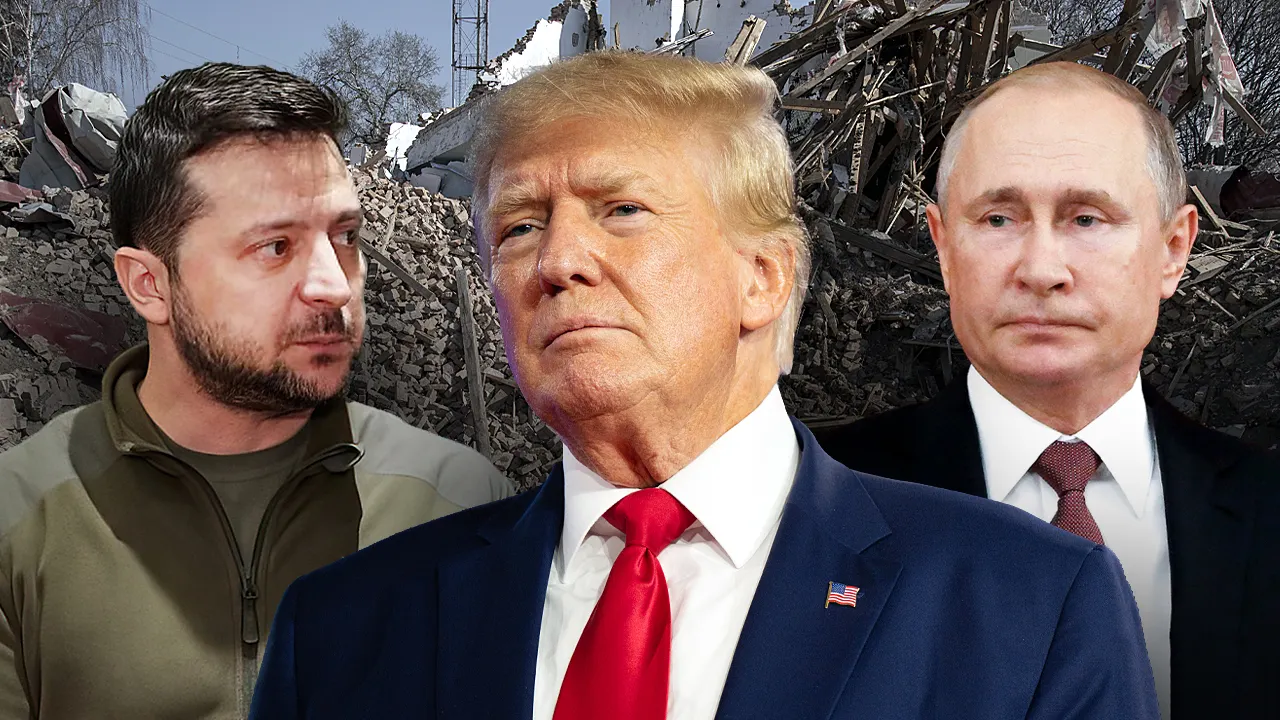
The United States is advancing a revised peace framework to end the war in Ukraine, with officials from Kyiv, Moscow, and Washington suggesting negotiations are closer to a breakthrough than at any point since Russia’s 2022 invasion. Despite this progress, negotiations remain stalled over the same fundamental obstacle: Russia demands Ukrainian territory, while Ukraine refuses to cede any land.
President Donald Trump announced this week that “tremendous progress” has been made in the peace process. His special envoy, Steve Witkoff, is scheduled to meet with Russian officials in Moscow while senior U.S. defense officials convene with their Ukrainian counterparts. A senior American official confirmed to Fox News Digital that Ukraine has accepted the “broad contours” of an emerging deal, with only “minor details” still being negotiated.
European allies are coordinating what France has called a “Coalition of the Willing” to support a “just and lasting peace.” However, as these diplomatic efforts unfold, Russia continues to launch missile and drone strikes on Kyiv, killing civilians and damaging critical power infrastructure—a stark reminder of the ongoing violence.
Oleksii Honcharenko, an opposition member of Ukraine’s Parliament, told Fox News Digital that Ukraine must pursue peace “as soon as possible,” even though large segments of Ukrainian society remain skeptical of the emerging plan. “My personal position is that we need peace as soon as possible,” he said. “This plan is a chance. I don’t like everything in it… some things are unacceptable. But it is a workable framework.”
Honcharenko rejected criticism that the proposal represents a U.S.-Russian blueprint being imposed on Kyiv. “For me, it doesn’t matter who the initial author was. There is a framework. Let’s work on it,” he said. While acknowledging that sanctions relief—one of Russia’s core demands—would be difficult for Ukrainians to accept, he also recognized battlefield realities: “We are not in the position where our tanks are near Moscow. There will not be a solution I like completely.”
Rep. Andy Barr (R-Ky.), a member of the House Foreign Affairs Committee, attributed the conflict to what he called weak leadership from the Biden administration. “Russia invaded Ukraine because Joe Biden was the weakest President in American history,” Barr said, adding that “Trump is the Peace President… the only leader who can end this war and bring stability back to Europe.”
Sergey Aleksashenko, an exiled Russian economist and former deputy finance minister, emphasized that territorial disputes remain the primary obstacle to peace. “The biggest difference is territorial,” he told Fox News Digital. “Russia wants to grab what it was not able to take by military means. Ukraine does not want to give up. All other points could be resolved, but not territory.”
Aleksashenko sees little indication that Russian President Vladimir Putin is prepared to compromise, noting that the Kremlin likely believes Western support for Ukraine is weakening. According to Aleksashenko, Putin may be willing to continue fighting “another two, three years,” convinced he can outlast both Kyiv and European governments struggling to maintain military aid.
Former NATO Supreme Allied Commander Gen. Philip Breedlove (Ret.) expressed deep concerns about any plan requiring Ukraine to surrender territory Russia has not conquered militarily. “It is an incredibly, incredibly bad thought,” he said. Breedlove warned that Putin’s ambitions extend beyond Ukraine, pointing to the Russian president’s stated goals of reshaping Eastern Europe’s security architecture.
Breedlove also noted the intense pressure on Ukrainian President Volodymyr Zelenskyy from Western governments that control Ukraine’s access to weapons and funding. “It’s very clear he’s being threatened with no support,” Breedlove said. “If Mr. Zelenskyy loses the support of America and Europe, life’s going to be really ugly for Ukraine. But they will not stop fighting.”
While the peace process has “improved” with greater Ukrainian input, Breedlove remains skeptical about bridging the fundamental disagreements. “The things that are acceptable to Ukraine are not going to be acceptable to Mr. Putin,” he concluded.
As negotiators prepare for what may be a final round of talks, the success of this peace initiative hinges on whether Ukraine and Russia—under pressure from allies and battlefield realities—can overcome the territorial divide that has defined this conflict from its beginning.
Fact Checker
Verify the accuracy of this article using The Disinformation Commission analysis and real-time sources.

16 Comments
With Russia’s continued attacks on civilians, it’s hard to be optimistic about their commitment to genuine peace negotiations. Verification and enforcement mechanisms will be critical to any potential deal.
Agreed, any peace agreement would need robust monitoring and enforcement to ensure compliance. Trust will be in short supply after the atrocities of this war.
Continued attacks on civilians during peace talks are extremely concerning and counterproductive. I hope Russia can be persuaded to negotiate in good faith and halt these attacks.
Agreed, Russia’s actions undermine the credibility of their negotiating position. Lasting peace will require them to demonstrate a real commitment to the process.
This is a complex situation that will require a lot of compromise and good faith on all sides. I hope the peace negotiations can find a way to balance Ukraine’s sovereignty with Russia’s security concerns.
You’re right, it’s a delicate balance. Resolving the territorial disputes will be the biggest challenge, but an end to the fighting is crucial.
While it’s positive to see some progress in the peace talks, I share the experts’ doubts about Putin’s true willingness to reach a compromise. His demands for Ukrainian territory are a major sticking point.
You make a good point. Putin has shown little inclination to give up the gains Russia has made, even if it means prolonging the conflict.
While the diplomatic progress is welcome, I’m skeptical that Putin will be willing to make the concessions necessary for a true lasting peace. His calculus seems to prioritize consolidating Russian control over Ukrainian territory.
That’s a fair assessment. Putin has shown little willingness to compromise on core issues like Ukraine’s sovereignty and territorial integrity. Bridging that gap will be extremely difficult.
The coordination of a ‘Coalition of the Willing’ to support a just peace is an encouraging development. Broad international support could put more pressure on Russia to negotiate in good faith.
Absolutely, unified Western pressure could be a key factor in getting Russia to the table. But the details of any settlement will be extremely challenging to work out.
The continued Russian strikes on Kyiv during the peace talks are extremely concerning and undermine their credibility as a negotiating partner. I hope the international community can apply more pressure to get Russia to the table in good faith.
Absolutely. Russia’s actions suggest they are not yet ready to make the compromises necessary for a lasting peace. Maintaining unity and resolve among Ukraine’s allies will be crucial.
While any diplomatic progress is welcome, the fundamental disconnect between Russia’s demands for Ukrainian territory and Ukraine’s refusal to cede land remains a major obstacle. Bridging that gap will require significant concessions from one side or the other.
You’re right, that core issue is the biggest sticking point. It will take creative and flexible diplomacy on all sides to find a mutually acceptable compromise, if that’s even possible at this stage.