


Listen to the article
In the scarred suburb of Bucha outside Kyiv, residents who survived Russian occupation and witnessed mass atrocities now face a painful new reality: a proposed U.S.-led peace deal that could grant amnesty to those responsible for war crimes committed against their community.
The town, where hundreds of Ukrainian civilians were killed in 2022, has become emblematic of the war’s brutality. Today, bullet-riddled buildings and mass graves serve as somber reminders of the occupation, while locals grapple with what they see as an unthinkable proposition.
“It’s a green light,” said Father Andriy Halavin after Sunday service at the Church of Andrew the Apostle, which stands beside a mass grave where tortured civilians lie buried. “It means you can keep bombing, keep executing soldiers, all with confidence that nothing will happen.”
The killings in Bucha shocked the world when discovered after Russian forces withdrew from the Kyiv region in spring 2022, following their failed attempt to capture Ukraine’s capital in the early phase of the full-scale invasion. Evidence of summary executions, torture, and other war crimes prompted international outrage and investigations.
Father Halavin emphasized that many perpetrators have already been identified, and the pursuit of justice isn’t about revenge but accountability – a principle he believes should not be sacrificed even as Ukraine weighs difficult compromises for peace.
The controversial 28-point peace proposal emerged from secret negotiations between Russian representatives and envoys of U.S. President Donald Trump. Under the proposed terms, Ukraine would surrender territory beyond land already under Russian control, reduce its military capabilities, and abandon aspirations for NATO membership. In exchange, Kyiv would receive international security guarantees and financial assistance for reconstruction.
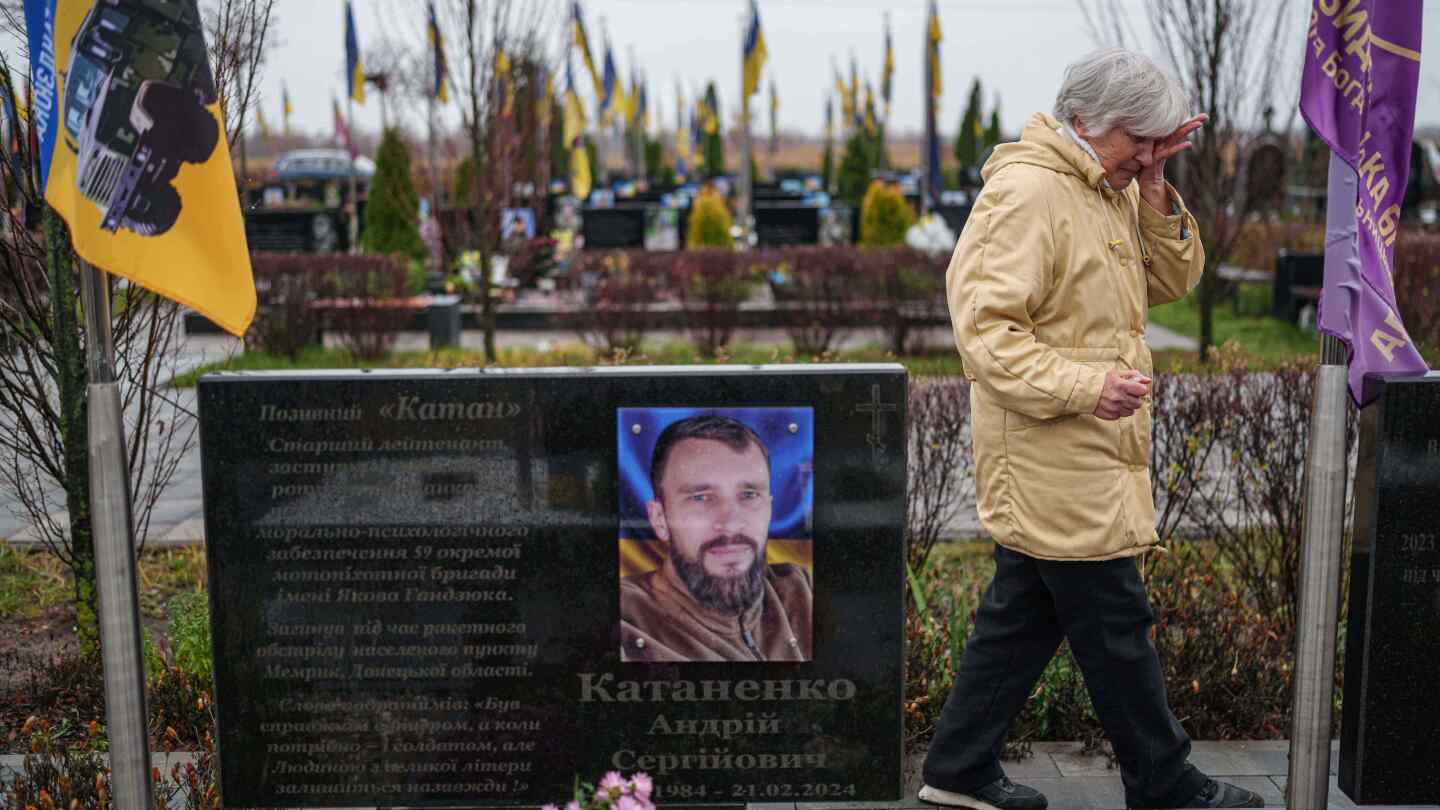
For survivors in Bucha, these terms represent not reconciliation but betrayal. At the town’s military cemetery, 66-year-old Vira Katanenko visited the grave of her son Andrii, killed last year fighting in the Donetsk region. The proposed amnesty fills her with dismay.
“I can’t accept that,” she said, her voice breaking with emotion. “They want forgiveness for all war crimes, including Bucha? That’s horrifying. Let them come here – let Trump himself come here. Let him and his family come, see our pain, and maybe then they’ll change their minds.”
The peace proposal has created ripples beyond Ukraine’s borders. European leaders have insisted that any legitimate peace talks must include Ukraine as a principal participant and protect the country’s sovereignty under international law – principles they worry could be undermined by the current proposal.
Ukrainian President Volodymyr Zelenskyy has described this moment as one of the most challenging of the war. While pledging to work constructively with Washington, he has emphasized the need for significant changes to the proposal to make it acceptable to the Ukrainian people.
The human cost of the ongoing conflict remains painfully evident. Near Bucha, mourners recently gathered for the funeral of Ruslan Zhyhunov, a 41-year-old machine gunner killed on the eastern front. As relatives and neighbors watched the burial in pouring rain, conversations inevitably turned to the peace plan and what it might mean for Ukraine’s future.
“How can you exchange the territory of your ancestors for something? For what?” questioned Andrii Honcharuk, a 71-year-old retired territorial defense volunteer who attended the service in uniform. “The war will not end soon. We will still be dying for a long time.”
The peace proposal has exposed a fundamental tension in Ukraine’s path forward. While the prospect of ending the devastating conflict holds obvious appeal, many Ukrainians believe peace without justice would merely embolden Russia and set the stage for future aggression.
For communities like Bucha that have already paid an unimaginable price, the idea of granting amnesty to those responsible for war crimes represents not just an abandonment of justice, but a betrayal of memory – turning documented atrocities into negotiable political chips rather than acts demanding accountability under international law.
Fact Checker
Verify the accuracy of this article using The Disinformation Commission analysis and real-time sources.

16 Comments
While I understand the desire for a swift resolution to this conflict, the proposal to grant amnesty for war crimes is deeply troubling. The people of Bucha and other affected communities have already endured unimaginable suffering. Any deal that fails to deliver accountability would be a grave injustice.
I agree. Accountability and justice must be central to any peace agreement, even if it makes the negotiations more difficult. The victims and their families deserve to see those responsible face the consequences of their actions. Lasting peace cannot be built on a foundation of impunity.
This proposed peace plan seems to prioritize a quick resolution over true reconciliation. Granting amnesty for war crimes committed in Bucha and elsewhere would be a bitter pill for Ukrainians to swallow. Justice and accountability should not be sacrificed for expedience.
I agree, the victims and their families deserve to see justice served, even if it complicates the path to peace. Lasting stability cannot be built on a foundation of impunity. A more nuanced approach is needed to address the legitimate concerns of all parties.
The situation in Bucha is heartbreaking. Residents have endured unimaginable trauma and loss. A peace deal that fails to properly address war crimes would be a bitter pill to swallow. Accountability and justice must be part of any lasting resolution.
You’re right, the people of Bucha deserve to see those responsible for the atrocities held accountable. Providing amnesty could feel like a betrayal after the horrors they’ve experienced. Striking the right balance will be extremely challenging.
The atrocities committed in Bucha are a stain on humanity that cannot be erased. Granting amnesty to those responsible would be a travesty of justice. While peace is the ultimate goal, it cannot come at the expense of the rule of law and respect for human rights. The victims deserve to see justice served.
Absolutely. A lasting peace must be built on a foundation of accountability and reconciliation, not impunity. The people of Bucha have already endured so much, and denying them justice would be a further betrayal. Finding the right balance between peace and justice will be a delicate and challenging task.
The proposed peace plan seems to prioritize a quick resolution over true reconciliation. Granting amnesty for war crimes committed in Bucha would be a bitter pill for Ukrainians to swallow. Justice and accountability should not be sacrificed for expedience.
You’re absolutely right. Lasting stability cannot be built on a foundation of impunity. A more nuanced approach is needed to address the legitimate concerns of all parties, including the victims and their families who deserve to see justice served.
The proposed peace deal for Ukraine raises many complex issues. Granting amnesty for war crimes could undermine justice and accountability, which are crucial for lasting peace. However, the realities of ending this devastating conflict must also be carefully weighed.
Amnesty is a sensitive topic given the atrocities committed. Finding a balance between peace and justice will require nuanced diplomacy and input from all stakeholders, including the people of Bucha who have suffered so much.
While a peaceful resolution is desperately needed, the proposal to grant amnesty for war crimes is deeply troubling. The people of Bucha and other affected communities have already endured unimaginable suffering. Any deal that fails to deliver accountability would be a grave injustice.
You make a valid point. Accountability and justice must be central to any peace agreement, even if it makes the negotiations more difficult. The victims and their families deserve to see those responsible face the consequences of their actions.
The atrocities committed in Bucha are a stain on humanity that cannot be erased. Granting amnesty to those responsible would be a travesty of justice. While peace is the ultimate goal, it cannot come at the expense of the rule of law and respect for human rights.
I agree wholeheartedly. The people of Bucha have already endured so much. To deny them justice would be a further betrayal. A lasting peace must be built on a foundation of accountability and reconciliation, not impunity.