


Listen to the article
Ukraine Seeks Vatican’s Formal Role in Negotiating Return of Children from Russia
Ukraine has formally requested the Vatican to establish an official framework for facilitating negotiations with Russia over the return of Ukrainian children and civilians taken during the nearly four-year war, a senior Ukrainian government official announced Wednesday.
Deputy head of President Volodymyr Zelenskyy’s office, Iryna Vereshchuk, told reporters in Rome that Ukraine wants the Holy See to serve as an intermediary platform through which Ukraine and Russia can negotiate the return of displaced civilians.
“It’s one thing when we have their prisoners of war and Russians are interested in returning them. They have our POWs, we have theirs. There is an interest in exchange,” Vereshchuk explained. “But Ukraine isn’t holding any Russian civilians to exchange.”
The request was formally conveyed in a letter from President Zelenskyy to Pope Leo XIV ahead of a scheduled audience Friday between the pope and a delegation of returned Ukrainian children and civilians. The letter asks that the Vatican formalize the previously informal arrangement in which Italian Cardinal Matteo Zuppi served as a personal papal envoy for humanitarian issues.
According to Vereshchuk, under Cardinal Zuppi’s unofficial mission, Russia exploited a “gray zone” to avoid responding to Ukraine’s lists of civilians it wanted returned, since the process lacked formal structure.
“Once the process is formalized we can have proper communications with the Russians and when we submit a letter through the platform they will have to respond,” she said.
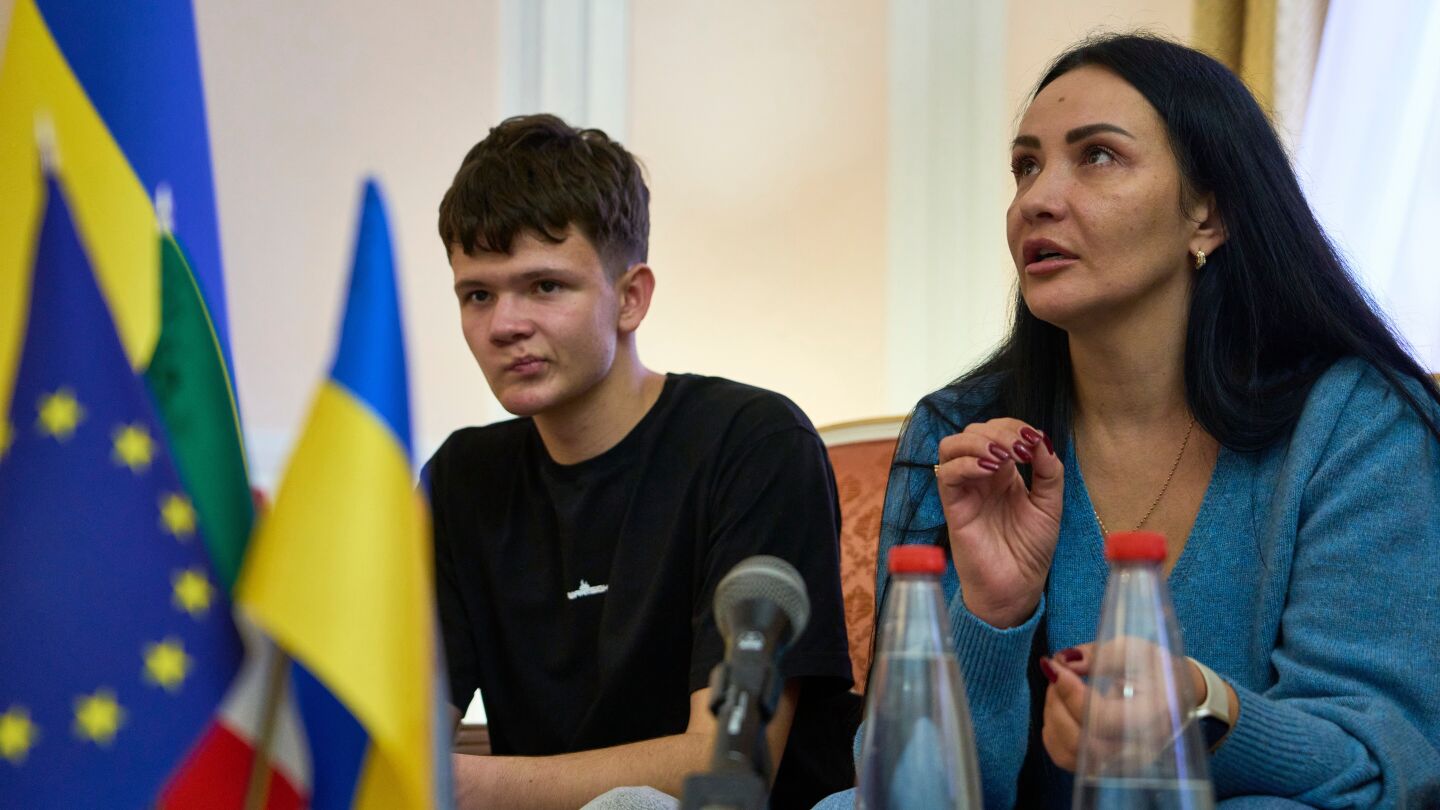
At Wednesday’s briefing, young Ukrainians described the trauma of separation from loved ones and their experiences under Russian control, including being subjected to intense propaganda efforts.
Veronika Vlasova, now 16, recounted how she was taken to Russian territory as a 13-year-old and separated from her mother for 14 months. “When I said I don’t want to write any of these kind of letters [of support for Russian soldiers], someone argued with me, and I was told that Ukraine doesn’t exist anymore,” Vlasova said. She was held in a children’s rehabilitation center in Russia without access to her telephone before eventually being released. She now lives in Kyiv.
The International Criminal Court in 2023 issued an arrest warrant for Russian President Vladimir Putin for war crimes, specifically accusing him of personal responsibility for the abduction of children from Ukraine.
Ukrainian officials consider the situation one of the country’s most pressing humanitarian crises. According to data published by Ukraine’s Bring Kids Back presidential platform, 19,546 Ukrainian children have been officially recorded as deported or forcibly transferred by Russia. As of March, Ukrainian Human Rights Ombudsman Dmytro Lubinets reported that 1,247 children had been successfully returned to Ukraine through diplomatic and humanitarian channels.
Vereshchuk also stated that Ukraine has identified approximately 2,000 civilians in Russian captivity through the Red Cross, though it’s unclear whether this figure includes children.
Liudmyla Siryk shared her months-long search for her grandson, Oleksandr Radchuk, who was injured in Mariupol as a 12-year-old during the opening weeks of the war in March 2022. After being separated from his mother, Radchuk was taken to a hospital in Donetsk. Siryk described securing the necessary paperwork and undertaking a four-day bus journey through Baltic countries and Russia to reach Donetsk, where they were reunited at the hospital.
“I’ve never been traveling in my life,” she said.
Now 15, Radchuk believes his mother remains in Russian captivity.
The Vatican and the Russian embassy to the Holy See did not immediately respond to requests for comment regarding Ukraine’s formal request.
Fact Checker
Verify the accuracy of this article using The Disinformation Commission analysis and real-time sources.

10 Comments
I’m curious to see how the Vatican responds to this request. Their involvement could put pressure on Russia to cooperate in returning the displaced Ukrainians, many of whom are children.
That’s a good point. The Vatican’s participation may lend more legitimacy and urgency to these negotiations, which is crucial given Russia’s resistance so far.
Ukraine’s request to the Vatican highlights the ongoing challenges it faces in negotiating with Russia over the return of its citizens. Establishing an official mediation framework is a sensible approach.
Yes, Ukraine recognizes the need for a structured process led by a respected third party like the Vatican. This could help break the deadlock and ensure a more transparent and accountable outcome.
This move by Ukraine demonstrates its determination to exhaust all diplomatic avenues to secure the return of its citizens. The Vatican’s involvement could be crucial in pressuring Russia to cooperate.
Indeed, Ukraine is taking a proactive approach by enlisting the Vatican’s support. This could be a strategic step to garner international attention and apply greater pressure on Russia.
This is an important diplomatic move by Ukraine to secure the safe return of its citizens forcibly taken by Russia. The Vatican could provide a neutral platform to facilitate negotiations and ensure proper protocols are followed.
Agreed. The Vatican’s moral authority and experience with international mediation could be invaluable in this sensitive situation.
This is a complex issue with significant humanitarian concerns. Formalizing the Vatican’s role as a neutral mediator seems like a prudent step to facilitate a resolution and the return of the displaced Ukrainians.
Absolutely. The Vatican’s moral influence and diplomatic experience could be instrumental in finding a peaceful solution that prioritizes the wellbeing of the affected civilians.