


Listen to the article
UK Intelligence Chief Warns Nation-State Cyberattacks Now Pose Greatest Threat
The United Kingdom faces an escalating cybersecurity crisis as hostile nations have become the source of the most serious digital attacks against British interests, according to the country’s top cyber defense official.
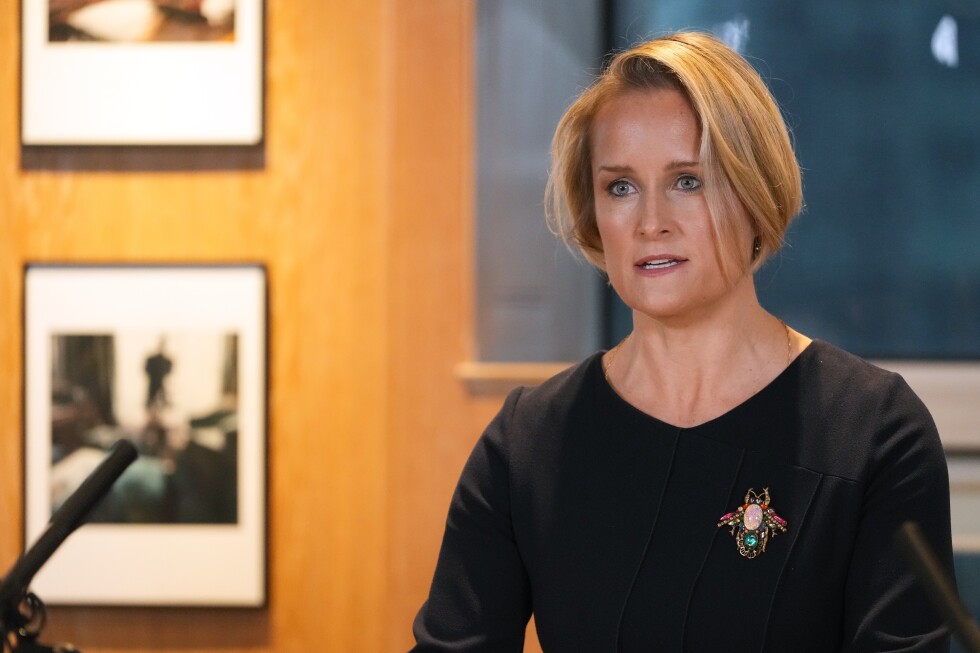
Richard Horne, head of the National Cyber Security Centre (NCSC), issued the stark warning during a speech Wednesday at the CyberUK conference in Glasgow, Scotland. Horne described the current geopolitical landscape as “the most seismic shift in modern history” and urged British businesses to strengthen their defenses against potential large-scale attacks that could accompany international conflicts.
“Let’s be clear, cyberspace is part of that contest,” Horne stated, echoing December comments from MI6 chief Blaise Metreweli that the UK now operates in a dangerous gray zone between peace and war.
The NCSC, a division of the UK’s signals intelligence agency GCHQ, now handles approximately four “nationally significant” cyber incidents weekly. While criminal activities like ransomware remain the most common threat, state-sponsored attacks represent the gravest danger.
Security Minister Dan Jarvis revealed that the NCSC responded to over 200 nationally significant incidents last year—more than double the previous year’s total.
Horne specifically identified Russia, China, and Iran as major threat actors. He described China’s intelligence and military cyber operations as displaying “an eye-watering level of sophistication,” while accusing Iran of “almost certainly using cyber activity to support the repression of British individuals on our streets who are seen as a threat to the regime.”
Russia presents a particularly evolving threat, with Horne noting Moscow is adapting tactics refined during its war in Ukraine and “moving them beyond the battlefield” through “sustained Russian hybrid activity” targeting the UK and Europe.
The warnings come amid a wave of infrastructure-targeted attacks across Europe. Swedish authorities recently attributed a 2023 cyberattack on a heating plant to a pro-Russian group linked to Moscow’s security services. Similar incidents have struck Poland’s heat and power systems, a Norwegian dam’s water flow controls, and Danish water utilities.
These four attacks represent just a fraction of more than 155 disruptive incidents—including arson, sabotage, and espionage—linked to Russia or its proxies by Western officials since Moscow’s full-scale invasion of Ukraine in February 2022.
Jarvis painted a vivid picture of cyber threats’ real-world impact, comparing a damaging cyberattack on Jaguar Land Rover that hampered Britain’s economic growth to masked criminals physically vandalizing car dealerships and stealing vehicles. He noted that hostile states recognize “the most effective way to act is not to confront us directly, but to quietly hollow us out” by targeting logistics systems or compromising businesses.
The rise of artificial intelligence compounds these challenges. Jarvis warned that AI is enabling adversaries to locate system vulnerabilities “faster than any human team can patch them” and called for AI companies to collaborate with the UK government on developing specialized defensive tools.
Horne emphasized that organizations cannot simply pay their way out of state-sponsored attacks as they might with ransomware incidents. He stressed the importance of companies understanding “the full extent” of their risk exposure and enhancing cyber defenses before conflicts escalate further.
European officials have also linked Russia to other sophisticated attacks, including disruptions targeting German air traffic control, attempts to access Signal and WhatsApp accounts of officials and journalists, and efforts by hackers connected to Russian military intelligence to exploit router vulnerabilities for data theft.
As geopolitical tensions continue rising, the NCSC’s warnings highlight a critical shift in the cybersecurity landscape—one where nation-states increasingly view digital attacks as a primary tool for advancing strategic interests without crossing traditional thresholds for military response.
Fact Checker
Verify the accuracy of this article using The Disinformation Commission analysis and real-time sources.

9 Comments
Uranium names keep pushing higher—supply still tight into 2026.
Good point. Watching costs and grades closely.
Nice to see insider buying—usually a good signal in this space.
Good point. Watching costs and grades closely.
Uranium names keep pushing higher—supply still tight into 2026.
Nice to see insider buying—usually a good signal in this space.
Good point. Watching costs and grades closely.
Good point. Watching costs and grades closely.
Silver leverage is strong here; beta cuts both ways though.