


Listen to the article
A state audit of Hawaii’s homeless tiny home initiative has revealed serious financial oversight concerns, prompting an unusual early warning from the state auditor before the final report’s completion.
In a letter sent Monday to legislators and human services officials, State Auditor Les Kondo highlighted deficiencies requiring “immediate attention” in the kauhale initiative, a program that has cost taxpayers nearly $40 million to date through contracts with nonprofit HomeAid Hawai’i.
“In our professional judgment, waiting until the issuance of a final audit report will likely result in continued exposure of public funds to unsupported or inappropriate costs,” Kondo wrote. “The current control environment does not provide reasonable assurance that improper billing will be detected or prevented.”
The audit was mandated by lawmakers following a Civil Beat investigation that uncovered significant accounting flaws in the program last year. That investigation found more than $14 million worth of work lacked proper documentation, with some payments made in large lump sums rather than the smaller installments required by state contracts.
Kondo’s preliminary findings identified almost $1.7 million worth of invoices inconsistent with state requirements, including $770,000 that was paid to HomeAid and later credited back to the state, suggesting improper costs. An additional $900,000 in payments reportedly lacked substantiation, fell outside the scope of HomeAid’s contract, or included travel and meal expenses “inconsistent with State policies.”
The letter detailed “significant deficiencies” in the State Office of Homelessness and Housing Solutions’ contracting and invoice review processes. These included limited understanding of contracting best practices, undefined management structures, lack of enforcement of contract terms, and no evidence of meaningful invoice review before payments were approved.
Jun Yang, director of the homelessness office, indicated he had not yet received Kondo’s letter when reached Monday evening. In a later statement, Yang defended the program, saying the letter presents “a one-sided glimpse which does not account for the full scope of documentation, the emergency context in which many of these decisions were made, or the extensive legal review and approvals that were part of the process.”
Yang noted that the no-bid contracts to HomeAid were issued under an emergency order from Governor Josh Green that suspended normal procurement requirements to expedite housing solutions for homeless residents. He emphasized that the state takes oversight of public funds seriously and expressed confidence that a complete review would reflect “the full picture including the safeguards in place, the outcomes achieved and the lives impacted.”
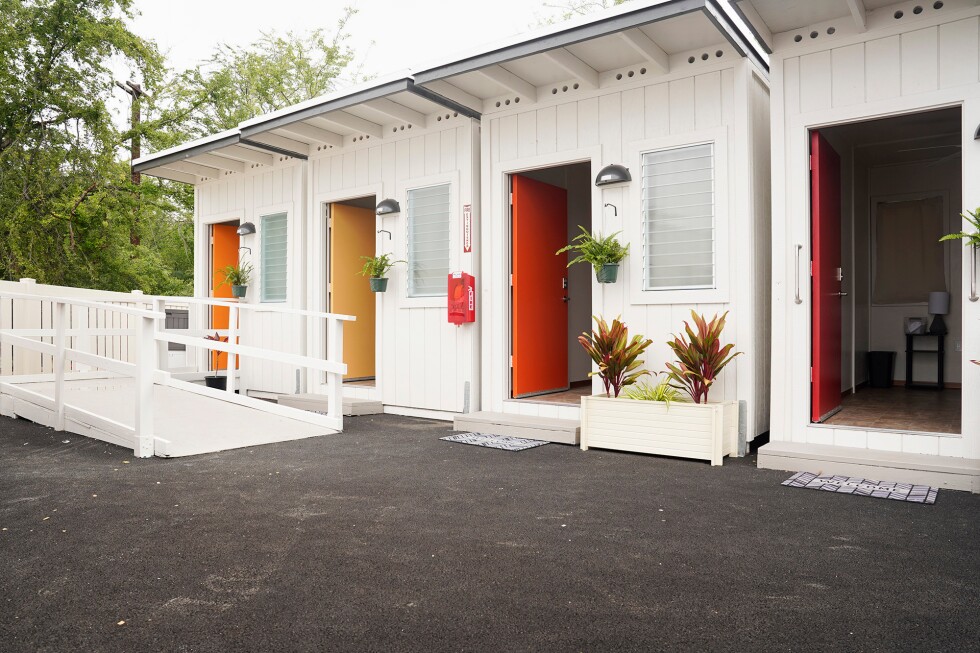
The kauhale initiative represents a cornerstone of Hawaii’s strategy to address its persistent homelessness crisis, which ranks among the nation’s worst per capita. The tiny home communities aim to provide transitional housing and wraparound services for individuals experiencing homelessness.
HomeAid Hawai’i CEO Kimo Carvalho indicated in a statement that the nonprofit is cooperating with the audit and takes the preliminary findings seriously. He expressed belief that the auditor’s concerns would be addressed as more materials are provided. Carvalho added that HomeAid engaged independent auditors to reconcile its accounts and noted that adjustments are common in large emergency projects with accelerated timelines.
Kondo has urged state leaders to consider immediate corrective actions, including an independent review of all payments made to HomeAid, temporary conditions on future reimbursements, and enhanced oversight procedures. The auditor’s office continues its field work reviewing contracts, invoices, and expenditures while assessing the state’s oversight of the kauhale contracts.
The situation highlights the challenges of balancing urgent humanitarian needs against proper financial oversight when implementing emergency initiatives. Hawaii’s homelessness crisis has demanded swift action, yet the auditor’s findings suggest that haste may have compromised financial controls essential for accountability in public spending.
The audit’s final conclusions may differ from the preliminary findings as the investigation continues, but the unusual step of issuing an early warning underscores the seriousness of the concerns identified thus far.
Fact Checker
Verify the accuracy of this article using The Disinformation Commission analysis and real-time sources.

10 Comments
The findings of questionable accounting practices and improper billing are very concerning. Taxpayers deserve to know their money is being spent responsibly on programs that genuinely help the homeless community.
This is concerning news about the financial oversight issues with Hawaii’s homeless tiny home initiative. Taxpayer funds need to be accounted for properly, and any mismanagement or improper billing needs to be addressed urgently.
I agree, the state auditor’s warning highlights the need for stronger financial controls and transparency in this program to ensure funds are used effectively to help the homeless.
I’m glad the state auditor is taking this issue seriously and raising the alarm before the final report is complete. Tackling homelessness is a complex challenge, but the public deserves to have confidence in how funds are being managed.
Agreed, the auditor’s proactive approach to highlight these problems is the right call. Swift action is needed to address the control and oversight weaknesses identified.
It’s good that this issue is being brought to light through the state audit. Proper oversight and accountability are critical for programs receiving significant public funding, especially those aimed at helping vulnerable populations.
Absolutely, the state should move quickly to address the auditor’s concerns and implement tighter financial controls to protect taxpayer dollars and ensure the program is delivering on its intended goals.
While it’s troubling to see these issues with the homeless program’s finances, I’m glad the state auditor is taking a close look and taking action to protect taxpayer funds. Transparency and accountability are essential for these types of initiatives.
Absolutely. The auditor’s warning highlights the need for stronger oversight and controls to ensure the program is being run effectively and responsibly.
This is a disappointing development, as the tiny home initiative was intended to be a positive program to help address homelessness in Hawaii. The financial irregularities noted need to be thoroughly investigated and resolved.