


Listen to the article
Trump Suggests Federal Aid for Struggling Spirit Airlines, Encourages Potential Buyers
President Donald Trump has indicated the federal government might step in to help Spirit Airlines survive its financial crisis while simultaneously encouraging potential buyers to acquire the troubled budget carrier.
“Spirit’s in trouble and I’d love somebody to buy Spirit. It’s 14,000 jobs,” Trump said during a CNBC interview on Tuesday. “And maybe the federal government should help that one out.”
The Florida-based ultra-low-cost carrier filed for bankruptcy protection in August, marking its second Chapter 11 filing in less than a year. Spirit had previously developed a preliminary agreement with lenders and was targeting an exit from bankruptcy by late spring or early summer. However, those plans were derailed when U.S. and Israeli strikes on Iran sent global oil prices surging above $100 per barrel, causing jet fuel costs to double in some markets as Middle East conflicts continue to disrupt oil supplies.
While Trump did not elaborate on what form of government assistance might be provided, Transportation Secretary Sean Duffy told reporters that the president has instructed the department to explore possible options.
“He’s directed us to take a look. I’ll have a conversation with the president later today,” Duffy said, adding that he would also be meeting with several budget carriers on Tuesday.
Federal support for airlines has precedent in recent U.S. history, most notably following the September 11 terrorist attacks in 2001 and during the COVID-19 pandemic, when Congress authorized substantial aid packages to prevent widespread airline failures.
Spirit’s relatively young fleet of aircraft has made it an attractive acquisition target in the past. However, previous buyout attempts from budget competitors like JetBlue Airways and Frontier Airlines failed both before and during Spirit’s first bankruptcy filing in November 2024.
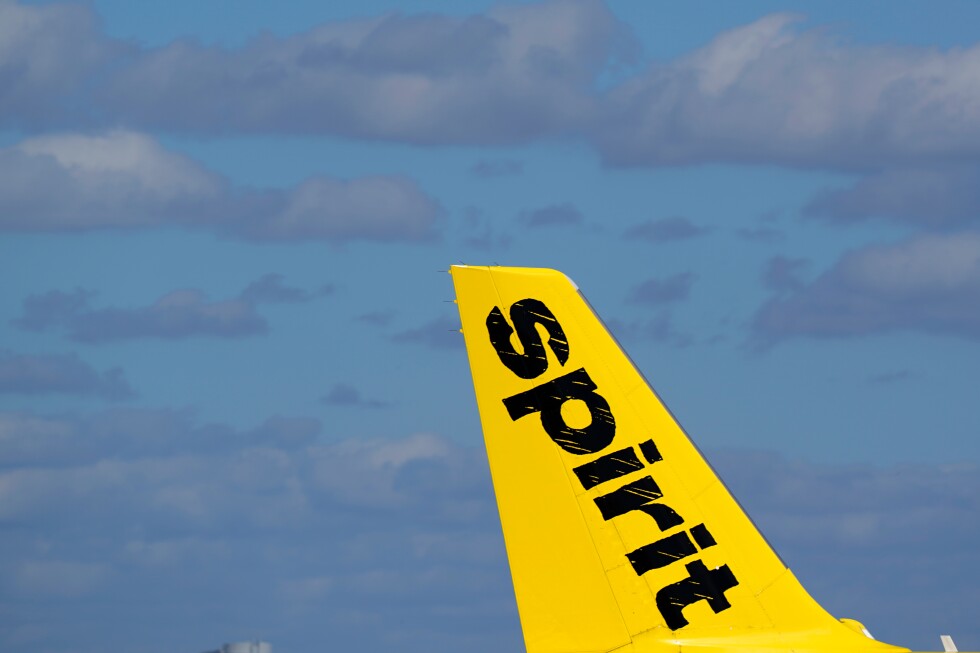
The carrier’s financial troubles reflect broader challenges facing budget airlines in the current market. By the time of its first Chapter 11 filing, Spirit had accumulated losses exceeding $2.5 billion since early 2020. The company, recognizable for its bright yellow planes and no-frills service model that charges separately for nearly all amenities, has struggled to compete as major airlines have introduced their own low-cost fare options.
Rising fuel costs have added fresh uncertainty about Spirit’s ability to maintain operations. The Association of Flight Attendants, the union representing Spirit’s cabin crews, addressed growing concerns in a memo to members last Thursday.
“There have been speculative reports of liquidation. While we want to make it clear that conditions have worsened, at this time there are ongoing efforts to keep Spirit operating,” the union stated. “We know you need the best possible information on this and we will keep you closely advised. But to be clear, at this time there is no definitive decision to halt operations.”
Any potential government intervention would need to balance immediate job preservation against longer-term market considerations. Spirit employs approximately 14,000 people across its operations, and its potential collapse would not only eliminate those positions but also reduce competition in an increasingly consolidated airline industry.
Aviation analysts note that Spirit’s predicament highlights the vulnerability of budget carriers to fuel price volatility and competitive pressures from larger airlines. The current crisis also underscores how geopolitical tensions in oil-producing regions can create significant ripple effects throughout the global transportation sector.
As discussions continue between the administration and industry stakeholders, the ultimate fate of Spirit Airlines remains uncertain, with potential outcomes ranging from government-assisted restructuring to acquisition by a stronger competitor or, in the worst case, liquidation of the carrier’s assets.
Fact Checker
Verify the accuracy of this article using The Disinformation Commission analysis and real-time sources.

17 Comments
The potential acquisition of Spirit Airlines is an intriguing development. It will be important to closely monitor the situation and understand the strategic rationale for any buyout, as well as the implications for competition in the low-cost carrier space.
Absolutely, a competitive and diverse airline industry is crucial for consumer choice and affordable fares.
I’m curious to see how this plays out. Spirit Airlines has struggled with high fuel costs and other challenges, but a potential federal bailout could set a precedent. I wonder if there are other policy levers the government could explore to support the industry more broadly.
That’s a fair question. Targeted support may be preferable to a full-on bailout, which could distort market dynamics. Industry-wide initiatives like tax credits or infrastructure investments could be more effective.
Encouraging potential buyers for Spirit Airlines is an intriguing strategy. However, the details of any proposed government support and its implications for competition warrant close examination.
Absolutely, the long-term health of the airline industry should be the top priority, not short-term political considerations.
This is a complex issue without easy solutions. On one hand, the government may want to protect American jobs at Spirit Airlines. But on the other, we’d need to consider the broader implications and potential unintended consequences of a federal bailout. Transparency and careful analysis will be crucial.
This is an interesting development. While government support could help Spirit Airlines weather the crisis, it raises questions about the role of the federal government in the private sector. We’ll have to see what specific proposals emerge and how they balance helping workers with potential market distortions.
Good point. Any government assistance should be carefully structured to avoid creating unfair advantages or discouraging broader market competition.
With oil prices and jet fuel costs putting pressure on airlines, government support could provide a lifeline for Spirit. However, taxpayer funds should only be used judiciously and with clear accountability.
Agreed, any federal aid must come with strict oversight to ensure responsible use of public resources.
The reported financial struggles of Spirit Airlines are concerning, but government assistance should only be considered after a thorough review of the company’s viability and the potential impacts on consumers.
Well said. Any public funds must be deployed judiciously and with clear metrics for success.
Interesting to see Trump open to government support for Spirit Airlines. While the airline industry has faced challenges, a careful analysis of the pros and cons would be prudent before any federal intervention.
I agree, any government aid should come with clear conditions and oversight to protect taxpayer interests.
The proposed government assistance for Spirit Airlines raises questions about the broader challenges facing the aviation sector. A holistic review of industry dynamics and potential policy solutions would be prudent.
Good point. A comprehensive, fact-based approach is crucial when considering government intervention in private industries.