


Listen to the article
President Donald Trump is set to take a prominent role at Friday’s World Cup draw in Washington, welcoming teams and fans from around the world at a moment when his administration has intensified restrictions on U.S. travel and immigration.
The juxtaposition is striking: as Trump prepares to host an event celebrating global unity through sport, his administration is expanding travel bans affecting 19 countries and hardening anti-immigrant rhetoric. The White House insists that expedited visa processing and excitement for next summer’s tournament—co-hosted by the United States, Mexico, and Canada—will overshadow concerns about these contradictory messages.
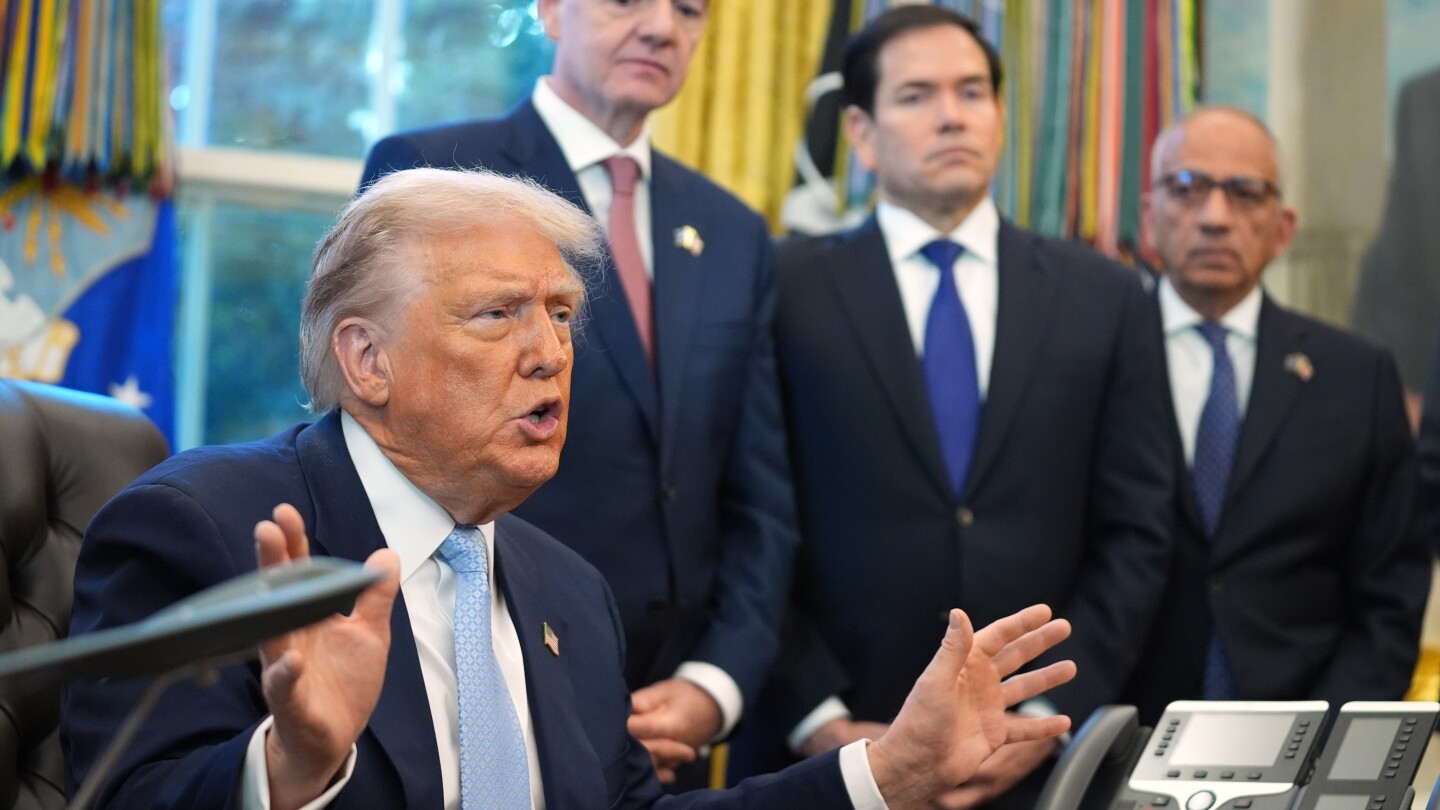
Trump’s recent statements have included calls for permanently pausing immigration from what he termed “poor countries,” with particular criticism directed at Afghans and Somalis. This rhetoric comes even as he oversees diplomatic achievements, including a peace agreement between Rwanda and Congo that he signed Thursday with multiple foreign leaders present.
FIFA, soccer’s international governing body, is expected to honor Trump for these peacemaking efforts during the World Cup draw ceremony.
Critics view the administration’s position as fundamentally at odds with the tournament’s spirit. “The Cup is supposed to be a moment when the world comes together, puts aside differences to celebrate sport,” said Senator Chris Van Hollen (D-Md.), a member of the Senate Foreign Relations Committee. “While it symbolizes the world coming together, you have a president of the United States who is trying to keep the world out.”
Andrew Giuliani, executive director of the White House FIFA task force, dismissed these concerns during a briefing with foreign reporters on Wednesday. “There is a fictional narrative out there that the president is not welcoming to foreigners,” Giuliani said, attributing Trump’s controversial statements to his New York background: “Sometimes we say things that are a little different than polished politicians say.”
The expanded travel restrictions have already affected World Cup participants. Iran has announced a boycott of the draw after key delegation members were denied visas, though its coach Amir Ghalenoei will attend with minimal staff. Haiti, which qualified for the tournament for the first time in 50 years, is also subject to the ban.
The restrictions include exceptions for athletes, coaches, essential support staff, and their immediate families from banned nations. However, fans from these countries—a significant source of tourism revenue for host nations—are barred from entry.
Homeland Security Secretary Kristi Noem escalated the administration’s position Monday, saying she would recommend a “full travel ban on every damn country that’s been flooding our nation with killers, leeches, and entitlement junkies.”
These developments contradict earlier assurances from FIFA President Gianni Infantino, who has cultivated close ties with Trump. In October, Infantino told reporters at a European Football Clubs assembly in Rome that “there will be no issues with regard to visas obviously for the participating teams and delegations.”
The White House emphasizes its efforts to facilitate tournament attendance, pointing to expedited visa processing for fans traveling to the 48-nation event, with matches held across 11 U.S. cities. The State Department has deployed over 400 additional consular officers to handle visa demand, and Secretary of State Marco Rubio reports that travelers in about 80% of countries worldwide can now secure visa appointments within 60 days.
A new system called “FIFA Pass” allows ticket purchasers to access expedited visa appointments. However, incidents suggesting potential immigration enforcement at matches have already emerged. During this summer’s Club World Cup, Alex Lasry, CEO of the New York/New Jersey World Cup host committee, noticed government social media posts warning that immigration agents would be “suited and booted” at matches.
When asked about the possibility of immigration raids at World Cup venues, Giuliani told reporters that Trump “does not rule out anything that will help make American citizens safer.”
For fans from countries under travel restrictions, the reality is stark. Rich André, director of state and local initiatives at the American Immigration Council and son of Haitian immigrants, noted the disappointment among Haiti’s soccer enthusiasts.
“They’re trying to create a carve-out here so the show can go on,” André said, referring to exemptions for teams and officials. “But the show doesn’t go on without the fans being able to come and cheer their team on in person.”
As the administration attempts to balance national security concerns with its duties as a World Cup host, the contradiction between Trump’s immigration policies and the tournament’s message of global unity remains unresolved, casting a shadow over what should be an international celebration of sport.
Fact Checker
Verify the accuracy of this article using The Disinformation Commission analysis and real-time sources.

31 Comments
Uranium names keep pushing higher—supply still tight into 2026.
Good point. Watching costs and grades closely.
Nice to see insider buying—usually a good signal in this space.
Good point. Watching costs and grades closely.
The cost guidance is better than expected. If they deliver, the stock could rerate.
Interesting update on Trump’s immigration message is colliding with his welcome to World Cup fans. Curious how the grades will trend next quarter.
I like the balance sheet here—less leverage than peers.
Good point. Watching costs and grades closely.
Good point. Watching costs and grades closely.
I like the balance sheet here—less leverage than peers.
Good point. Watching costs and grades closely.
Silver leverage is strong here; beta cuts both ways though.
Good point. Watching costs and grades closely.
Exploration results look promising, but permitting will be the key risk.
Good point. Watching costs and grades closely.
Good point. Watching costs and grades closely.
If AISC keeps dropping, this becomes investable for me.
Good point. Watching costs and grades closely.
Exploration results look promising, but permitting will be the key risk.
Interesting update on Trump’s immigration message is colliding with his welcome to World Cup fans. Curious how the grades will trend next quarter.
Good point. Watching costs and grades closely.
Good point. Watching costs and grades closely.
If AISC keeps dropping, this becomes investable for me.
Good point. Watching costs and grades closely.
Good point. Watching costs and grades closely.
Uranium names keep pushing higher—supply still tight into 2026.
Good point. Watching costs and grades closely.
Good point. Watching costs and grades closely.
I like the balance sheet here—less leverage than peers.
Good point. Watching costs and grades closely.
Good point. Watching costs and grades closely.