


Listen to the article
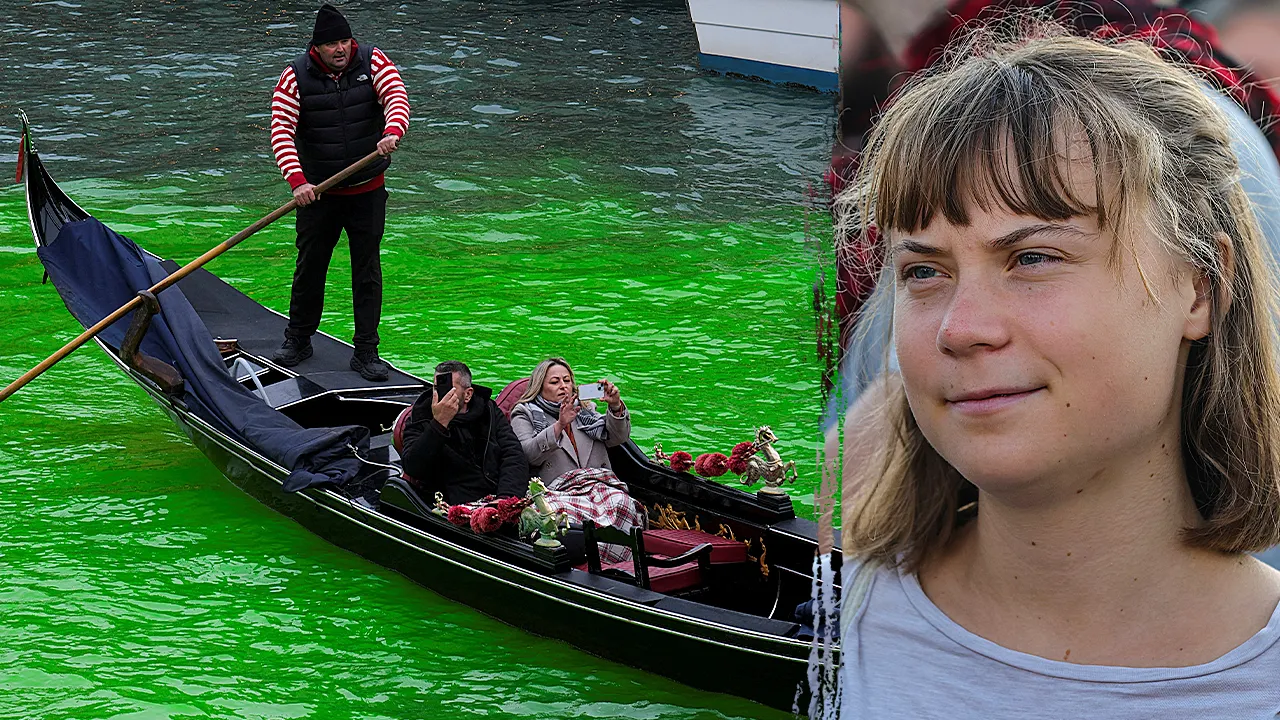
Climate activist Greta Thunberg has received a 48-hour ban from entering Venice, Italy after participating in a protest that turned the city’s Grand Canal bright green. The Swedish activist, 22, was fined $172 along with approximately 35 other demonstrators involved in the action, according to The Telegraph.
The protest was organized by Extinction Rebellion, which coordinated simultaneous demonstrations across ten Italian cities to coincide with the conclusion of the COP30 United Nations climate conference in Brazil. The environmental group stated that the fluorescent dye used was non-toxic and commonly employed in environmental studies such as tracking water flows or monitoring leaks.
In addition to dyeing Venice’s Grand Canal, protesters displayed a “Stop Ecocide” banner on the iconic Rialto Bridge and conducted a silent demonstration with participants dressed in red veils moving through crowds of tourists. Similar actions took place in other Italian cities, with activists dyeing fountains in Genoa and Padova green, and turning rivers in Turin, Bologna and Taranto the same color.
Veneto Province Governor Luca Zaia condemned the protest as “a gesture that risks having consequences for the environment” and “a disrespectful act towards our city, its history and its fragility.” Venice is particularly vulnerable to environmental concerns, with the historic city facing increasing threats from rising sea levels and more frequent flooding.
Extinction Rebellion defended the action, stating it was intended to “draw attention to the massive effects of climate collapse.” The group also criticized Italian Prime Minister Giorgia Meloni’s government for resisting stronger climate measures at the recently concluded COP30 conference in Brazil.
This incident marks the latest in a series of high-profile demonstrations by Thunberg, who has become one of the world’s most recognizable climate activists since initiating her “School Strike for Climate” protests as a teenager. Her approach has evolved to include more direct action tactics in collaboration with established environmental groups.
Venice, a UNESCO World Heritage site built across 118 small islands separated by canals and connected by over 400 bridges, faces unique environmental challenges. The city has implemented expensive flood defense systems in recent years, including the MOSE barrier project, to protect against the increasing “acqua alta” (high water) events that regularly submerge portions of the city.
Environmental protests have become increasingly confrontational globally, with activists arguing that dramatic actions are necessary to draw attention to the urgency of climate change. Critics, however, contend that such demonstrations can alienate potential supporters and damage historically significant sites.
The timing of the Venice protest, immediately following the COP30 conference, appears strategic. Climate advocates have expressed frustration with the pace of international climate negotiations and what they see as insufficient commitments from world governments to reduce carbon emissions and limit global warming.
For Venice authorities, the incident presents a delicate balance between allowing freedom of expression and protecting the city’s cultural and environmental integrity. The relatively modest fine and short-term ban imposed on Thunberg and other protesters reflects this tension between acknowledging the right to protest while discouraging actions that could potentially harm the city’s fragile ecosystem.
Fact Checker
Verify the accuracy of this article using The Disinformation Commission analysis and real-time sources.

5 Comments
The use of non-toxic dye to highlight environmental issues is an intriguing approach, but dyeing a historic landmark like the Grand Canal is a bold and potentially risky move. Extinction Rebellion will need to carefully manage the public perception of this protest.
Greta Thunberg and Extinction Rebellion seem to be taking increasingly provocative actions to draw attention to climate change. While the group claims the dye was non-toxic, dyeing a historic canal is a controversial tactic that could backfire and alienate the public.
I understand the urgency, but damaging public property is a risky approach that may undermine the broader environmental message. Perhaps the group could explore more constructive ways to engage the public and policymakers.
Interesting that the activists targeted Venice, an iconic city already threatened by rising sea levels and climate change impacts. However, this type of disruptive protest could turn public opinion against the environmental cause if not handled carefully.
I’m curious to hear more about the group’s rationale for choosing Venice and the specific tactics employed. While the cause is important, the optics of this action seem questionable.