


Listen to the article
The Philippines is testing a pioneering carbon financing mechanism aimed at accelerating the retirement of coal-fired power plants while funding their conversion to renewable energy facilities. This innovative approach, called transition credits, seeks to create value from emissions that would be prevented by phasing out coal operations earlier than scheduled.
Unlike traditional carbon credits that represent emissions already reduced or removed, transition credits quantify and monetize future emissions that would be avoided by retiring coal plants ahead of their typical 50-year lifespan. The funds generated would then be directed toward replacing fossil fuel equipment with clean energy technology at the same sites.
“If it works, there will be a playbook for coal asset owners and their energy transitions,” said Irene Maranan of ACEN Corp., the energy arm of Philippine conglomerate Ayala Corp. “There will be more believers than non-believers in this initiative.”
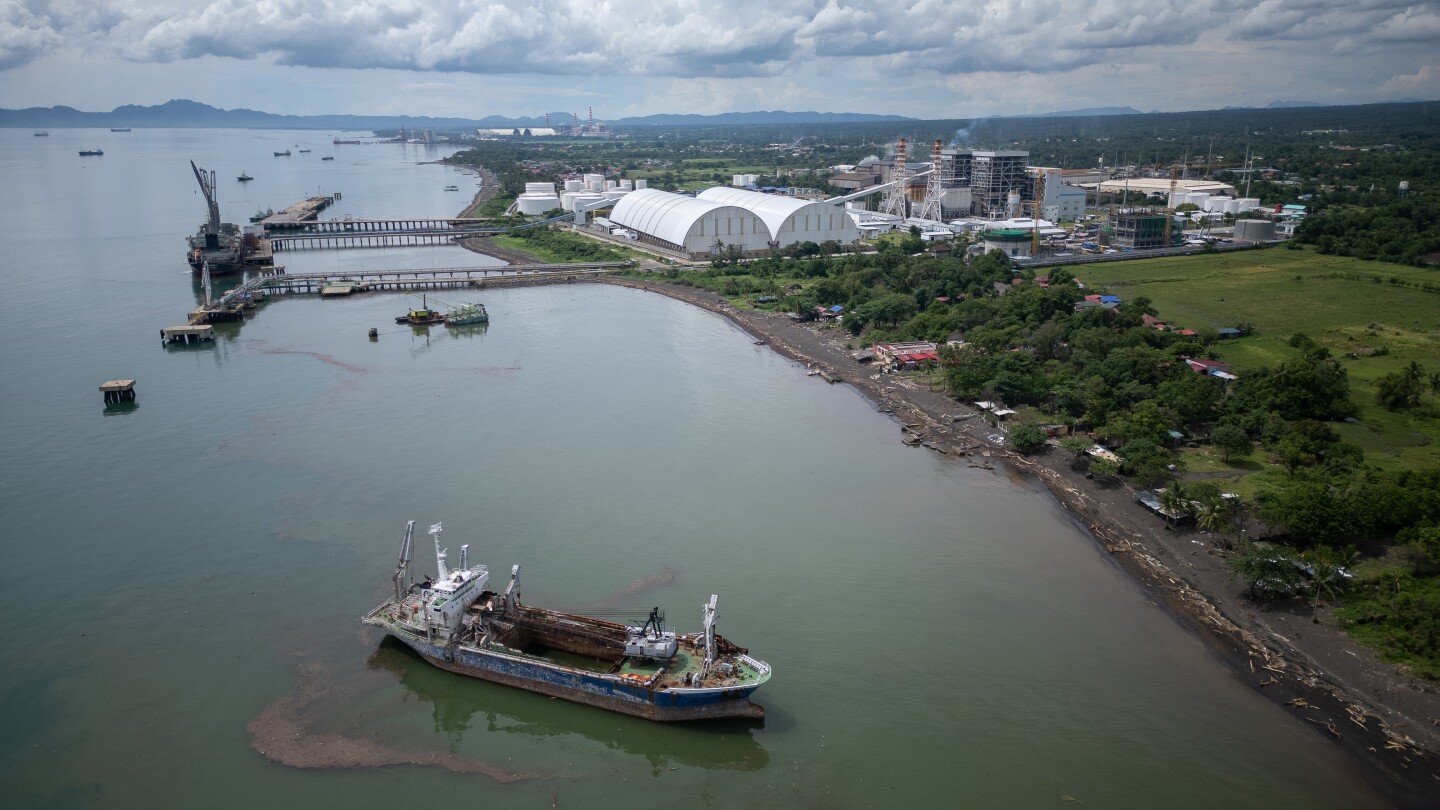
The concept is being piloted at ACEN’s 270-megawatt South Luzon Thermal Energy Corp. power plant in Calaca City, south of Manila. Built just a decade ago, the facility represents the typical profile of Southeast Asia’s coal plants, which average less than 15 years in operation. ACEN has committed to retiring the South Luzon facility by 2040, but transition credits could potentially accelerate this timeline.
The Rockefeller Foundation designed the transition credits concept and sees significant regional potential. Joseph Curtin, the foundation’s vice president of energy transitions, identified approximately 60 coal plants across the Asia-Pacific region suitable for this approach, potentially attracting $110 billion in public and private capital by 2030.
“We want to do dozens of projects to drive real impact,” Curtin explained. “But to have any credibility, we need to do one project and we need to use that to learn and evolve.”
The initiative comes at a critical juncture for Southeast Asia, which ranks as the world’s third-largest coal-consuming region after India and China. The International Energy Agency projects the region’s electricity demand will double by 2050, putting pressure on nations to expand energy production while meeting climate commitments.
Ramnath Iyer of the U.S.-based Institute for Energy Economics and Financial Analysis estimates a transition credit could be valued between $11 and $52. “There will be challenges and flaws, like in every deal,” Iyer noted. “But it’s not like we have a smorgasbord or buffet of climate change solutions to choose from.”
Despite its potential, the transition credit approach faces significant skepticism from environmental activists and carbon market experts. Their concerns stem from longstanding integrity issues in global carbon markets, where projects have been plagued by allegations of greenwashing, miscalculations, and failure to deliver promised benefits to local communities.
Patrick McCully, an energy transition analyst for Reclaim Finance, dismissed transition credits as “old wine in a new bottle” and “a dead end” in a recent report, arguing that the industry hasn’t adequately addressed fundamental problems with carbon credit systems.
“It is a really thorny issue to try to accurately quantify the benefits of an intervention like transition credits,” cautioned Danny Cullenward of the University of Pennsylvania’s Kleinman Center for Energy Policy, though he acknowledged that “efforts to support phasing out coal-fired power plants are worthy, important and of critical need.”
Elle Bartolome of the Philippine Movement for Climate Justice, who protested what she termed the “carbon casino” during recent UN climate talks, raised concerns about whether local communities would truly benefit. She questioned if reparations would be provided to those negatively impacted by the Calaca coal plant’s operations.
For ACEN, the practical realities of energy transition necessitate this approach. “It would be irresponsible to just turn off a coal plant without a replacement,” Maranan emphasized. “The country still needs its energy supply. There is a growing demand that isn’t stopping.”
The Philippines’ experiment comes as the world struggles to maintain the global goal of limiting warming to 1.5 degrees Celsius above pre-industrial levels. The UN failed to negotiate an international roadmap to phase out fossil fuels at recent climate talks, while emissions continue rising as coal meets growing energy demands in the Asia-Pacific’s developing economies.
As this pilot project unfolds in Calaca, its success or failure could significantly influence how Southeast Asia navigates the challenging path from coal dependency to renewable energy adoption in the coming decades.
Fact Checker
Verify the accuracy of this article using The Disinformation Commission analysis and real-time sources.

20 Comments
Silver leverage is strong here; beta cuts both ways though.
The cost guidance is better than expected. If they deliver, the stock could rerate.
Good point. Watching costs and grades closely.
Good point. Watching costs and grades closely.
Nice to see insider buying—usually a good signal in this space.
If AISC keeps dropping, this becomes investable for me.
Good point. Watching costs and grades closely.
Good point. Watching costs and grades closely.
Uranium names keep pushing higher—supply still tight into 2026.
Good point. Watching costs and grades closely.
Good point. Watching costs and grades closely.
Interesting update on The Philippines tests ‘transition credits’ to cut coal use in novel experiment. Curious how the grades will trend next quarter.
Good point. Watching costs and grades closely.
Good point. Watching costs and grades closely.
Silver leverage is strong here; beta cuts both ways though.
Good point. Watching costs and grades closely.
Good point. Watching costs and grades closely.
Exploration results look promising, but permitting will be the key risk.
If AISC keeps dropping, this becomes investable for me.
Good point. Watching costs and grades closely.