


Listen to the article
Historic Thailand-Cambodia Border Conflict Reignites Despite Ceasefire
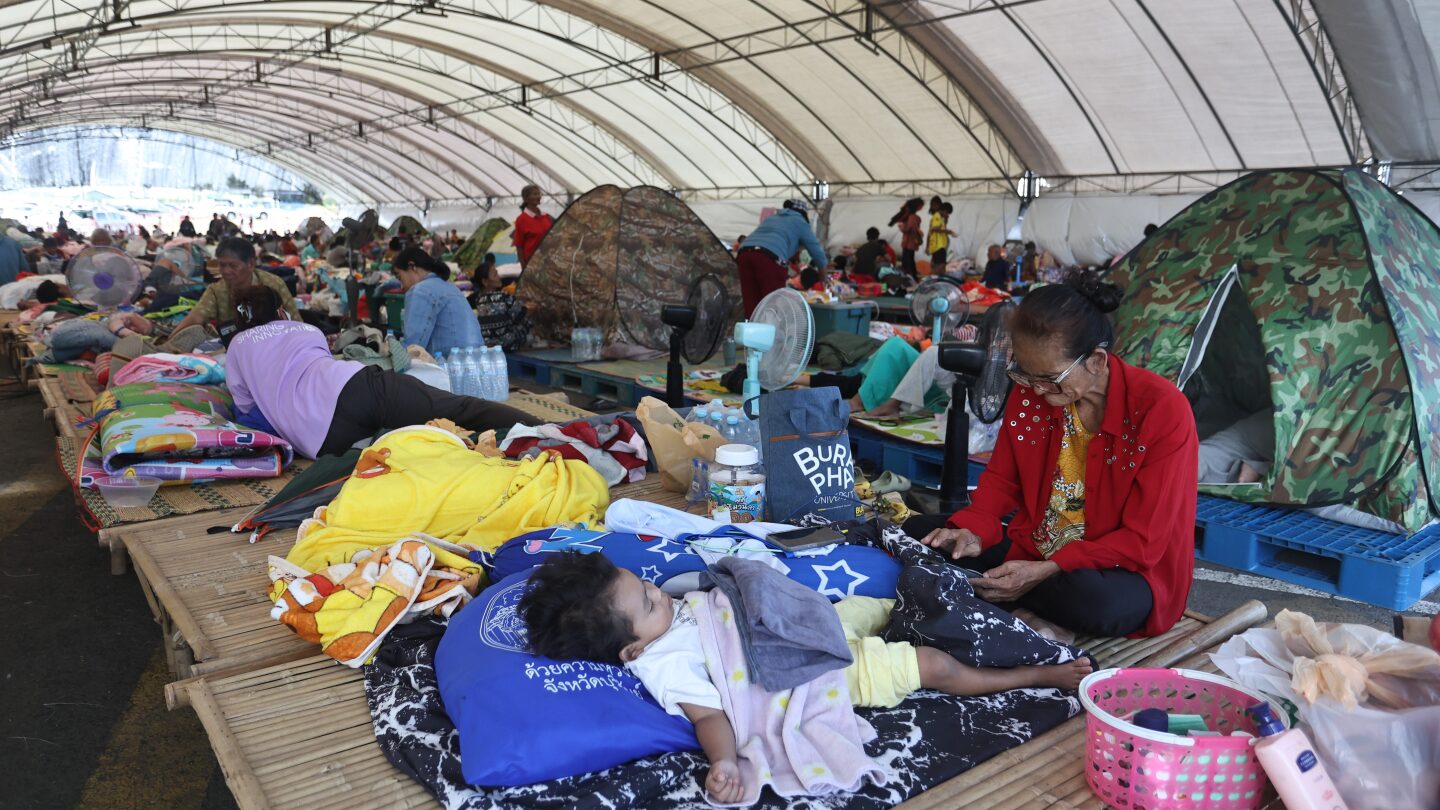
Armed clashes erupted once again along the Thailand-Cambodia border Monday, shattering a fragile ceasefire brokered just months earlier with assistance from U.S. President Donald Trump. The latest fighting marks the most significant escalation since July’s five-day conflict that claimed dozens of military and civilian lives and displaced tens of thousands of villagers.
While initial reports cannot confirm which side initiated hostilities, Thailand has launched airstrikes along the border region as ground combat intensifies between the two Southeast Asian neighbors.
The border dispute has deep historical roots stretching back over a century. The conflict centers on competing territorial claims stemming from a 1907 map created during Cambodia’s French colonial period—a document Thailand has long contended is inaccurate. Many Thais remain embittered by a 1962 International Court of Justice ruling that awarded sovereignty of disputed territory to Cambodia, a decision reaffirmed in 2013. This territorial disagreement has fueled periodic armed clashes, particularly between 2008 and 2011.
The July hostilities ended after Malaysian-led peace efforts and direct intervention from President Trump, who leveraged both countries’ economic dependence on the American market by threatening to withhold trade privileges. Trump later cited this mediation as an example of his administration’s success in resolving international conflicts.
A preliminary agreement in July gave way to a more detailed October accord that outlined several confidence-building measures: coordinated de-mining operations, removal of heavy weaponry from border areas, trust-building initiatives, and a halt to inflammatory rhetoric and misinformation. However, observers note that implementation has been minimal at best.
Instead of de-escalation, both nations have engaged in an aggressive propaganda war with occasional smaller-scale cross-border incidents. Cambodia has repeatedly demanded the release of 18 soldiers captured by Thai forces during previous fighting. Meanwhile, Thailand accuses Cambodia of planting new landmines in disputed areas that have injured Thai soldiers—allegations Cambodia denies, claiming the mines are remnants from decades of civil war that ended in 1999.
“The failure to implement the ceasefire terms was used by the Thai side as an excuse not to promptly release the Cambodian prisoners,” said a regional security analyst familiar with the situation, “despite the October agreement’s clear call for Thailand to do so as a goodwill gesture to promote trust.”
The conflict has significant geopolitical implications beyond the immediate border region. Thailand has long been one of Washington’s closest allies in Southeast Asia and maintains clear military superiority over Cambodia, particularly in air power. However, Cambodia has been working to strengthen its diplomatic position, including being among the first nations to publicly support a Nobel Peace Prize nomination for President Trump.
The situation is further complicated by shifting regional alignments. While the United States has historically maintained close ties with Thailand, Washington has recently increased engagement with Cambodia in what analysts describe as an effort to counter China’s growing influence in Phnom Penh. This perceived realignment has reportedly caused friction in Bangkok.
Trade relationships add another layer of complexity. Despite Thailand’s larger and more developed economy, Cambodia has made greater progress toward finalizing a trade agreement with Washington—a development that has not gone unnoticed in Thai policy circles.
The renewed fighting threatens the crucial tourism sector in both countries, which were still recovering from the devastating impact of the COVID-19 pandemic. The winter high season represents a vital revenue period for both economies.
Beyond modern geopolitics, the conflict is rooted in centuries-old cultural rivalry dating back to when both were competing empires in the region. This historical antagonism has manifested in disputes over cultural heritage, with both nations claiming ownership of traditional arts, combat sports, culinary traditions, and other cultural expressions.
As regional diplomats scramble to prevent further escalation, the future of the border region remains uncertain. Without meaningful implementation of previous agreements and true confidence-building measures, analysts fear the cycle of conflict may continue to plague Thai-Cambodian relations for years to come.
Fact Checker
Verify the accuracy of this article using The Disinformation Commission analysis and real-time sources.

33 Comments
Nice to see insider buying—usually a good signal in this space.
Good point. Watching costs and grades closely.
Good point. Watching costs and grades closely.
Production mix shifting toward World might help margins if metals stay firm.
Good point. Watching costs and grades closely.
Good point. Watching costs and grades closely.
If AISC keeps dropping, this becomes investable for me.
Good point. Watching costs and grades closely.
Good point. Watching costs and grades closely.
Nice to see insider buying—usually a good signal in this space.
Good point. Watching costs and grades closely.
Uranium names keep pushing higher—supply still tight into 2026.
Good point. Watching costs and grades closely.
The cost guidance is better than expected. If they deliver, the stock could rerate.
Good point. Watching costs and grades closely.
Uranium names keep pushing higher—supply still tight into 2026.
Good point. Watching costs and grades closely.
Good point. Watching costs and grades closely.
Uranium names keep pushing higher—supply still tight into 2026.
Good point. Watching costs and grades closely.
Good point. Watching costs and grades closely.
Nice to see insider buying—usually a good signal in this space.
Nice to see insider buying—usually a good signal in this space.
Exploration results look promising, but permitting will be the key risk.
Good point. Watching costs and grades closely.
Good point. Watching costs and grades closely.
I like the balance sheet here—less leverage than peers.
Good point. Watching costs and grades closely.
Production mix shifting toward World might help margins if metals stay firm.
Good point. Watching costs and grades closely.
Interesting update on The new fighting between Thailand and Cambodia is rooted in old enmity. Curious how the grades will trend next quarter.
Uranium names keep pushing higher—supply still tight into 2026.
Good point. Watching costs and grades closely.