


Listen to the article
Thailand’s government officially terminated a 2001 Memorandum of Understanding with Cambodia on Tuesday, ending a two-decade framework that was intended to resolve overlapping maritime territorial claims between the neighboring Southeast Asian nations.
The agreement, which had been in place for 22 years, was designed to facilitate peaceful maritime boundary negotiations and establish protocols for jointly managing marine resources in accordance with international law. Despite five rounds of talks over the past two decades, the countries failed to make meaningful progress toward resolving their competing claims.
Cambodia expressed regret over Thailand’s decision but indicated it would continue seeking resolution through alternative means. The termination doesn’t take immediate legal effect until Thailand delivers formal notification to Cambodia.
The collapse of the maritime agreement dashes hopes in both countries for the development of potentially lucrative offshore oil and gas resources in the disputed areas. Energy exploration companies have long eyed the Gulf of Thailand for its untapped petroleum reserves, but development has been hampered by the unresolved boundary issues.
This diplomatic rupture comes amid deteriorating relations between the two countries, which experienced armed conflict along their land border in July and December last year. The clashes resulted in dozens of civilian and military casualties on both sides and displaced hundreds of thousands of people. While a fragile ceasefire was established in late December, tensions persist with sporadic incidents and significant military deployments along the border region.
The border disputes have fueled nationalist sentiment in Thailand, making territorial integrity a prominent issue in domestic politics. Prime Minister Anutin Charnvirakul and his Bhumjaithai Party included terminating the maritime agreement among their campaign promises during Thailand’s recent elections, framing it as a defense of national interests.
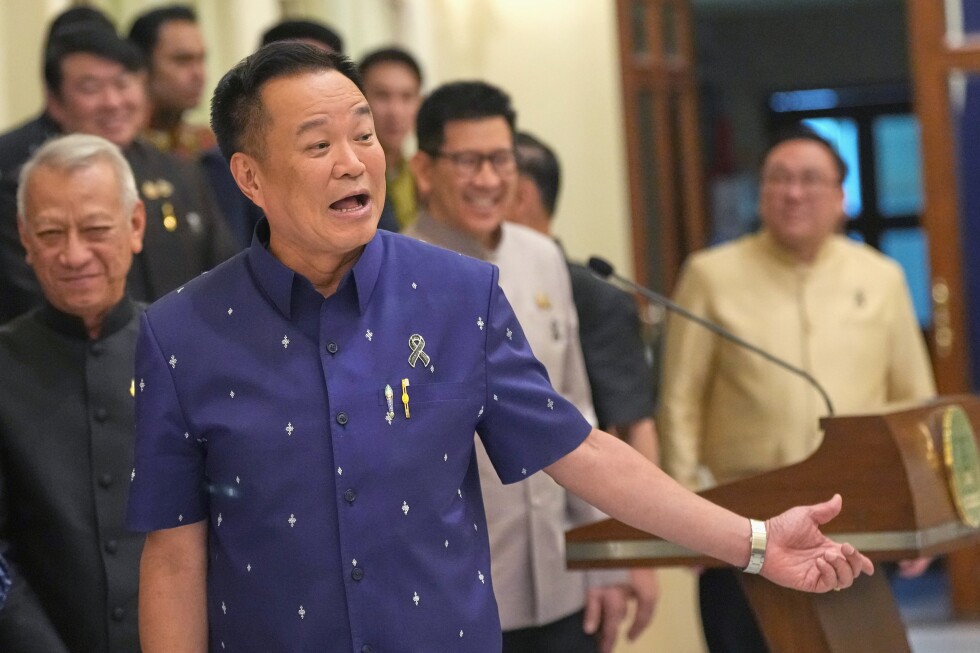
Despite the timing, Prime Minister Anutin emphasized that the memorandum termination is unrelated to the ongoing border situation. “The termination will not impact the current border situation,” Anutin stated after Tuesday’s Cabinet meeting. He added that negotiations regarding maritime territory would continue through other international frameworks, particularly the United Nations Convention on the Law of the Sea (UNCLOS).
Thai government spokesperson Rachada Dhnadirek reinforced this position, describing the termination as “an adjustment of the framework for cooperation, not a termination of relations or negotiations.” According to Rachada, Thailand proposes shifting to mechanisms under the U.N. Convention, which she characterized as “clearer, more comprehensive, and systematic” for effective maritime dispute resolution.
Speaking from Phnom Penh, Cambodian Foreign Minister Prak Sokhonn expressed disappointment with Thailand’s decision, calling it “a departure from the spirit and political will that enabled our two countries to establish a framework for peacefully resolving these issues in accordance with international law.” He announced that Cambodia will pursue compulsory conciliation under the U.N. framework, reaffirming “its commitment to resolving maritime disputes peacefully and in accordance with international law.”
Cambodian Prime Minister Hun Manet reinforced this position in a social media statement, saying, “Cambodia’s decision reflects our sincere hope that both countries can reach a just and lasting solution in line with international law, allowing our peoples to live together in peace, stability, and harmony.”
Maritime boundary disputes in Southeast Asia have frequently complicated regional relations, with overlapping claims affecting economic development, particularly in potential resource-rich areas. This latest diplomatic shift underscores the challenges of resolving long-standing territorial issues in a region where maritime boundaries remain contentious despite decades of negotiation efforts.
Fact Checker
Verify the accuracy of this article using The Disinformation Commission analysis and real-time sources.

9 Comments
The collapse of this 2001 agreement is disappointing, as it dashes hopes for joint management of marine resources in the disputed areas. Both countries will need to explore other diplomatic avenues to find a lasting resolution.
With potentially lucrative offshore oil and gas reserves in the region, the stakes are high for Thailand and Cambodia to settle their competing claims.
This is a complex territorial dispute that has dragged on for over 20 years. It’s understandable that Thailand has decided to terminate the 2001 MoU, but I’m curious to see what alternative approaches the two countries might pursue going forward.
Unresolved maritime boundaries can create challenges for energy companies looking to develop the region’s natural resources. Hopefully Thailand and Cambodia can find a way to cooperate on resource management.
The termination of this agreement is a setback, but not entirely unexpected given the lack of progress in the negotiations over the past two decades. Thailand and Cambodia will need to re-evaluate their strategies if they want to reach a mutually acceptable solution.
With the potential for offshore energy development at stake, both countries have strong incentives to find a way to cooperate on managing the disputed maritime areas.
This is an unfortunate development, as the unresolved maritime boundary issues have long hindered energy exploration and resource development in the Gulf of Thailand. Thailand and Cambodia will need to demonstrate flexibility and political will to find a compromise.
Interesting development in the long-running maritime dispute between Thailand and Cambodia. It’s a shame they couldn’t resolve the overlapping claims, as energy exploration and resource development in the Gulf of Thailand have been hampered by the unresolved issues.
Hopefully they can find an alternative framework to peacefully negotiate the maritime boundaries and allow energy companies to tap into the region’s potential resources.