


Listen to the article
Thailand’s Prime Minister Acknowledges Government Failures as Flood Death Toll Rises to 162
Thai Prime Minister Anutin Charnvirakul on Saturday admitted to government shortcomings in handling the devastating floods that have ravaged southern Thailand, killing at least 162 people and affecting nearly 4 million residents across 12 provinces.
“I apologized to the people that the government was unable to take care and protect them,” Anutin told reporters during a news conference following his visit to the disaster zones. The prime minister’s comments come amid mounting criticism of the government’s emergency response to one of the worst flooding disasters to hit the region in recent years.
The southern province of Songkhla has borne the brunt of the catastrophe, with at least 126 confirmed deaths, according to government spokesperson Siripong Angkasakulkiat. The province’s largest city, Hat Yai, continues to report rising casualties as rescue teams gain access to previously submerged residential areas and recover more bodies.
The Department of Disaster Prevention and Mitigation reported Saturday that more than 1.4 million households have been affected by the floods, which began last weekend following torrential rains. The disaster left thousands stranded, streets impassable, and countless low-rise buildings and vehicles submerged under floodwaters.
In response to the crisis, the Thai government has unveiled a comprehensive relief package. Anutin announced that compensation payments will begin distribution next week to affected residents. Additional measures include debt suspension programs and short-term, interest-free loans designed to help businesses recover and support home repairs.
“Our priority now is to ensure that recovery efforts reach every affected household as quickly as possible,” Anutin stated. “We understand the immense challenges faced by our citizens and are committed to providing both immediate relief and long-term support.”
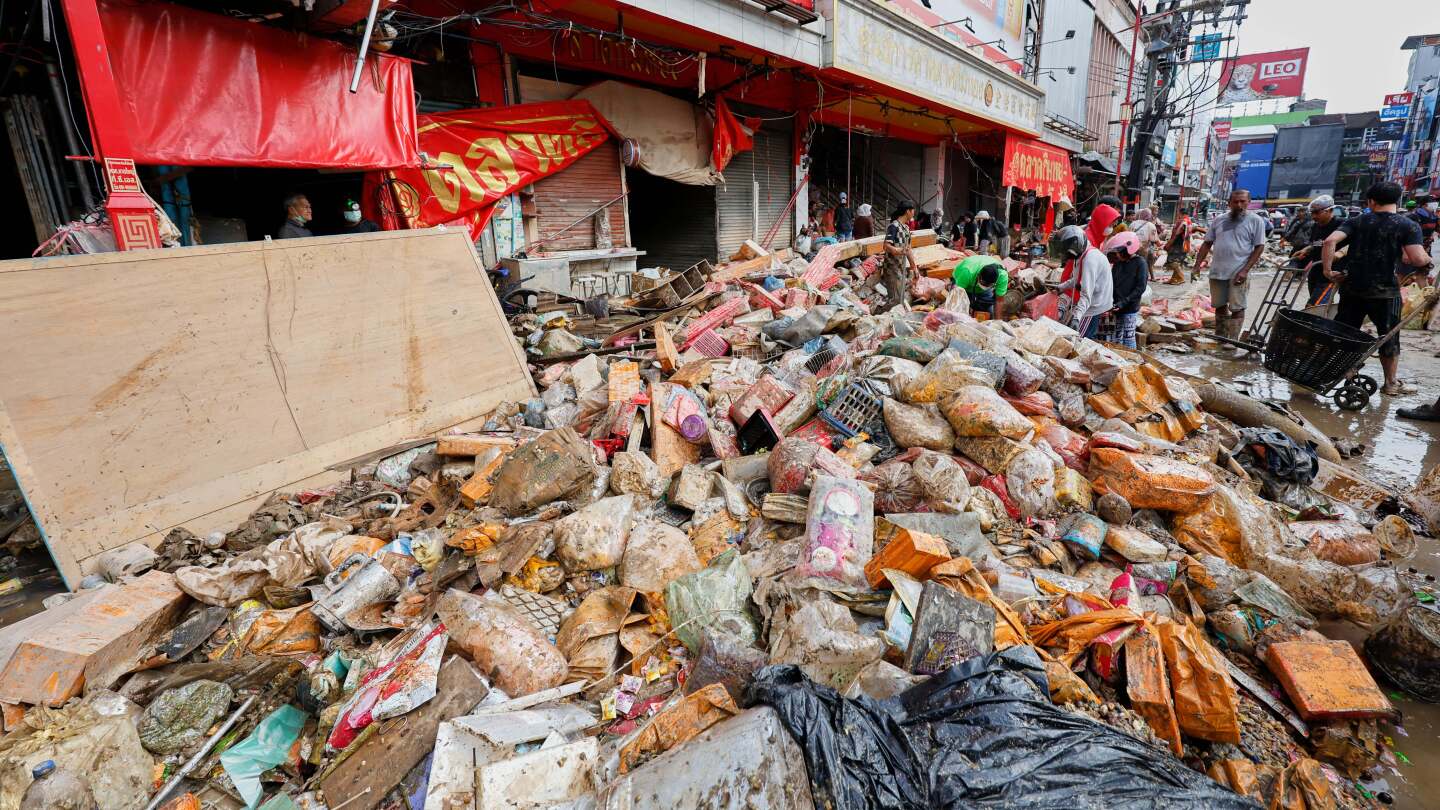
There appears to be a glimmer of hope as the Department of Disaster Prevention and Mitigation reported Saturday morning that water levels have begun to recede across all affected provinces. Local news footage showed residents returning to their homes to assess the damage, with many finding their personal belongings and furniture scattered and destroyed.
The scale of the disaster has prompted royal intervention. Government spokesperson Siripong announced that King Maha Vajiralongkorn would donate 100 million baht (approximately $3.11 million) to Hat Yai Hospital, which suffered extensive damage during the flooding. Additionally, the king has pledged royal support for the funeral ceremonies of all flood victims.
Thailand’s southern region, known for its tourism industry and agricultural production, regularly experiences seasonal monsoons. However, climate experts have pointed to changing weather patterns and increased intensity of rainfall in recent years as contributing factors to more severe flooding events.
The economic impact of the disaster is expected to be significant. Southern Thailand is a major producer of rubber and palm oil, with extensive plantations now underwater. Tourism operators in the region, already struggling to recover from pandemic-related losses, now face additional setbacks.
Local disaster management experts have called for a comprehensive review of Thailand’s flood prevention infrastructure and early warning systems. Dr. Seree Supratid, a leading hydrologist at Rangsit University, told local media that “urbanization, insufficient drainage systems, and the lack of updated flood mapping have exacerbated the impact of heavy rainfall in vulnerable areas.”
As recovery efforts continue, attention will likely turn to questions about long-term resilience planning and climate adaptation measures needed to protect Thailand’s vulnerable coastal regions from future disasters.
Fact Checker
Verify the accuracy of this article using The Disinformation Commission analysis and real-time sources.

14 Comments
This is a sobering reminder of the devastating impacts of extreme weather events. The prime minister’s acknowledgement of shortcomings is a step in the right direction, but more must be done to protect vulnerable communities.
Agreed. Improved disaster planning, early warning systems, and emergency relief coordination will be crucial to mitigating the effects of similar disasters down the line.
Tragic to hear about the devastating floods in Thailand. The government’s failure to adequately respond is concerning. Hopefully they can learn from this experience to improve disaster preparedness and emergency response for the future.
The prime minister’s acknowledgement of failures is a positive first step, but the real test will be in how the government follows through with meaningful reforms to disaster preparedness and crisis response. This tragedy cannot be repeated.
While the prime minister’s acknowledgement of failures is a positive sign, the real work lies ahead in implementing comprehensive reforms to Thailand’s disaster management systems. Protecting vulnerable communities must be the top priority going forward.
Devastating news from Thailand. The government’s inability to adequately prepare for and respond to these floods is concerning. Hopefully this leads to a thorough review and improvements to the country’s disaster management systems.
This is a tragic situation, and the government’s shortcomings in handling it are deeply concerning. Thorough investigations, transparent reporting, and a clear plan for improving early warning, emergency response, and coordination should be the next steps.
This is a tragic situation, and the government’s shortcomings in handling it are deeply troubling. Improving early warning systems, emergency protocols, and coordination between agencies should be an urgent priority to save lives in future disasters.
The scale of this disaster and the government’s failure to adequately protect its citizens is very concerning. Thorough investigations and comprehensive reforms to disaster management systems are needed to ensure better outcomes next time.
It’s good to see the prime minister taking responsibility, but the loss of life is truly heartbreaking. Improving disaster response capabilities, including better coordination, resource allocation, and community engagement, is crucial to prevent such devastating outcomes.
This is a sobering reminder of the importance of effective disaster preparedness and emergency response. The prime minister’s acknowledgement of failures is a start, but concrete actions to improve systems and processes are needed to prevent such tragedies.
While it’s good to see the prime minister take responsibility, the loss of life is heartbreaking. Strengthening disaster response capabilities, including better coordination and resource allocation, is crucial to prevent such devastating outcomes in the future.
While the death toll is heartbreaking, I’m glad the prime minister is taking responsibility for the government’s failures. Strengthening emergency response capabilities should be a top priority to prevent further loss of life.
The prime minister’s comments are a step in the right direction, but the real test will be in the government’s follow-through. Strengthening early warning, evacuation protocols, and coordination between agencies should be top priorities to save lives in future disasters.