


Listen to the article
Taiwan’s Opposition Leader Travels to China on “Peace Mission” Amid Rising Tensions
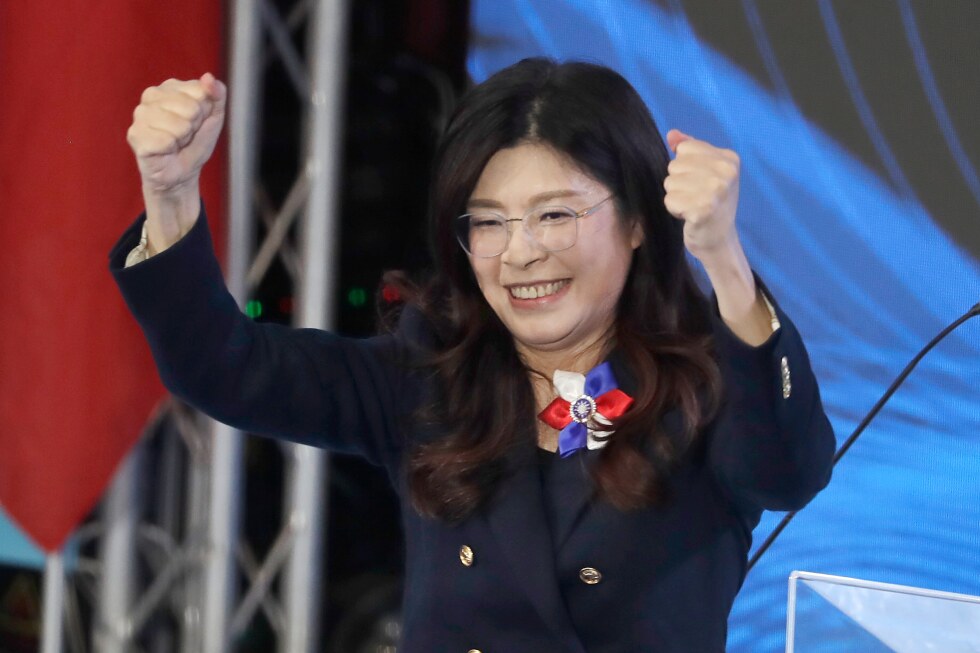
Taiwan opposition leader Cheng Li-wun departed for mainland China on Tuesday following an invitation from Chinese President Xi Jinping, describing her trip as a “journey for peace” as Beijing continues to assert claims over the self-governed island.
Speaking to reporters at Taipei’s airport, where both supporters and protesters gathered with signs and chants, Cheng emphasized Taiwan’s commitment to preventing military conflict. “The purpose of this visit to mainland China is precisely to show the world that it is not just Taiwan that unilaterally hopes for peace,” said the Kuomintang party chairwoman.
The visit marks the first trip by a Taiwanese opposition leader to China in ten years and comes at a particularly sensitive time, just weeks before a scheduled meeting between Xi and U.S. President Donald Trump in Beijing this May. Small crowds of both supporters and critics gathered at the airport as Cheng departed.
Cheng expressed hope that her visit would demonstrate “the sincerity and determination of the CPC Central Committee to use peaceful dialogue and exchange to resolve all possible differences between the two sides,” referring to China’s ruling Communist Party.
The timing of Cheng’s visit is significant against a backdrop of escalating military tensions in the Taiwan Strait. China has been conducting near-daily military operations around Taiwan, including warplane and naval vessel deployments. Following the U.S. announcement of a $10 billion arms package to Taiwan in December, China staged major live-fire military exercises that deployed air, naval and missile units around the island.
The U.S. State Department responded to these exercises by stating they “increase tensions unnecessarily” and urged Beijing to cease military pressure against Taiwan. However, China has consistently maintained that Taiwan is an internal matter and its most critical issue in U.S.-China relations.
During a February phone call between Xi and Trump, the Chinese leader firmly stated that “Taiwan will never be allowed to separate from China” and cautioned that “the U.S. must handle the issue of arms sales to Taiwan with prudence,” according to Chinese government statements. Beijing describes the Taiwan issue as “the most important issue in China-US relations.”
The December arms package approved by the Trump administration includes medium-range missiles, howitzers, and drones—military equipment that has provoked strong objections from Beijing. The United States, while maintaining no formal diplomatic ties with Taipei under its “One China” policy agreement with Beijing, remains Taiwan’s strongest informal supporter and primary weapons supplier.
Meanwhile, domestic politics in Taiwan adds another layer of complexity. Cheng’s visit comes as the opposition-controlled parliament, led by her Kuomintang party, has stalled attempts by Taiwan’s government under President Lai Ching-te to pass a special defense budget of $40 billion. Beijing refuses to engage with President Lai, whom it labels a separatist.
The Chinese government has never renounced the use of force to bring Taiwan under its control, considering the island an inalienable part of its territory despite Taiwan’s functioning as an independent democracy with its own government, military, and currency for decades.
Cheng’s diplomatic mission reflects the challenging balancing act facing Taiwanese political leaders, who must navigate relations with China while maintaining the island’s de facto independence and security partnerships with the United States and other democratic allies in the Indo-Pacific region.
As tensions continue to simmer in the Taiwan Strait, international observers will be watching closely for any signals from Cheng’s meetings with Chinese officials that might indicate Beijing’s future approach toward cross-strait relations.
Fact Checker
Verify the accuracy of this article using The Disinformation Commission analysis and real-time sources.

11 Comments
While the timing of this visit is delicate, I hope it can help build trust and understanding between Taiwan and China. Reducing the risk of miscalculation should be the top priority.
This visit is a bold move, but one that could pay dividends if it leads to a productive exchange of views and a renewed commitment to peaceful coexistence.
The visit by the Taiwan opposition leader is a bold move, given the heightened tensions. I’m curious to see if it can lead to tangible progress or if it’s more symbolic in nature.
It’s encouraging to see Taiwan’s commitment to preventing military conflict, even in the face of China’s assertive claims. Diplomacy and dialogue are critical to managing this complex situation.
Absolutely. Open communication and a willingness to find common ground are essential, no matter how challenging the geopolitical landscape may be.
This visit by the Taiwan opposition leader to China is an interesting development. It will be important to see if any progress can be made on reducing tensions between the two sides through peaceful dialogue.
Agreed. Open communication channels are crucial, even in sensitive times. Let’s hope this trip can lead to constructive discussions and reduce the risk of escalation.
Taiwan’s opposition leader deserves credit for undertaking this ‘peace mission’ to China. Fostering constructive dialogue is the best way to address differences and prevent conflict.
Agreed. Even small steps towards open communication can go a long way in defusing tensions and promoting regional stability.
Navigating the delicate cross-strait relationship is no easy task. While the timing is tricky, I’m cautiously optimistic this ‘peace mission’ could help find common ground and ease military concerns.
That’s a fair perspective. Any effort to promote stability and prevent conflict should be welcomed, even if the path forward remains uncertain.