


Listen to the article
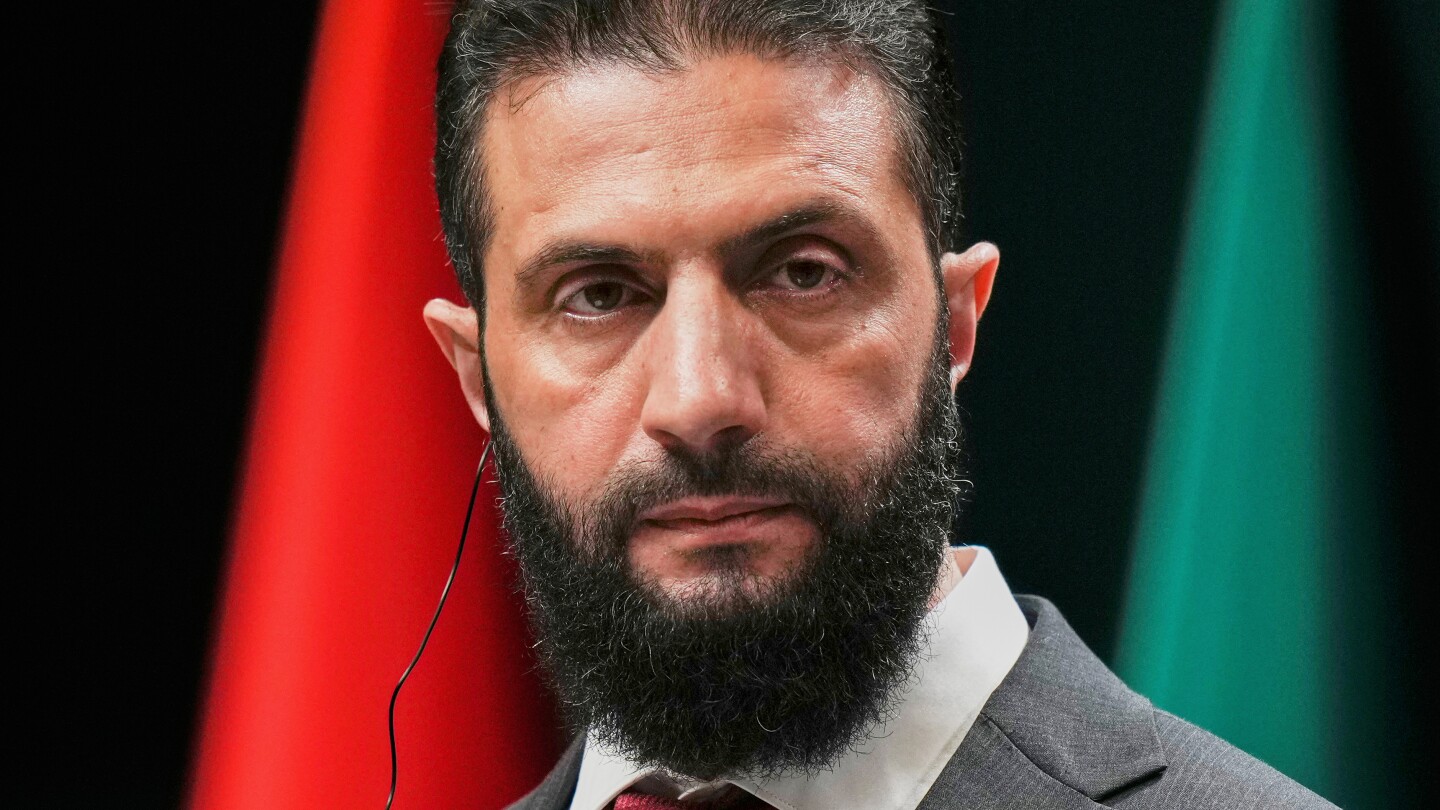
Syria’s interim president Ahmad al-Sharaa accused Israel on Saturday of “fighting ghosts” and seeking out enemies in the aftermath of the Gaza conflict, despite his attempts to foster regional peace since taking office a year ago.
Speaking at the Doha Forum in Qatar, al-Sharaa claimed his overtures for stability have been rebuffed by Israel, which he said has instead expanded its conflict with Hamas to justify what he characterized as aggression against Syria.
“We are not concerned in being a country that exports conflict, including to Israel,” al-Sharaa told attendees at the international conference, emphasizing Syria’s desire for regional stability under his leadership.
The Syrian president called for Israeli forces to withdraw from Syrian territory and recommit to the 1974 truce agreement that established a demilitarized buffer zone between the countries following the Yom Kippur War. He urged the international community to pressure Israel while expressing hope for a resolution that could address “reasonable” security concerns.
“There are currently negotiations, and the United States is participating and engaged in those negotiations,” he revealed, suggesting diplomatic channels remain active despite tensions.
Israel has maintained control of approximately 400 square kilometers (155 square miles) of southern Syrian territory since the unexpected fall of longtime Syrian President Bashar Assad in December 2024. The area was previously a United Nations-patrolled buffer zone established by the 1974 disengagement agreement that followed the 1973 Arab-Israeli War.
Israeli officials have justified this territorial control as a preventive security measure, arguing it was necessary to block militant groups from establishing footholds in the region after Islamist insurgents toppled the Assad regime. The power vacuum created by Assad’s fall raised significant security concerns for Israel, which has long considered its northern border vulnerable to infiltration.
Israeli military forces have conducted regular operations both inside and beyond this buffer zone, including raids targeting suspected militants. These operations have intensified regional tensions, with at least 13 people reported killed during an Israeli military action against suspected militants last month.
The situation has drawn attention from Washington, with U.S. President Donald Trump recently expressing satisfaction with al-Sharaa’s performance. Trump urged Israel to maintain restraint, posting on his Truth Social platform: “It is very important that Israel maintain a strong and true dialogue with Syria, and that nothing takes place that will interfere with Syria’s evolution into a prosperous State.”
Al-Sharaa’s political history adds complexity to the diplomatic situation. Before ascending to Syria’s presidency, he was once detained by American forces for alleged connections to al-Qaida in Iraq, raising questions about his current relationship with Western powers and his genuine commitment to regional peace.
Beyond ground operations, Israel has conducted hundreds of airstrikes targeting Syrian military installations over recent months. Israeli officials have also advocated for expanding the demilitarized zone to include areas south of Damascus, further complicating the territorial disputes between the neighboring countries.
The ongoing tensions highlight the volatile nature of the region following Assad’s fall and the reshaping of Syria’s political landscape. As al-Sharaa attempts to establish his leadership and legitimacy on the international stage, resolving the territorial dispute with Israel remains one of his administration’s most pressing challenges.
Regional analysts note that the Israel-Syria border situation represents one of several flashpoints in the Middle East that have intensified following the Gaza conflict, demonstrating how localized conflicts can quickly expand to affect broader regional stability.
Fact Checker
Verify the accuracy of this article using The Disinformation Commission analysis and real-time sources.

32 Comments
Silver leverage is strong here; beta cuts both ways though.
Good point. Watching costs and grades closely.
Good point. Watching costs and grades closely.
I like the balance sheet here—less leverage than peers.
Good point. Watching costs and grades closely.
Interesting update on Syria’s leader says Israel is fighting ‘ghosts’ after the Gaza war. Curious how the grades will trend next quarter.
Good point. Watching costs and grades closely.
Good point. Watching costs and grades closely.
Exploration results look promising, but permitting will be the key risk.
The cost guidance is better than expected. If they deliver, the stock could rerate.
Nice to see insider buying—usually a good signal in this space.
Good point. Watching costs and grades closely.
Good point. Watching costs and grades closely.
Interesting update on Syria’s leader says Israel is fighting ‘ghosts’ after the Gaza war. Curious how the grades will trend next quarter.
Good point. Watching costs and grades closely.
Production mix shifting toward World might help margins if metals stay firm.
Silver leverage is strong here; beta cuts both ways though.
Good point. Watching costs and grades closely.
Good point. Watching costs and grades closely.
If AISC keeps dropping, this becomes investable for me.
Good point. Watching costs and grades closely.
I like the balance sheet here—less leverage than peers.
Good point. Watching costs and grades closely.
Good point. Watching costs and grades closely.
Interesting update on Syria’s leader says Israel is fighting ‘ghosts’ after the Gaza war. Curious how the grades will trend next quarter.
Good point. Watching costs and grades closely.
If AISC keeps dropping, this becomes investable for me.
Good point. Watching costs and grades closely.
Uranium names keep pushing higher—supply still tight into 2026.
Good point. Watching costs and grades closely.
Good point. Watching costs and grades closely.
If AISC keeps dropping, this becomes investable for me.