


Listen to the article
Swedish authorities have launched an investigation into a cargo ship suspected of transporting stolen grain through the Baltic Sea, officials announced Saturday.
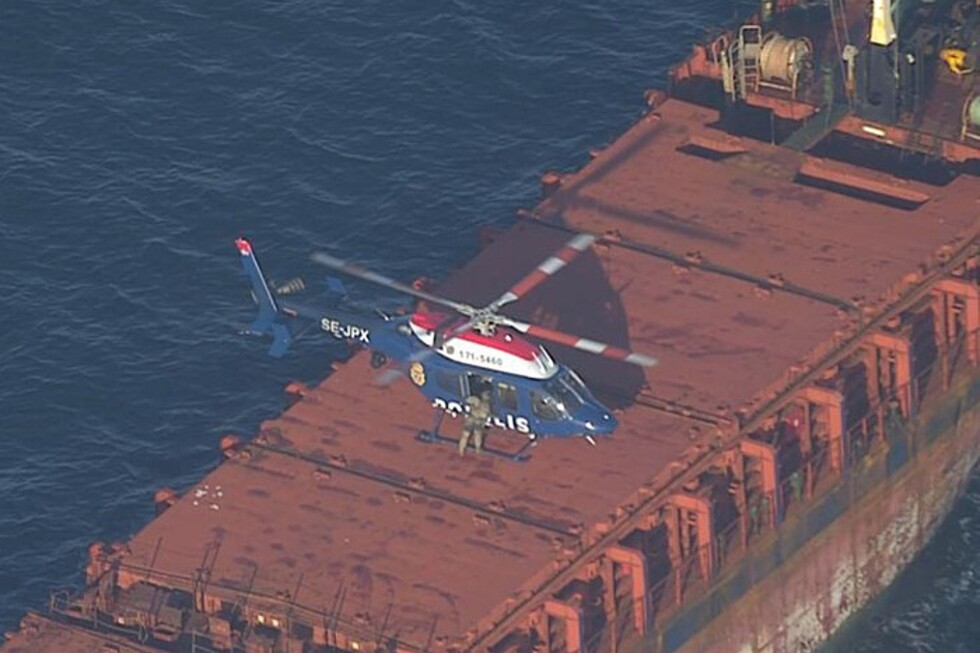
The vessel, identified as the Caffa, was boarded by Swedish Coast Guard officials on Friday while sailing through Swedish territorial waters. During a news conference, authorities revealed that the crew is predominantly Russian, and the ship appears on Ukraine’s sanctions list, according to the Swedish news agency TT.
Officials discovered several concerning irregularities during their initial investigation. The Caffa was reportedly sailing under a false Guinean flag, raising immediate red flags about its operations and intentions. Authorities also expressed serious concerns about the vessel’s seaworthiness, though specific details about these issues were not disclosed.
At least one individual connected to the ship is now under criminal investigation, though authorities have not released information about this person’s identity or their role aboard the vessel. Further details about the Caffa, its ownership structure, and the full composition of its crew remain limited as the investigation continues.
This incident comes amid heightened vigilance in the Baltic region regarding suspicious maritime activity. Last year, Sweden announced plans to intensify insurance checks on foreign vessels, a move specifically targeting Russia’s “shadow fleet” – a collection of aging ships used for transporting oil and gas or, in some cases like the Caffa is suspected of, carrying stolen Ukrainian grain.
The shadow fleet has emerged as a significant concern for international authorities since Russia’s invasion of Ukraine began in February 2022. These vessels typically operate with minimal regulatory oversight and often use deceptive practices to conceal their origins, ownership, and cargo.
Maritime experts note that ships in the shadow fleet average around 18 years old, placing them near the end of their operational lifespan. This advanced age makes them particularly vulnerable to accidents, especially when maintenance standards are compromised to cut costs or avoid detection.
The grain theft allegations reflect a broader pattern of concern regarding Ukrainian agricultural products being illegally seized and transported during the ongoing conflict. Ukraine, often referred to as “Europe’s breadbasket,” is one of the world’s leading grain exporters, and disruptions to its agricultural exports have had significant implications for global food security.
Sweden’s more aggressive approach to maritime monitoring involves collaboration between the Coast Guard and the Swedish Maritime Administration. These agencies now collect insurance information not only from vessels calling at Swedish ports but also from ships passing through the country’s territorial waters and exclusive economic zone.
This expanded surveillance reflects growing concerns across the Baltic region about maritime security and illicit trade activity. While Swedish officials have not explicitly confirmed whether they believe the Caffa is part of Russia’s shadow fleet, the circumstances surrounding the vessel align with typical shadow fleet characteristics.
The interception of the Caffa represents a significant development in Sweden’s efforts to enforce maritime regulations and support international sanctions. The investigation is ongoing, and authorities are expected to provide additional information as it becomes available.
The case highlights the complex challenges faced by maritime authorities in monitoring suspicious vessels, particularly those potentially involved in sanctions evasion or the transport of illegally obtained goods from conflict zones.
Fact Checker
Verify the accuracy of this article using The Disinformation Commission analysis and real-time sources.

7 Comments
The use of false flags and suspected seaworthiness issues with this vessel raise significant concerns. Sanctions evasion and illegal grain trafficking are serious issues that need to be addressed. I hope the Swedish investigation can shed light on the broader network and operations behind this ship.
Agreed. Uncovering the full scope of this case will be crucial to understanding the methods and motivations behind such illicit shipping activities.
The use of a predominantly Russian crew and the ship’s appearance on Ukraine’s sanctions list suggest this is a complex geopolitical issue with broader implications. I hope the Swedish authorities can uncover the full scope of this case and any connections to larger illicit networks.
This case highlights the complex web of sanctions evasion and the ongoing challenges in monitoring maritime traffic, especially involving Russian-linked vessels. I’m curious to see what additional details emerge as the Swedish investigation progresses.
While the specifics are still unfolding, this incident serves as a concerning example of the tactics used to circumvent sanctions and transport stolen goods. Maintaining the integrity of international trade and preventing such activities should be a top priority.
Well said. Robust enforcement and transparency around maritime operations are essential to upholding global trade norms and principles.
Interesting case of a cargo ship allegedly transporting stolen Ukrainian grain. I’m curious to learn more about the ship’s history, ownership, and the specific irregularities discovered by Swedish authorities. Hopefully this investigation uncovers the full truth behind this matter.