


Listen to the article
Super Typhoon Sinlaku, the strongest tropical cyclone on Earth this year, battered the U.S. territories of Saipan and Tinian in the Northern Mariana Islands with sustained winds reaching 150 mph, causing widespread destruction and forcing over 1,000 residents into shelters.
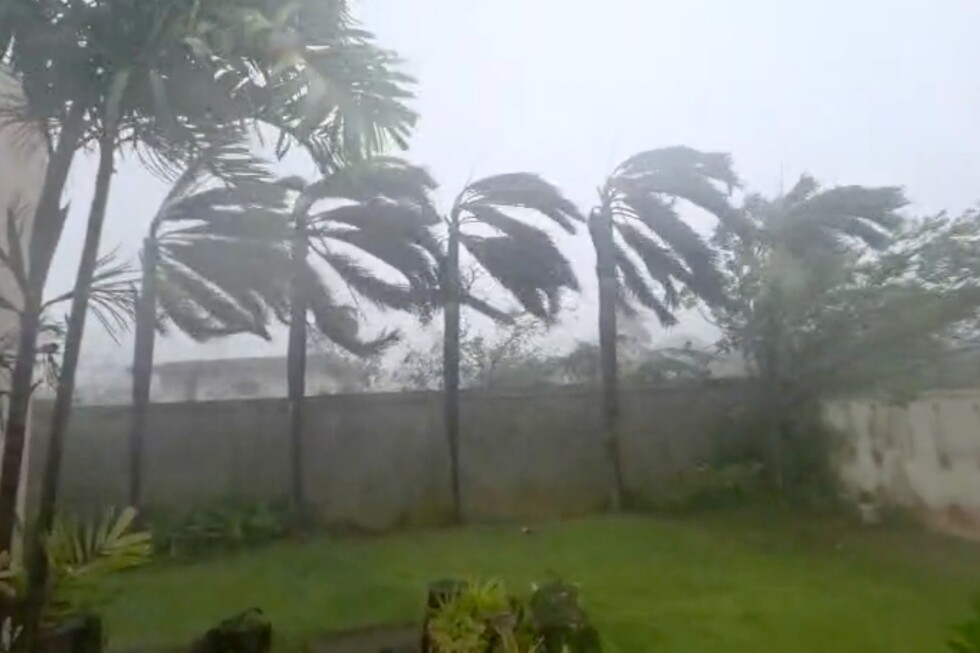
The powerful storm unleashed ferocious winds and relentless rain for hours before daybreak Wednesday, tearing off roofs, uprooting trees, and causing significant flooding across the islands, home to nearly 50,000 people.
In Saipan’s village of Susupe, the typhoon’s fury was evident as commercial building roofs were ripped away and vehicles tossed about like toys. Resident Dong Min Lee documented the destruction, capturing footage of a car perched atop two others in his apartment building’s parking lot and damage to his balcony.
“I hope people will take an interest and help. The damage is really huge here,” Lee said via Facebook message.
Preliminary damage reports included extensive flooding, uprooted trees, and downed power lines across the affected areas, according to Jaden Sanchez, spokesperson for the Saipan mayor’s office. Despite the destruction, there were no immediate reports of casualties as residents heeded warnings to seek shelter.
Mayor Ramon “RB” Jose Blas Camacho was surveying the damage while authorities continued to advise residents to remain indoors away from the dangerous conditions. The American Red Cross and partner organizations established shelters housing over 1,000 people across Guam and the Northern Marianas.
“I’m guessing anything that was made of wood and tin did not survive this,” said Glen Hunter, a Saipan native who has weathered numerous typhoons but described Sinlaku as feeling like the strongest yet. He watched helplessly as at least three tin roofs flew past his yard while rain seeped into every corner of his concrete home.
“It was a losing battle because the rain was coming through everywhere,” Hunter explained. “Every house is just flooded with water, no matter what type of structure you’re in.”
Ed Propst, a former lawmaker working in the governor’s office, reported hearing “banging and clanging through the night” but was cautiously optimistic about the lack of reported fatalities, attributing this to residents taking shelter appropriately.
Weather officials predicted that winds exceeding 75 mph would continue through Wednesday afternoon as the storm’s eye moved northwest of Saipan and Tinian. According to Ken Kleeschulte, acting science and operations officer for the National Weather Service on Guam, conditions would remain too dangerous for people to safely venture outside for at least 36 hours, even as winds gradually diminished to around 50 mph.
The impact extended beyond the Northern Marianas to Guam, located approximately 135 miles to the south, where tropical force winds and torrential rainfall caused flash flooding. U.S. military officials there issued shelter-in-place orders for personnel. The military controls about one-third of Guam’s land, which serves as a critical hub for U.S. forces in the Pacific.
For Saipan, this devastating typhoon represents another setback in a series of challenges. The tourism-dependent island was still recovering from 2018’s Super Typhoon Yutu when the COVID-19 pandemic struck, further hampering economic recovery efforts.
Galvin Deleon Guerrero, president of Northern Marianas College, noted that Yutu had destroyed 85% of the institution’s Saipan campus. The college had secured $100 million in grant funding to rebuild before Sinlaku hit.
“Just as we were finally beginning to recover and rebuild, we get hit with this,” Guerrero said. “Climate change is real.”
President Donald Trump approved emergency disaster declarations ahead of the storm for both Guam and the Mariana Islands. The Federal Emergency Management Agency mobilized support from multiple agencies, deploying nearly 100 FEMA staff and additional personnel to assist with response efforts.
Weather experts note that while typhoons are common in the Pacific, with over 300 super typhoons identified in the past 80 years, April occurrences are somewhat unusual. The peak season typically mirrors the Atlantic hurricane season from summer to fall.
As Sinlaku begins to curve toward the sparsely populated volcanic islands in the far northern Marianas, residents of the affected areas face the daunting task of cleanup and recovery, with many concerned about the psychological impact on those still dealing with trauma from previous disasters.
Fact Checker
Verify the accuracy of this article using The Disinformation Commission analysis and real-time sources.

8 Comments
The footage of the destruction, with cars piled on top of each other and roofs torn off buildings, really drives home the sheer force of this typhoon. My sympathies go out to the people of the Northern Mariana Islands as they work to assess the full extent of the damage.
While the lack of reported casualties is encouraging, the scale of the damage is still quite concerning. I hope the US territories receive sufficient federal aid and resources to help the affected communities get back on their feet as quickly as possible.
Devastating news about the damage caused by Super Typhoon Sinlaku in the Northern Mariana Islands. My thoughts go out to the affected communities as they work to recover from this powerful storm. I hope the relief efforts are swift and effective in supporting the residents.
Seeing the damage to homes, businesses, and critical infrastructure in Saipan and Tinian is heartbreaking. I hope the recovery process goes smoothly and that the affected residents receive the support they need to rebuild and recover.
The intensity of this typhoon is a stark reminder of the increasing frequency and severity of extreme weather events due to climate change. It’s crucial that we continue to invest in resilient infrastructure and disaster preparedness to protect vulnerable populations in the face of these challenges.
You’re absolutely right. Strengthening disaster response capabilities and building more climate-resilient communities should be top priorities for policymakers in these regions.
This serves as a sobering reminder of the vulnerability of small island nations and territories to the impacts of climate change. Strengthening disaster resilience and climate adaptation measures in these regions should be a top priority for policymakers.
The destruction caused by Super Typhoon Sinlaku highlights the importance of early warning systems and effective disaster preparedness. I hope the authorities in the Northern Mariana Islands are able to learn from this experience to better protect their communities in the future.