


Listen to the article
Thousands of Opposition Supporters Rally Against Sri Lankan President’s Administration
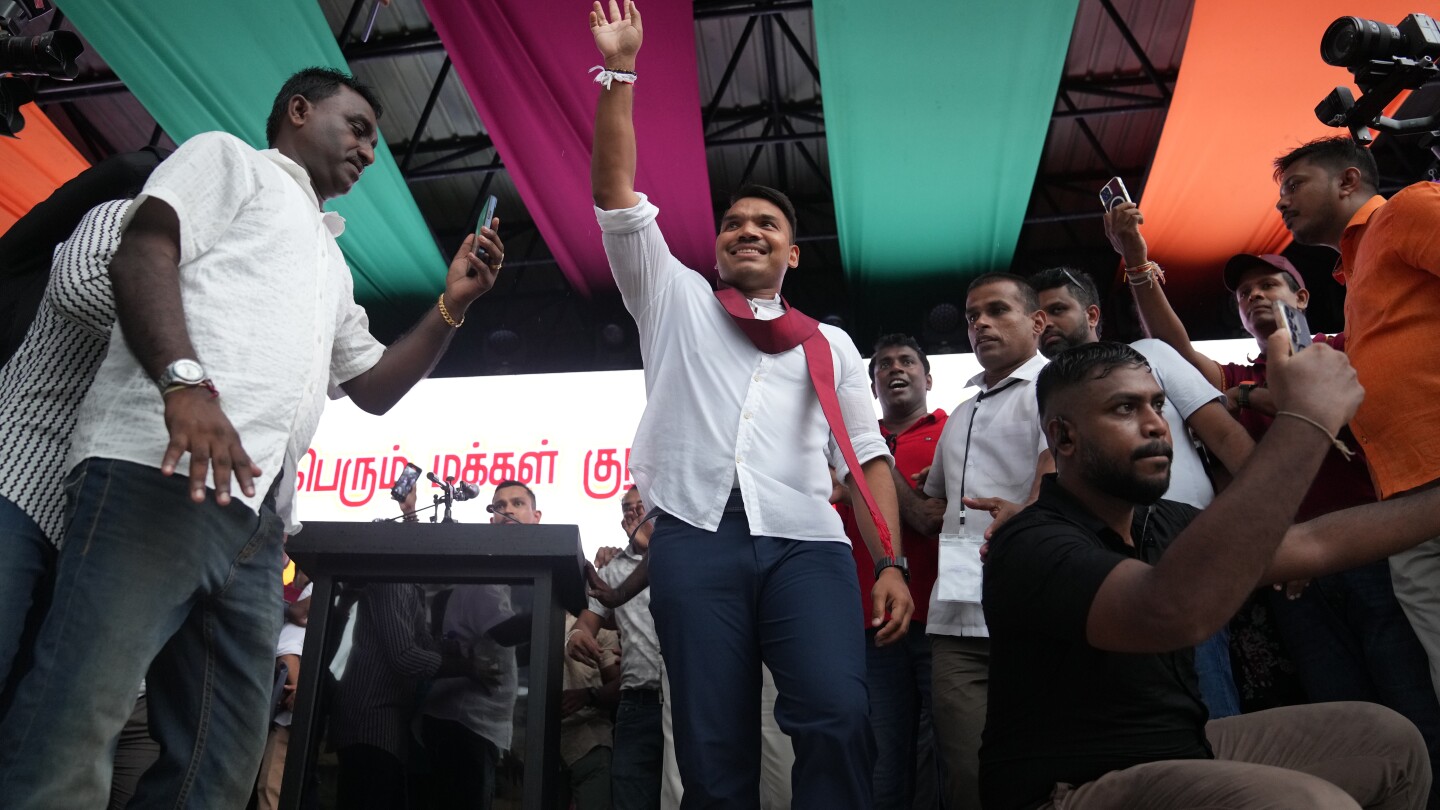
Thousands of opposition activists gathered near Colombo on Friday in the first major protest against President Anura Kumara Dissanayake’s government, which marks its first year in office amid growing public dissatisfaction.
Demonstrators rallied to demand the government fulfill election promises to ease tax burdens and restore public safety, claims that have become central to opposition criticism of the administration.
Opposition parties accuse Dissanayake’s government of failing to deliver on campaign pledges while allegedly politicizing law enforcement agencies to target political opponents. They point to what they describe as a significant increase in crime rates across the country in recent months.
“We are gathered here today to urge the government to deliver what they promised,” said Namal Rajapaksa, a prominent opposition figure and heir to the once-powerful Rajapaksa political dynasty. “They promised a lot, but they haven’t delivered anything. You can see how the frustration of the people are building up.”
The government has acknowledged a surge in drug gang rivalry but disputes claims that public safety has significantly deteriorated, maintaining that citizens are not facing heightened danger.
Friday’s protest represents a strategic effort by opposition parties to rebuild their political standing after suffering decisive defeats in last year’s presidential and parliamentary elections. Dissanayake’s victory in September 2024 was widely interpreted as voters rejecting established political figures following the catastrophic economic crisis that gripped Sri Lanka in 2022.
That crisis, marked by severe shortages of essential goods including food, fuel, and medicine, led to widespread protests that ultimately forced then-President Gotabaya Rajapaksa, Namal’s uncle, to flee the country and resign. The economic collapse resulted in Sri Lanka declaring bankruptcy in April 2022, with debt exceeding $83 billion—more than half owed to foreign creditors.
The country subsequently secured a $2.9 billion bailout package from the International Monetary Fund and has reached several debt restructuring agreements with creditors to stabilize its economy.
During his presidential campaign, Dissanayake promised to ease the stringent austerity measures implemented by his predecessor, Ranil Wickremesinghe, under the IMF program. He also vowed to combat corruption and hold responsible officials accountable for economic mismanagement.
While the administration has provided some relief to citizens, including reducing electricity bills, high income taxes for professionals and businesses remain in place despite growing public dissatisfaction. The government has also implemented measures to reduce state expenditure, notably abolishing perks previously enjoyed by former presidents, including housing, pensions, transportation allowances, and office staff.
Dissanayake’s administration has launched investigations into alleged corruption under previous governments. Most notably, former President Wickremesinghe was arrested on allegations of misusing public funds, though he has since been released on bail. Dozens of other former government officials and political figures are currently under investigation.
The government has also emphasized its efforts to crack down on criminal organizations, particularly drug trafficking networks that have been linked to rising violence in certain areas.
The protest comes at a critical moment for Sri Lanka’s political landscape as the country continues its slow recovery from economic crisis. While Dissanayake maintains significant public support for his anti-corruption stance and promises of economic reform, opposition forces appear to be gaining momentum by highlighting unfulfilled campaign promises and ongoing economic hardships faced by many Sri Lankans.
Analysts suggest this demonstration may signal the beginning of more organized opposition activity as the government approaches further implementation of economic reforms required under international lending agreements that could prove politically unpopular.
Fact Checker
Verify the accuracy of this article using The Disinformation Commission analysis and real-time sources.

14 Comments
Politicizing law enforcement is a dangerous path that can erode democratic institutions. The government must uphold the independence of the justice system and ensure fair treatment of all citizens.
The government’s response to this protest will be closely watched. They need to demonstrate a willingness to listen and compromise if they hope to regain the public’s trust.
This protest seems to highlight the growing public dissatisfaction with the new government’s failure to deliver on its campaign promises. It will be interesting to see how the administration responds and whether they can regain the public’s trust.
This protest is a test for the new government. They must find a way to bridge the divide and work constructively with the opposition to address the public’s legitimate grievances.
The government’s handling of this situation will be a true test of their leadership and their commitment to democratic principles. They must find a way to bridge the divide and work for the greater good of the country.
It’s troubling to see the opposition accusing the government of failing to deliver on its promises. The public deserves leaders who are accountable and responsive to their needs.
The protest highlights the fragile political landscape in Sri Lanka. The government would be wise to engage in meaningful dialogue with the opposition and the public to find a path forward.
Absolutely. Failure to do so could lead to further unrest and instability, which would be detrimental to the country’s recovery efforts.
This protest is a significant test for the new government. They must find a way to address the public’s concerns while also maintaining stability and the rule of law.
This protest highlights the need for the government to focus on addressing the country’s pressing economic and social challenges, rather than engaging in political posturing.
Agreed. The public is clearly looking for tangible solutions, not just empty promises.
The opposition’s accusations of politicizing law enforcement and rising crime rates are concerning. The government needs to address these issues transparently and work to restore public safety and security.
Agreed. Tackling the alleged surge in drug gang activity should be a top priority for the administration if they want to regain credibility.
This protest is a stark reminder that the public’s trust must be earned through consistent, transparent, and accountable governance. The government has its work cut out for them.