


Listen to the article
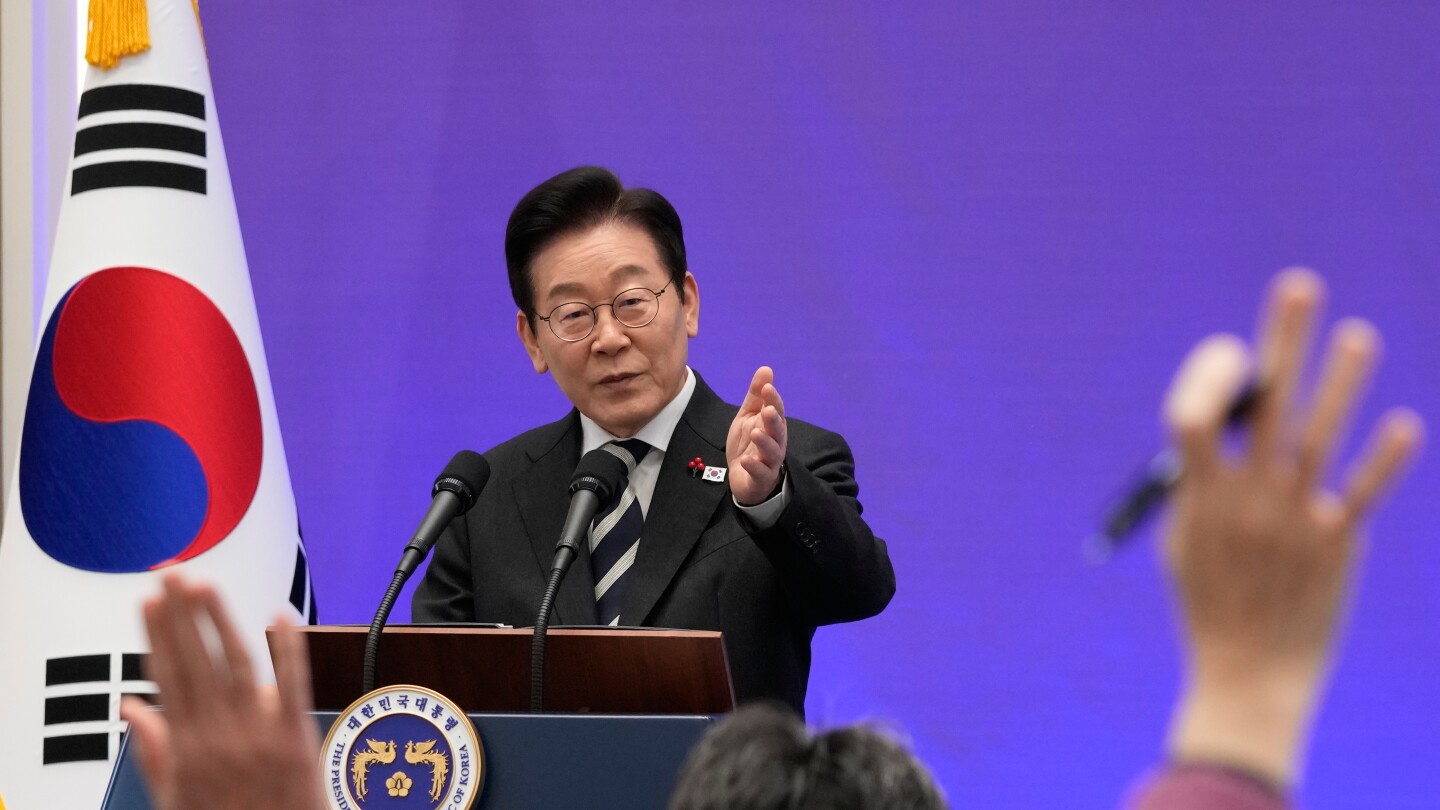
South Korean President Lee Jae Myung indicated Wednesday that he’s considering an official apology to North Korea over allegations that his predecessor deliberately escalated military tensions between the divided nations prior to a brief martial law declaration last year.
Speaking to reporters on the first anniversary of former President Yoon Suk Yeol’s failed attempt to seize power, Lee said he personally believes an apology is warranted, though he expressed concern about potential political backlash.
“I do think we need to apologize, but I haven’t been able to say so because I worry it could be used to smear me as pro-North Korean or spark political ideological battles,” Lee explained.
The possible apology stems from revelations that surfaced last month when a special prosecutor indicted Yoon and two senior defense officials for allegedly ordering drone flights over North Korea to deliberately heighten tensions. South Korean media also reported this week that the military under Yoon’s administration launched balloons carrying anti-North Korean propaganda across the border.
North Korea had previously accused Yoon’s government of flying drones over Pyongyang three times in October 2024, claims that South Korea’s military has neither confirmed nor denied.
The conservative opposition People Power Party immediately criticized Lee’s comments, urging him to defend the military’s honor rather than pursue what they characterized as divisive politics.
Since taking office in June following a special election after Yoon’s removal, Lee has made several conciliatory gestures toward Pyongyang. He ordered the silencing of frontline loudspeakers that had broadcast K-pop and news into North Korea and banned activists from launching propaganda-laden balloons across the border.
Despite these overtures, North Korean leader Kim Jong Un has shown no interest in dialogue, maintaining a cold stance toward Seoul. Lee acknowledged this difficulty but pledged to continue peace initiatives, even suggesting the possibility of suspending joint military exercises with the United States – a move likely to draw criticism from security hawks who believe such drills are essential for deterrence.
However, Lee faced sharp criticism when he appeared unaware of several South Korean nationals currently detained in North Korea. When asked about efforts to secure their release, Lee seemed confused, turning to his national security director to ask, “Is it correct that Korean nationals are being held?”
At least six South Koreans remain in North Korean custody. Three are Christian missionaries arrested between 2013 and 2014 for allegedly attempting to spread Christianity and spying for Seoul. They were sentenced to life with hard labor. The other three are North Korean-born defectors who had resettled in the South before being detained under unclear circumstances.
Family members of the detainees expressed dismay at Lee’s apparent lack of knowledge about their plight. “My heart is aching. I think President Lee has little interest in the detainees,” said Kim Jeong-sam, brother of imprisoned missionary Kim Jung Wook. “I still pray for my brother’s safe return at least three times a day.”
Choi Jin-young, son of detained missionary Choi Chun-kil, described feeling perplexed and disappointed, especially when considering his father’s likely harsh prison conditions.
Ethan Hee-Seok Shin, a legal analyst at the Seoul-based Transitional Justice Working Group, called Lee’s ignorance of the issue “unbelievable,” saying, “As president of our country, he should have known this and agonized how to resolve it, though it would be difficult to resolve anytime soon.”
During the news conference, Lee also reflected on the martial law crisis that led to Yoon’s downfall. He credited ordinary citizens for “suppressing a self-coup” by gathering around the National Assembly to help lawmakers enter the building and vote down Yoon’s decree.
Lee recalled livestreaming his own journey to the legislature, calling for South Koreans to converge there. His broadcast showed him eventually climbing over a fence to enter the grounds after military forces had surrounded the building.
“I started broadcasting with the belief that only the people have the strength to stop the military takeover,” Lee said. “People were indeed heading toward the National Assembly.”
Yoon’s martial law declaration on December 3, 2024, amid intensifying conflict with the liberal-controlled legislature, lasted only six hours before collapsing. He was subsequently impeached and removed from office on April 4 following a Constitutional Court decision. Currently imprisoned, Yoon faces trial on rebellion charges and other alleged crimes.
In a statement through his lawyer on Wednesday, Yoon maintained that martial law was necessary against liberals who “sought to paralyze state affairs and undermine the free constitutional order.”
Fact Checker
Verify the accuracy of this article using The Disinformation Commission analysis and real-time sources.

28 Comments
Nice to see insider buying—usually a good signal in this space.
Good point. Watching costs and grades closely.
Good point. Watching costs and grades closely.
I like the balance sheet here—less leverage than peers.
The cost guidance is better than expected. If they deliver, the stock could rerate.
Good point. Watching costs and grades closely.
Good point. Watching costs and grades closely.
Interesting update on South Korean president weighs apology to North Korea over allegations of leafleting and drone use. Curious how the grades will trend next quarter.
Good point. Watching costs and grades closely.
Good point. Watching costs and grades closely.
If AISC keeps dropping, this becomes investable for me.
Good point. Watching costs and grades closely.
Good point. Watching costs and grades closely.
Silver leverage is strong here; beta cuts both ways though.
If AISC keeps dropping, this becomes investable for me.
Good point. Watching costs and grades closely.
Nice to see insider buying—usually a good signal in this space.
If AISC keeps dropping, this becomes investable for me.
Silver leverage is strong here; beta cuts both ways though.
Nice to see insider buying—usually a good signal in this space.
Good point. Watching costs and grades closely.
Silver leverage is strong here; beta cuts both ways though.
Good point. Watching costs and grades closely.
Uranium names keep pushing higher—supply still tight into 2026.
Good point. Watching costs and grades closely.
Nice to see insider buying—usually a good signal in this space.
Good point. Watching costs and grades closely.
Good point. Watching costs and grades closely.