


Listen to the article
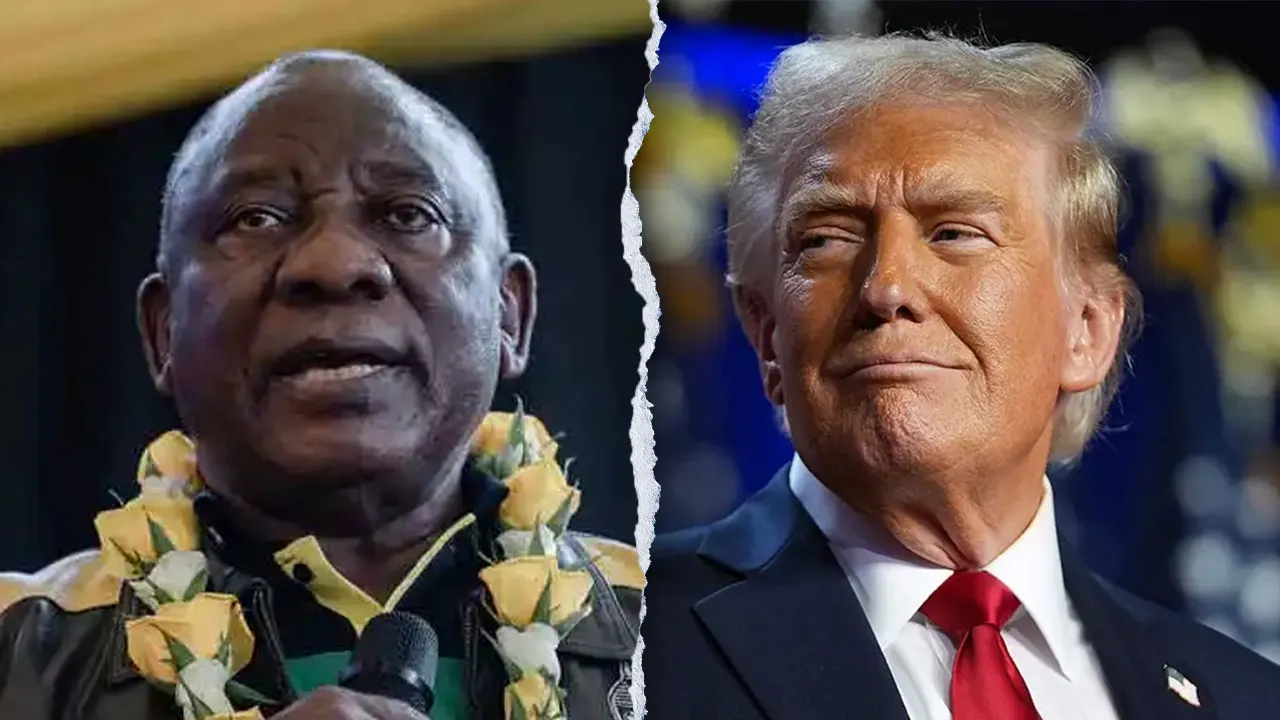
In a new escalation of diplomatic tensions, the White House has launched a sharp critique of South Africa regarding the ongoing G20 Leaders’ Summit in Johannesburg. The dispute centers on South Africa’s refusal to allow a U.S. embassy delegation to participate in the summit’s closing ceremony.
White House Deputy Press Secretary Anna Kelly expressed frustration after South African President Cyril Ramaphosa declined to perform the ceremonial handover to a junior U.S. diplomat. The United States had requested its chargé d’affaires attend the ceremony, as the U.S. is set to assume the G20 presidency next year.
“President Ramaphosa initially declared that he would pass the gavel to an ’empty chair.’ Now, he’s refusing to facilitate a smooth transition of the G20 presidency at all,” Kelly told reporters. She further accused South Africa of having “weaponized their G20 presidency to undermine the G20’s founding principles,” adding that President Trump “looks forward to restoring legitimacy to the G20 in the U.S.’s 2026 host year.”
The dispute comes after President Trump withdrew all U.S. participation from the summit, citing concerns about alleged racial discrimination against white South Africans. This unprecedented boycott by a major G20 power has cast a shadow over the proceedings in Johannesburg.
The tensions have extended beyond governmental circles. South Africa’s Chief Rabbi, Dr. Warren Goldstein, criticized the G20 for failing to address what he described as “one of the greatest human rights crises in Africa” – violence against Christians across the continent.
“How can it be that in the long wish list of items that make up the G20 Leaders Declaration, there wasn’t space to condemn the continent-wide jihadi war on Christians?” Goldstein questioned. He pointed to recent violence, including the kidnapping of more than 300 girls and 12 teachers from a Catholic school in Nigeria, calling the G20’s silence “a moral disgrace.”
Among the 42 world leaders and major institutions represented at the summit, only Italy’s President Giorgia Meloni has publicly addressed the issue of Christian persecution. Before the summit began, she called on the Nigerian government to “strengthen the protection of Christian communities and all religious communities and to pursue those responsible for these heinous attacks.”
Questions have also emerged about the legitimacy of the summit’s proceedings. Journalists reported hearing President Ramaphosa telling leaders that the final 122-point resolution was ready for endorsement before discussions had taken place, raising concerns about the authenticity of the deliberative process.
The final G20 Leaders’ Declaration, released Sunday, contained only a general reference to religion, stating that nations should promote “respect for human rights and for fundamental freedoms for all without distinction as to race, sex, language, or religion.” The document also included a condemnation of terrorism “in all its forms and manifestations.”
South Africa has officially marked the United States as “absent” from the summit. The only visible American presence at the event was the U.S. flag displayed in the media center.
This diplomatic standoff occurs at a critical juncture for global economic cooperation. The G20, which represents about 85% of global GDP and two-thirds of the world’s population, faces increasing challenges in maintaining cohesion amid growing geopolitical tensions.
The controversy also highlights the shifting power dynamics within international forums as emerging economies like South Africa assert greater influence while traditional Western powers recalibrate their approach to multilateral engagement.
Despite attempts to reach South African government officials for comment, no response was received at the time of reporting.
Fact Checker
Verify the accuracy of this article using The Disinformation Commission analysis and real-time sources.

19 Comments
Interesting update on South Africa Criticized by Trump Administration for Alleged Bias in G20 Leadership. Curious how the grades will trend next quarter.
Good point. Watching costs and grades closely.
Uranium names keep pushing higher—supply still tight into 2026.
Good point. Watching costs and grades closely.
Good point. Watching costs and grades closely.
Production mix shifting toward World might help margins if metals stay firm.
Good point. Watching costs and grades closely.
Good point. Watching costs and grades closely.
Exploration results look promising, but permitting will be the key risk.
Good point. Watching costs and grades closely.
Production mix shifting toward World might help margins if metals stay firm.
I like the balance sheet here—less leverage than peers.
Silver leverage is strong here; beta cuts both ways though.
Uranium names keep pushing higher—supply still tight into 2026.
If AISC keeps dropping, this becomes investable for me.
Production mix shifting toward World might help margins if metals stay firm.
Good point. Watching costs and grades closely.
The cost guidance is better than expected. If they deliver, the stock could rerate.
Good point. Watching costs and grades closely.