


Listen to the article
In a quiet theater where violence once struck, 70-year-old Hassan Barre stands at a podium delivering verses about civic responsibility and national unity. His audience is sparse, but his purpose is profound: preserving Somalia’s rich poetic heritage amid decades of conflict.
The National Theater in Mogadishu hosts a dwindling group of elderly poets in formal attire who gather regularly to share their art and reminisce about better times. These men, some with hennaed beards and failing eyesight, represent an endangered cultural tradition in a country that has suffered immeasurable losses through years of war.
Poetry holds a special place in Somalia’s cultural identity. The nation has long been described as “a nation of poets,” with oral tradition serving as the highest art form, practiced everywhere from remote villages to militant encampments. Traditional Somali poetry often celebrates pastoral life and explores gender roles within the country’s predominantly Islamic society.
The art form reached its zenith during the regime of Siad Barre, who, despite his authoritarian rule from 1969 to 1991, championed intellectual and artistic expression. Poets like Mohamed Ibrahim Warsame “Hadraawi,” often called the “Shakespeare of Somalia” until his death in 2022, achieved international recognition for work that spanned from love songs to lamentations of war.
“During Siad Barre’s time, we were treated like kings,” said Barre, who is unrelated to the former president. “Some received free housing. The present administration doesn’t give much treatment to poets and singers. We expect them to treat us the way we used to be treated.”
The overthrow of Siad Barre in 1991 unleashed a devastating civil war as clan militias fought for control, creating a power vacuum that eventually enabled the rise of al-Shabab, the al-Qaida-affiliated militant group. Since then, Somalia has become more associated with terrorist bombings than with cultural achievements.
Cultural institutions have suffered greatly. Reaching the National Theater requires advance notification to intelligence agencies, including details as specific as a vehicle’s make and color. The building, located in a heavily fortified zone near the presidential palace, stands mostly unused alongside the equally dormant National Museum.
Both facilities reflect the government’s priorities: the vast majority of Somalia’s budget goes toward security operations rather than cultural preservation. The National Theater itself has a tumultuous history, having opened in 1967, closed in 1991 after Barre’s ouster, reopened in 2012, and months later becoming the site of a suicide bombing that killed eight people during a speech by the prime minister.
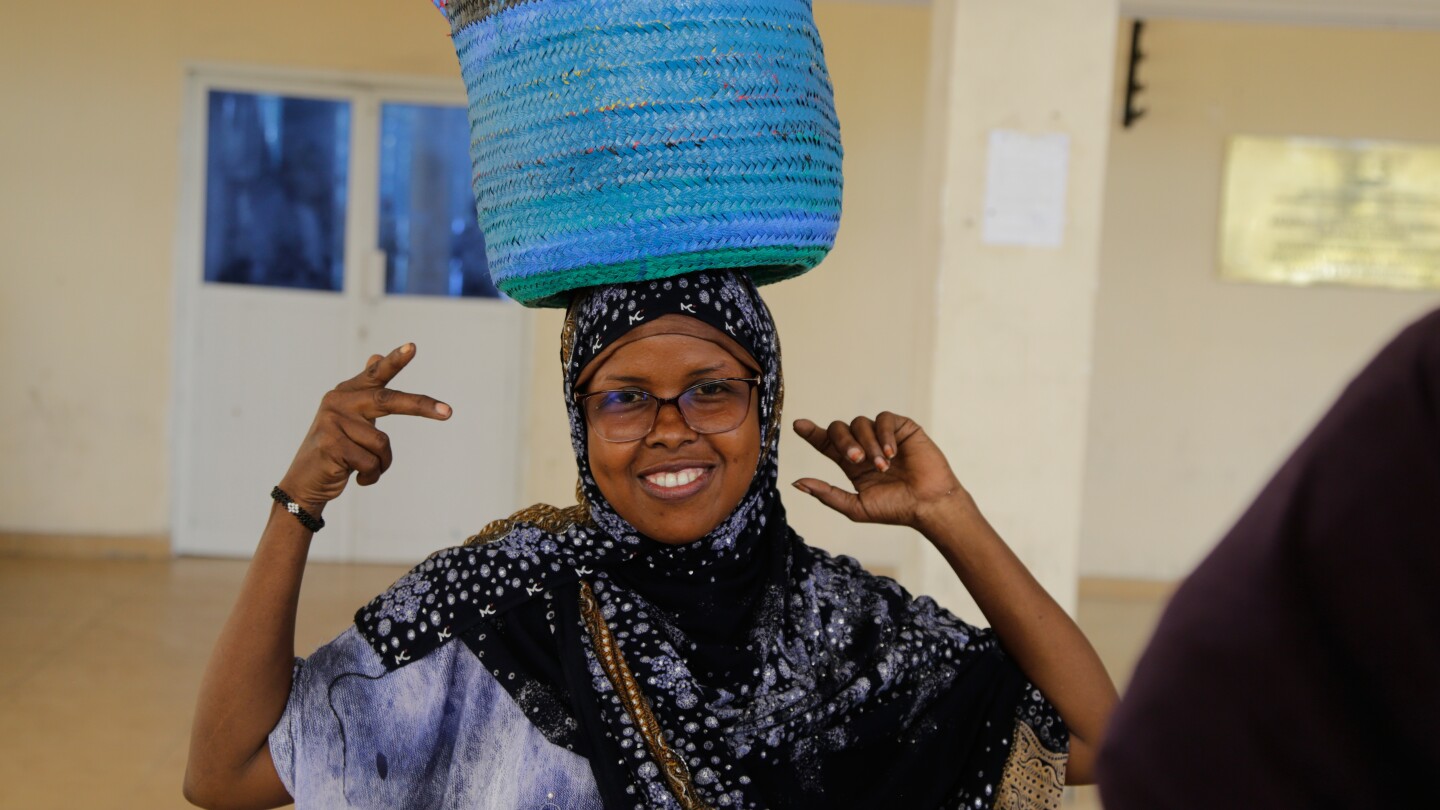
Despite these challenges, a dedicated community persists. On the day of Barre’s recitation, young Somalis practiced traditional folk dances emphasizing values like agricultural stewardship, while poets, including one woman, conversed quietly nearby.
Daud Aweis, Somalia’s culture minister, acknowledges poets’ vital role in society, calling them “a foundational pillar for cultural vitality, individual well-being and peaceful coexistence.” While current funding is limited, he says the long-term goal is to expand support for cultural programs.
Traditional poetry still finds expression at weddings and community gatherings, and local radio stations broadcast poems daily. The Somali Council of Poets, chaired by Hirsi Dhuuh Mohamed, maintains a membership of about 400 individuals, including many from the diaspora.
“One thing that unites all Somali poets, whether in Eritrea, whether in Somalia, everywhere, we stand for peace,” said Mohamed. He emphasized that while poets avoid direct political engagement, their collective message promotes security, good governance, and community integration.
Maki Haji Banaadir, a senior poet who serves as deputy director of the National Theater, reflects on more hopeful times. In 2003, he and six colleagues traveled across Somalia advocating for reconciliation—a journey impossible today when the federal government controls little territory beyond Mogadishu and several regions seek independence.
Now recognizable for his gold-rimmed glasses and no-nonsense demeanor, Maki gained popularity a decade ago for composing a song about the Somali shilling’s diminishing value as U.S. dollars became the preferred currency in local markets.
Asked whether he and his peers are mentoring the next generation of Somali poets, Maki responded with quiet determination: “We are working day and night.” In a nation still searching for stability, these cultural guardians continue their effort to preserve Somalia’s poetic voice for future generations.
Fact Checker
Verify the accuracy of this article using The Disinformation Commission analysis and real-time sources.

8 Comments
It’s bittersweet to read about the dwindling group of poets gathering at the National Theater. While it’s disheartening to see this tradition endangered, their perseverance in the face of adversity is admirable. Their work is a testament to the resilience of the Somali people.
Yes, the fact that these poets continue to share their art, even as their numbers dwindle, is a powerful statement. Their commitment to preserving this cultural legacy is truly inspiring.
The role of poetry in celebrating pastoral life and exploring gender dynamics within Somali society is intriguing. I wonder how these themes have evolved over time and how they reflect the broader social and cultural changes in the country.
Poetry’s enduring power in Somalia is inspiring. Even amidst conflict, these elder poets keep the nation’s rich cultural heritage alive through their art. Their dedication to preserving this tradition is truly admirable.
I agree, the role of poetry in Somali identity and society is fascinating. These poets are true custodians of an endangered tradition.
It’s heartening to see the National Theater in Mogadishu hosting these elderly poets. Preserving this unique oral tradition is crucial, even as Somalia navigates immense challenges. Their poetic voices provide a sense of hope and unity.
Absolutely. Poetry’s ability to transcend conflict and speak to the shared experiences of a nation is remarkable. These poets are true national treasures.
The description of Somalia as a “nation of poets” is intriguing. I’m curious to learn more about how poetry has shaped the country’s cultural identity and social fabric over time, especially during periods of political upheaval.