


Listen to the article
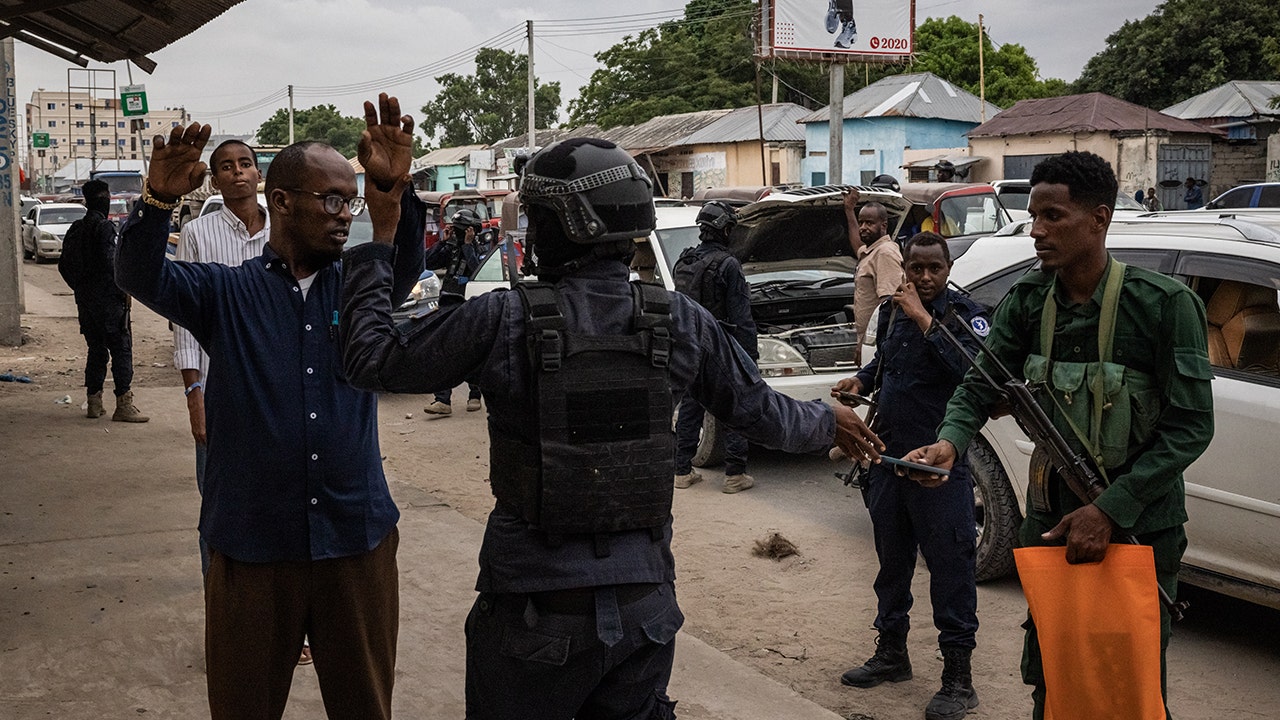
Somalia continues to grapple with terrorism and lawlessness despite pockets of stability, as Islamic State and al Qaeda affiliates maintain a deadly presence in the Horn of Africa nation. According to Human Rights Watch, hundreds have been killed in 2024 alone, either by jihadists or in conflicts between the country’s clans and tribes.
President Donald Trump recently intensified his criticism of Somalia, describing it as “just people walking around killing each other” and suggesting it might be “the worst country on Earth.” His administration has dramatically increased counterterrorism operations, with U.S. Africa Command conducting more than ten times the number of airstrikes against terrorist targets compared to missions carried out under President Biden in 2024.
Recent military operations include a November 25 attack against ISIS-Somalia terrorists in the Puntland region, reportedly using drones and MH-60 helicopters, followed by a November 28 strike targeting al Qaeda-linked al-Shabab militants near Kismayo in southern Somalia.
Bill Roggio, senior fellow at the Foundation for Defense of Democracies, told Fox News Digital that “al-Shabab continues to hold significant territory in southern and central Somalia.” He noted that while the exact amount of territory under their control remains undisclosed, it has likely increased since 2019, when AFRICOM reported al-Shabab controlled about 25% of the country.
“In areas Shabab controls, it subjects civilians to taxes and its harsh version of Sharia, or Islamic law, and it recruits, indoctrinates and trains young men to wage jihad,” Roggio explained.
Daily life in Somalia varies dramatically by region. Mogadishu resident Samatar Talliye described a complex reality: “The country is big, and the experiences are very different. Mogadishu is relatively safe, and it is a big city with millions of people. Business is booming, the housing market is insane, and new projects are started every day.”
Another Mogadishu resident, Abdisamad Artan Ahmed, recently told Reuters that “Somalia is currently one of the safest countries in East Africa,” claiming that “this is the best and safest time for the country.”
However, Human Rights Watch reports tell a different story, documenting occasional terror attacks even in the capital. In August 2023, al-Shabab attacked a beach restaurant in Mogadishu, killing 37 civilians and injuring over 200.
Anna Mahjar-Barducci, project director at the Middle East Media Research Institute, acknowledged “tangible signs of improvement in aspects of daily life in Somalia particularly in Mogadishu” while emphasizing that “progress is uneven: rural and southern regions face ongoing al-Shabab threats.”
Al-Shabab’s financial reach permeates nearly every sector of Somali society. According to the European Union’s Agency for Asylum, the UN Panel of experts on Somalia reported that al-Shabab’s overall financial income for 2023 exceeded $150 million, collected through checkpoints, forced charitable contributions, direct extortion of businesses, import taxation, kidnappings, and various other fees.
Former State Department counterterrorism analyst Tricia Bacon explained to Minnesota’s Kare 11 News that funding al-Shabab isn’t necessarily intentional but “that’s sort of the cost of doing business in Somalia because the government has been so ineffective at protecting people from al-Shabab’s extortion that, you know, you don’t really have a choice of whether or not to pay.”
Government corruption remains widespread, with residents noting that obtaining services often requires paying extra fees. “Government corruption is visible and painful, but people are used to complete chaos,” Talliye admitted, referencing the ongoing instability that began with the 1991 civil war.
Fox News correspondent Eric Shawn, who reported from Mogadishu in 1992, described a country “ruled by warlords” with “mass starvation and no government.” He recalled nightly gunfire and rocket-propelled grenade launches, with “no electricity and basic human conditions [that] were barbaric.”
More than three decades later, many Somalis still dream of freedom, which Mahjar-Barducci defined as “living without fear — being able to move freely, work safely, and care for their families.” She noted that Western audiences often misunderstand Somalia, “overlooking the resilience of its people, strong community networks, and gradual improvements in security, governance, and business opportunities.”
For many Somalis, Talliye reflected, fear of al-Shabab persists, with “the hope [being] the long and painful journey towards one man, one vote. People only believe things will change when politicians are held responsible by the people.”
Fact Checker
Verify the accuracy of this article using The Disinformation Commission analysis and real-time sources.

9 Comments
It’s a complex and troubling situation in Somalia, with economic progress emerging despite the persistent threat of terror groups. The intensified counterterrorism operations raise concerns, but if they can help curb the influence of extremists, that could create more opportunities for sustainable development. Hoping to see progress on both the security and economic fronts.
The security challenges in Somalia are certainly concerning, but it’s encouraging to see economic growth emerging despite the ongoing turmoil. It will be critical for the government to find ways to improve stability and security to further spur development.
The delicate balance between security and economic development in Somalia is a complex challenge. I’m glad to see pockets of stability and growth, but the persistent threat of terror groups is deeply troubling. Hoping the government and international community can find effective ways to address both issues.
The challenges in Somalia are a stark reminder of the devastating impact that terrorism and instability can have on a country’s development. While the economic growth is a positive sign, the ongoing threat from groups like ISIS and al-Shabab is deeply concerning. Curious to see how the government and international community navigate this delicate balance between security and progress.
The situation in Somalia is a stark reminder of the devastating impact that terrorism and instability can have on a country’s development. While the economic growth is a positive sign, the persistent threat from groups like ISIS and al-Shabab is deeply troubling. Hoping the government and international community can work to address both the security and economic challenges in tandem.
The security challenges in Somalia are clearly a major impediment to the country’s economic progress. While the increased counterterrorism efforts are concerning, if they can help weaken the grip of extremist groups, that could open the door for more sustained development. Curious to see how the government and international community navigate this delicate balance.
Agreed, the security situation is the key obstacle to Somalia’s economic growth. Addressing the terrorism threat while also fostering stability and good governance will be crucial.
Terrorism and lawlessness have plagued Somalia for far too long. While the increased counterterrorism operations are concerning, if they can help weaken the grip of extremist groups, that could open the door for more sustainable economic progress. Curious to see how this situation evolves.
It’s encouraging to see Somalia making economic strides, but the ongoing security issues are clearly a major obstacle. The intensified counterterrorism operations raise concerns, but if they can help curb the influence of extremist groups, that could create more opportunities for sustainable progress. Curious to follow how this situation evolves.