


Listen to the article
Soldiers seize power in Guinea-Bissau following contested election, president deposed
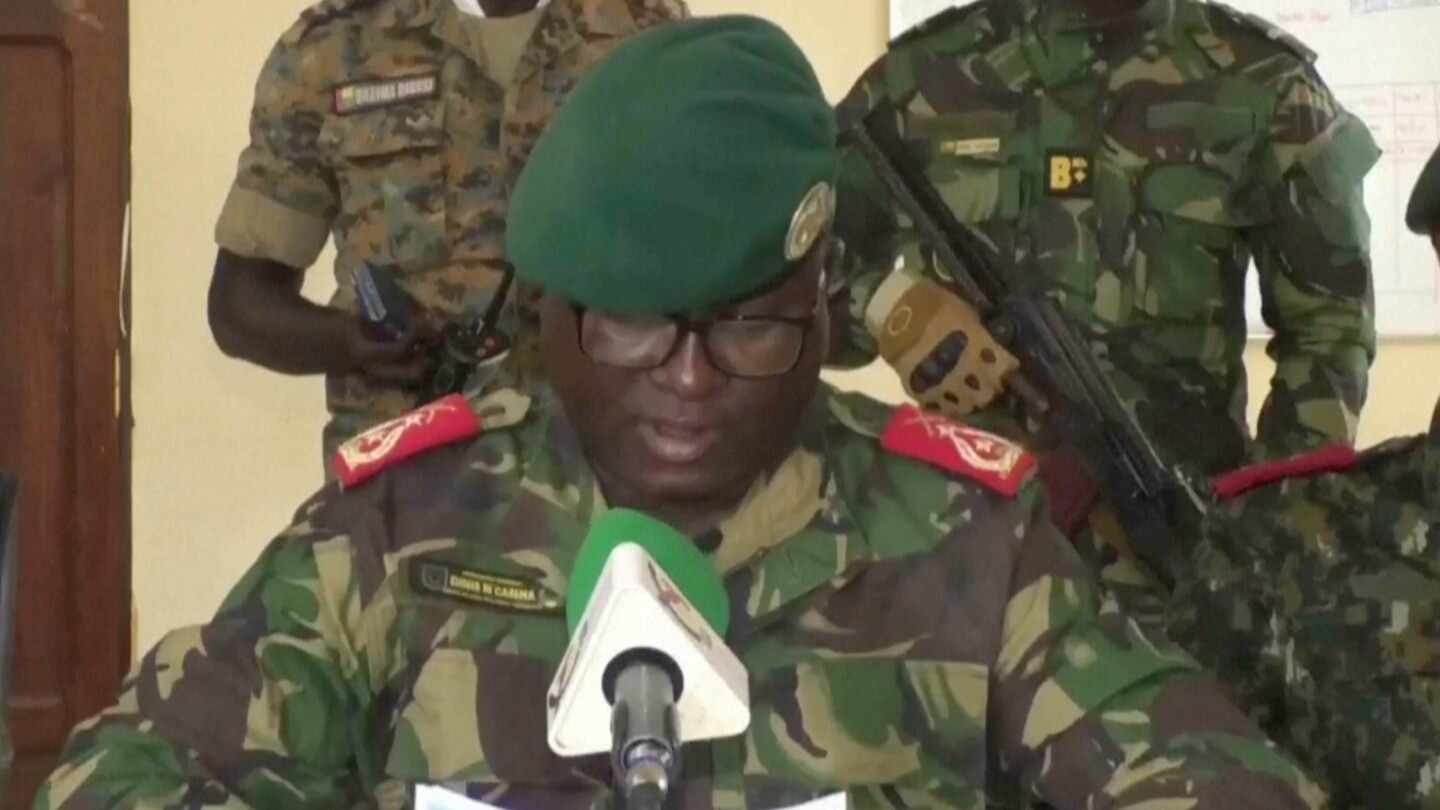
Soldiers in Guinea-Bissau staged a coup on Wednesday, appearing on state television to announce they had seized control of the West African nation just three days after national elections. President Umaro Sissoco Embaló confirmed to French media that he had been arrested and deposed in the takeover.
Military spokesperson Dinis N’Tchama announced the formation of a “High Military Command for the re-establishment of national and public order” which has immediately suspended the country’s democratic institutions. The military claimed they acted to prevent the “manipulation of electoral results” through an alleged plot involving “national politicians” and a “well-known drug lord,” though they provided no evidence to support these allegations.
The coup unfolded dramatically when gunfire erupted near the presidential palace midday Wednesday. An Associated Press journalist reported roads to the palace were sealed off with checkpoints manned by heavily armed and masked soldiers. The military also moved to secure the National Electoral Commission building, arresting its chief and sealing off the premises.
“I have been deposed,” Embaló told France 24, adding that he had been arrested by forces led by the army chief of staff but had not been subjected to violence.
The military announced the immediate suspension of the electoral process, media activities, and closure of all national borders – actions typical of coup attempts in the region.
Guinea-Bissau had just held presidential and legislative elections on Sunday, with both incumbent President Embaló and opposition candidate Fernando Dias claiming victory on Tuesday. Official provisional results had been expected Thursday. In addition to Embaló, soldiers have arrested Dias and Domingos Simões Pereira, leader of the main opposition African Party for the Independence of Guinea and Cape Verde (PAIGC), according to a statement from the party.
The political context in Guinea-Bissau has been tense, with Embaló facing a legitimacy crisis. Opposition figures had argued his five-year term, which began in February 2020, had expired earlier this year. Although the Supreme Court ruled his term should run until September 4, the presidential election was delayed until November, further heightening tensions.
The Popular Front, a civil society coalition, accused Embaló and the military of staging a “simulated coup” to block the release of election results and maintain power. The group alleged the president plans to install a new interim government and eventually call fresh elections in which he would run again.
International organizations have swiftly condemned the military takeover. The United Nations Secretary-General António Guterres called for restraint and respect for the rule of law. The African Union and ECOWAS (Economic Community of West African States) issued a joint statement denouncing the “blatant attempt to disrupt the democratic process” and demanding an immediate return to constitutional order and the release of detained officials.
This coup adds Guinea-Bissau to a growing list of West African nations experiencing military takeovers since 2020. Mali, Niger, Burkina Faso, Guinea, and Gabon have all seen their governments toppled by military forces in recent years, creating a concerning pattern of democratic backsliding across the region.
Guinea-Bissau has a troubled political history, having experienced four successful coups and numerous attempted ones since gaining independence from Portugal. The country has also emerged as a significant drug trafficking hub between Latin America and Europe, with the narcotics trade often intertwined with political instability.
The military’s reference to a “drug lord” in its coup announcement reflects this complex reality, though analysts note such claims are often used to justify military intervention without substantive evidence.
As the situation continues to develop, citizens of Guinea-Bissau face renewed uncertainty after a brief period of democratic processes. The international community watches closely to see whether diplomatic pressure will lead to a restoration of civilian rule or if Guinea-Bissau will join its neighbors in extended military governance.
Fact Checker
Verify the accuracy of this article using The Disinformation Commission analysis and real-time sources.

9 Comments
Drug trafficking has long been a major issue in Guinea-Bissau, fueling corruption and undermining democratic institutions. If the military’s claims about a drug lord’s involvement are true, that would be very concerning.
I’m curious to learn more about the military’s specific allegations of electoral manipulation. Without clear evidence, their justification for the coup seems questionable. Hopefully an independent investigation can shed light on the situation.
Agreed, transparency and accountability will be crucial going forward. The international community should press for a return to democratic rule as soon as possible.
It’s troubling to see the military seizing power after a contested election. I wonder what the international response will be and whether this will lead to further instability in the region.
Agreed. Regional stability and democratic governance are crucial for economic development in West Africa. I hope the international community can pressure the military to restore constitutional order quickly.
Coups can be hugely destabilizing, especially in a country with a history of political instability like Guinea-Bissau. I hope this doesn’t disrupt regional trade and investment in the mining and energy sectors.
This is a concerning development that bears close watching. I’ll be looking to reputable news sources for updates on the situation and its potential impacts on the economy and markets.
This coup could disrupt supply chains and trade flows in the region, which could impact commodity markets like gold, bauxite, and phosphates that Guinea-Bissau is involved in. I’ll be watching developments closely.
Coups are always concerning, especially in regions with fragile democracies. I hope the situation in Guinea-Bissau can be resolved peacefully, with respect for the will of the people expressed through free and fair elections.